
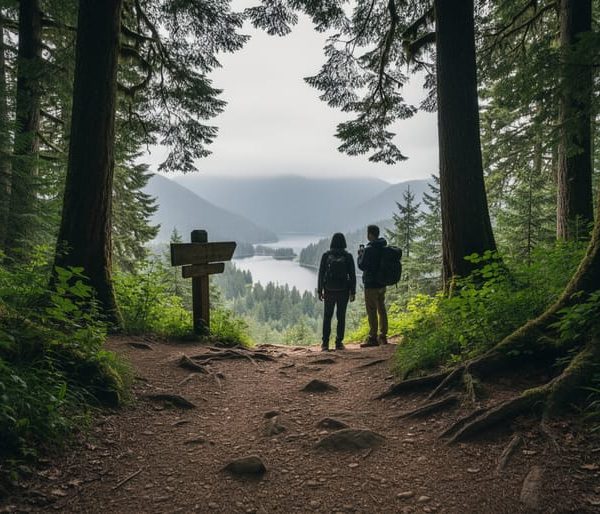
Mont St Bruno offers hikers a well-marked network of trails winding through old-growth forest, past five serene lakes, and up to panoramic summit views just 20 minutes from Montreal. The park’s 35 kilometers of maintained trails are accessible through clear maps available at the welcome center and online through Parks Canada resources, making navigation straightforward even for first-time visitors.
What sets this location apart is the blend of accessibility and genuine wilderness feel. The Sentier des Lacs loop spans 5.13 miles with 466 feet of elevation gain, delivering a satisfying workout without overwhelming beginners. Families often start with the 1.5-kilometer Sentier du Petit-Duc, while more experienced hikers tackle the 3.5-kilometer Sentier du Grand-Duc for a longer forest immersion.
The trail system stays open year-round, with winter bringing cross-country ski routes alongside designated hiking paths. Getting the most from your visit means understanding which trails connect, where the elevation climbs steepest, and how to avoid crowded weekends when parking fills fast. A solid trail map paired with knowledge of current conditions transforms a pleasant walk into a memorable backcountry experience minutes from urban life.
This guide breaks down the entire trail network, shows you how to read and use the park’s maps effectively, and shares field-tested tips for timing your hike, choosing the right route for your group, and handling the seasonal quirks that catch unprepared visitors off guard.
Why Mont St Bruno Is Worth the Hike
Mont St Bruno sits just 20 minutes from downtown Montreal, making it one of the most accessible natural escapes in Quebec. You don’t need to drive hours into the wilderness to find genuine hiking terrain, this park delivers forest trails, scenic lake views, and proper elevation gain within easy reach of the city.
The trail network here accommodates everyone. Beginners can warm up on the 1.5 km Sentier du Petit-Duc loop, while more ambitious hikers tackle the 5.13-mile Sentier des Lacs with its 466 feet of elevation gain. Families appreciate the shorter, gentler routes like the 3.5 km Sentier du Grand-Duc, which offers a satisfying forest experience without overwhelming young legs. If you’re looking for a real workout, string together multiple trails to push your distance and climb.
What sets Mont St Bruno apart is its year-round appeal. When snow covers the ground, the park maintains 35 km of mechanically groomed trails, including 27 km for classic skiing and 8 km for skate skiing. Winter hikers can still explore routes like Petit-Duc and Grand-Duc when other parks shut down. Spring through fall, the lakes reflect the surrounding forest, creating those postcard moments that make the climb worthwhile.
The terrain isn’t flat, you’ll earn your views here. But that’s exactly why experienced hikers return. You get legitimate elevation work, technical enough to feel like proper mountain hiking, all within a park system that’s managed for safety and accessibility. Whether you’re training for bigger hikes out west or simply want an honest day in the woods, Mont St Bruno delivers without the commute.
The Essential Hiking Trails at Mont St Bruno
1. Sentier des Lacs (Lakes Trail)
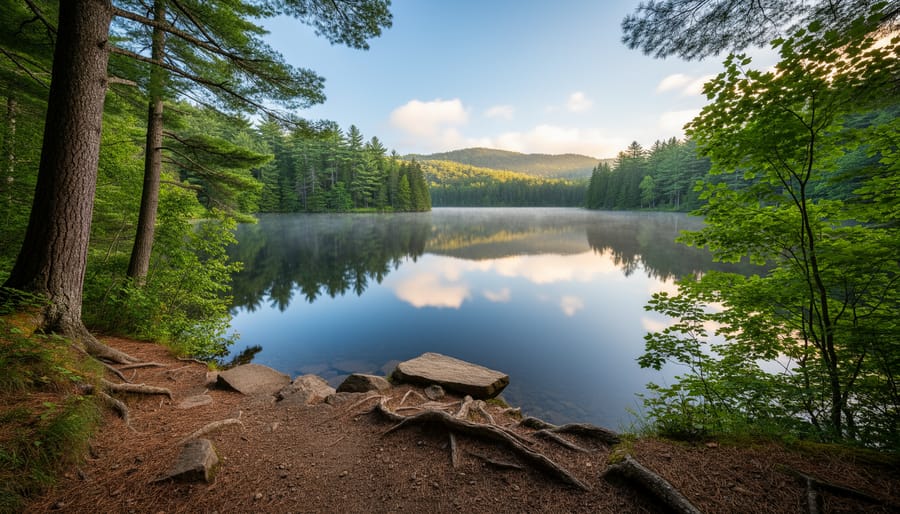
The Sentier des Lacs is the signature trail at Mont St Bruno, offering a comprehensive 5.13-mile loop that takes you past the park’s most scenic water features. With 466 feet of elevation gain spread across the route, this trail delivers a moderate workout without overwhelming newer hikers.
You’ll wind through mature hardwood forests and emerge at viewpoints overlooking Lac Seigneurial, Lac des Bouleaux, and Lac du Moulin. The terrain varies from gentle lakeside paths to rolling sections with short, steady climbs. Tree roots and rocks punctuate the trail, so solid footwear matters here.
What makes this trail special is how it showcases the park’s ecosystem diversity in one outing. You move from dense forest canopy to open lake edges where you might spot great blue herons or turtles sunning on logs. The middle sections take you higher onto the slopes of the mountain itself, where the forest floor changes and you get broader views through the trees.
Most hikers complete the loop in two to three hours, though photographers and bird watchers often stretch that to four. The trail is well-marked with numbered posts that correspond to park maps, making navigation straightforward even for first-time visitors. Spring brings wildflowers to the forest floor, while fall transforms the hardwoods into a riot of reds and golds. Winter use is possible on portions that overlap with the park’s maintained trails, though you’ll need appropriate gear for snow conditions.
2. Sentier du Grand-Duc (Great Horned Owl Trail)
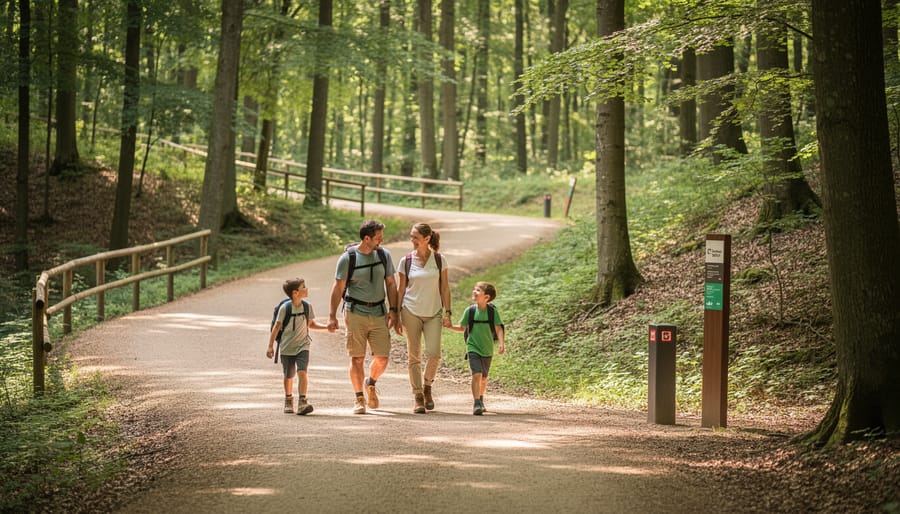
This 3.5 km loop serves as an excellent introduction to Mont St Bruno’s trail network for families and hikers building confidence on longer routes. The beginner-level rating reflects well-maintained paths with gentle grades that rarely challenge your footing, making it accessible even for those new to trail hiking.
The terrain consists primarily of packed dirt paths winding through mixed hardwood forest, with occasional roots and small rocks that add interest without demanding technical skill. You’ll gain and lose elevation gradually rather than facing steep climbs, which allows newer hikers to focus on enjoying the surroundings instead of worrying about the next uphill push. The trail’s namesake, the great horned owl, inhabits these woods, scan the larger trees at dawn or dusk for the best chance of spotting one.
Most hikers complete the Grand-Duc loop in 75 to 90 minutes at a relaxed pace, leaving plenty of time to explore other trails in a half-day visit. It pairs naturally with the shorter Petit-Duc trail for a morning outing, or serves as a warm-up before tackling the longer Sentier des Lacs. The trail remains open during winter months when snow conditions allow, though you’ll want snowshoes or traction aids once accumulation begins.
Plan to bring water and snacks even on this shorter route, the forest canopy provides shade in summer but can trap humidity, making hydration essential.
3. Sentier du Petit-Duc (Northern Saw-whet Owl Trail)

The Sentier du Petit-Duc stretches 1.5 kilometers through gentle terrain, making it the park’s shortest marked loop and a perfect introduction to Mont St Bruno’s trail system. This beginner-level path winds through mixed forest without significant elevation challenges, keeping families with toddlers and first-time hikers comfortably on track.
Most visitors use Petit-Duc as a warm-up before tackling longer routes or as a standalone nature walk when time is limited. The compact loop takes 30 to 45 minutes at an easy pace, leaving plenty of daylight for additional exploration. Parents appreciate the manageable distance for children just learning trail etiquette, while the well-marked path helps build confidence in reading trail signs.
The trail connects naturally with the Sentier du Grand-Duc at several junctions, letting you extend your hike to 5 kilometers total if the group has energy to spare. Check your trail map for these connection points before setting out, the numbered trail markers make it straightforward to navigate between loops without backtracking. During winter, Petit-Duc remains open for hiking and snowshoeing, giving year-round access to this friendly introduction to the park’s larger network.
4. The Winter Trail Network
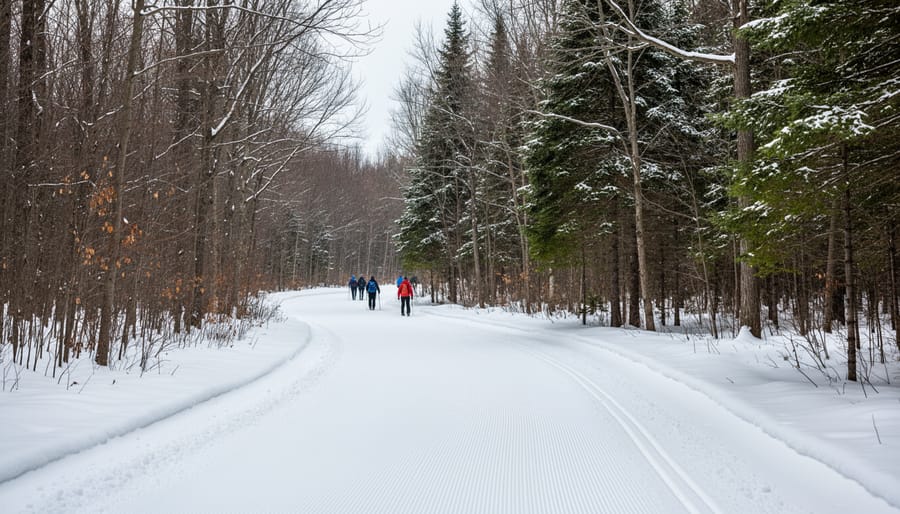
When snow blankets Mont St Bruno, the park transforms into a well-maintained winter recreation hub. The 35-kilometer mechanically groomed trail system includes 27 kilometers designated for classic skiing and 8 kilometers for skate skiing, but winter hikers aren’t left out. Trails like Petit-Duc and Grand-Duc remain open specifically for winter hiking, giving you accessible options when you want to explore on foot rather than skis.
The groomed winter trails offer packed, stable surfaces that make hiking easier than breaking trail through deep snow, though you’ll want to stay aware of faster skiers sharing certain sections. Winter conditions bring their own rewards, frozen lake views, crisp air, and the quiet beauty of bare hardwoods against snow. Temperatures in Quebec winter can drop well below freezing, so layering properly matters as much as having a good map.
If you’re new to cold-weather hiking, check reliable winter hiking tips before heading out. Traction devices for icy sections, insulated water bottles that won’t freeze, and extra layers for wind exposure make the difference between a great outing and an uncomfortable one. The winter trail network gives you the structure and maintenance to focus on the experience rather than route-finding through unmarked snow.
Understanding Mont St Bruno Trail Maps
Getting your hands on a reliable trail map is the first step toward a successful hike at Mont St Bruno. Parks Canada maintains a trails dataset covering hiking trails in national parks and historic sites, which can serve as a foundational resource for planning your route. However, on-site trail maps at the park entrance and visitor center often provide the most up-to-date information about seasonal conditions and temporary closures.
A good Mont St Bruno trail map should clearly show:
- Trail distances and loop lengths for each numbered route
- Elevation profiles indicating gains and vertical changes
- Difficulty ratings to match trails to your fitness level
- Junction points where trails intersect or split
- Seasonal closures affecting winter and summer access
Once you’re on the trail, look for color-coded markers at regular intervals along each path. These markers correspond to the trail names and help you stay oriented, especially where switchbacks explained in the terrain might make your direction less obvious. At trail junctions, signposts typically display distances to key landmarks and estimated hiking times, letting you adjust your route on the fly.
Download a digital copy or snap a photo of the trail map before you head out. Cell service can be spotty in parts of the park, so having an offline reference ensures you won’t second-guess your navigation when you reach a fork in the trail.
Practical Hiking Information
Preparing for a hike at Mont St Bruno starts with understanding what Quebec’s weather and terrain demand from visitors. The park’s trails accommodate hikers year-round, but each season brings distinct conditions that shape your packing list and expectations.
Quebec weather shifts dramatically, so layer your clothing even during summer months. Bring moisture-wicking base layers, a windproof jacket, and rain protection, afternoon storms develop quickly in this region. Sturdy hiking boots with good ankle support handle the trails better than sneakers, especially on steeper sections where tree roots and rocks create uneven footing. Pack more water than you think you’ll need; the rolling terrain makes hydration crucial.
| Season | Trail Conditions | Essential Gear | Key Considerations |
|---|---|---|---|
| Spring | Muddy, melting snow patches | Waterproof boots, gaiters, extra socks | Trails soften and erode; avoid early season |
| Summer | Dry, firm, can be buggy | Insect repellent, sun protection, hydration | Highest visitor traffic; start early |
| Fall | Leaf-covered, potentially slippery | Trekking poles, layers for temperature swings | Peak foliage brings crowds mid-September |
| Winter | Snow-packed, icy sections | Microspikes, insulated layers, headlamp | Shorter daylight; trails like Petit-Duc and Grand-Duc stay open |
A basic first aid kit, trail snacks, and a fully charged phone belong in every pack. Cell coverage varies throughout the park, so don’t rely on your phone for navigation exclusively. Download offline maps before you arrive or pick up a paper trail map at park information points. Check Parks Canada resources for current trail status before heading out, seasonal maintenance and weather events occasionally close specific routes.
Local Tips for Hiking Mont St Bruno
Arrive on weekday mornings, especially Tuesday through Thursday, to enjoy the trails with minimal crowds, weekends and holidays draw families and groups. Early starts also give you better wildlife spotting chances, particularly for deer near the lakes and various bird species along the forested sections.
Combine Sentier des Lacs with either Grand-Duc or Petit-Duc to create a half-day adventure that showcases both the park’s scenic water features and varied terrain. If you’re short on time, linking Petit-Duc with Grand-Duc gives you a solid 5 km outing that samples different forest zones without the full commitment of the longer loop.
Bring binoculars for birdwatching along the quieter trail sections. The park’s mix of wetland and forest habitats attracts diverse species year-round. The overlooks near the lakes offer excellent photography opportunities during golden hour, with reflections particularly striking on calm mornings.
Pack your survival essentials including navigation tools, first aid supplies, and extra water, cell reception can be spotty in some trail sections. Winter hikers should add traction devices and thermal layers to their gear list, as trail conditions can range from packed snow to icy patches even on the maintained routes like Petit-Duc and Grand-Duc.
Frequently Asked Questions
Where can I get a trail map for Mont St Bruno?
Parks Canada provides trail information for the park as part of their national trails dataset. You can also find trail details on the Balise QC website, which lists current trail conditions and distances for Quebec hiking destinations.
Which trails at Mont St Bruno are best for beginners?
Sentier du Petit-Duc (1.5 km loop) and Sentier du Grand-Duc (3.5 km loop) are both marked as beginner-level trails. These shorter loops offer gentle terrain perfect for families and hikers new to the sport.
How long does it take to hike the main trails?
The Sentier des Lacs, the park’s signature 5.13-mile loop, typically takes 2-3 hours at a comfortable pace. Shorter beginner trails like Petit-Duc can be completed in 30-45 minutes, while Grand-Duc takes about an hour.
Can you hike Mont St Bruno in winter?
Yes, winter hiking is available on select trails including Sentier du Petit-Duc and Sentier du Grand-Duc. The park also maintains 35 km of winter trails, with 27 km for classic skiing and 8 km for skate skiing.
When planning your hike, consider that trail conditions vary significantly between seasons. Summer and fall offer the easiest navigation with clear trail markers and dry footing, while spring can bring muddy sections as snow melts. Winter hiking requires appropriate footwear with good traction, and you’ll share some trail space with cross-country skiers on the maintained winter network.
The elevation gain on trails like Sentier des Lacs, 466 feet over the full loop, is moderate and manageable for most hikers with basic fitness. You’ll encounter some steeper sections, but nothing technically challenging. Trails are well-marked with numbered posts that correspond to park maps, making it straightforward to track your location even if you’re unfamiliar with the area.
If you’re combining multiple trails in one visit, start with Petit-Duc as a warm-up before tackling longer routes. The trail network is designed to let you link sections together, creating custom routes based on your time and energy level.
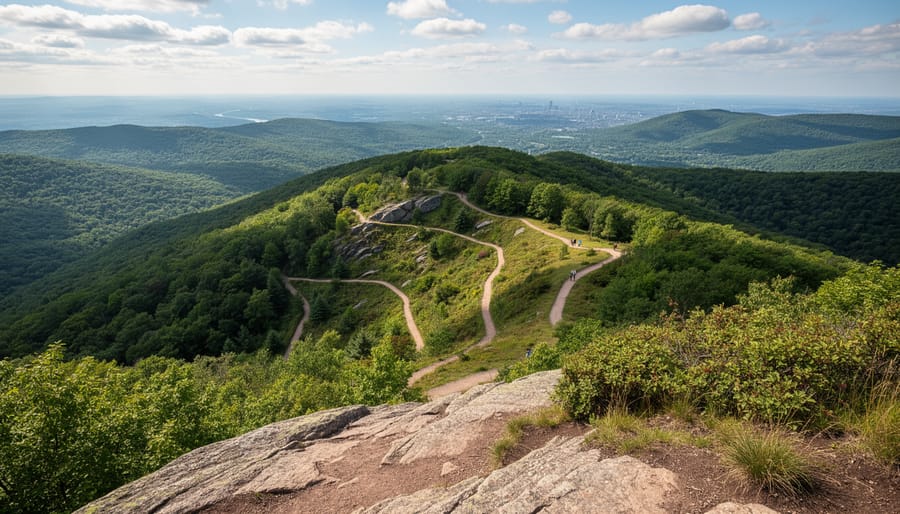
Mont St Bruno stands out as one of the most accessible and rewarding hiking destinations in the greater Montreal area. Whether you’re tackling the scenic 5.13-mile Sentier des Lacs loop or exploring the beginner-friendly trails like Grand-Duc and Petit-Duc, the park delivers a genuine outdoor experience without requiring a long drive from the city. The combination of well-maintained trails, beautiful lake views, and diverse difficulty options makes it suitable for everyone from families introducing kids to hiking to seasoned trail runners looking for a quick workout.
Before you head out, take a few minutes to grab a trail map from Parks Canada resources or the park entrance. Having a clear sense of the trail network helps you make the most of your visit and keeps you confident on the trails. Check the weather forecast for Quebec conditions, pack layers regardless of season, and bring enough water for your chosen route. Mont St Bruno rewards preparation with memorable views and a satisfying hiking experience that keeps locals and visitors coming back throughout the year.