
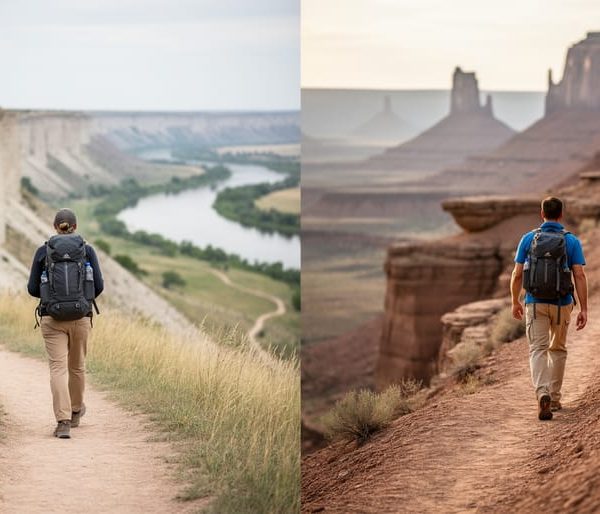
If you’re searching for hiking near NE, start with two places: Indian Cave State Park in the east and Saddle Rock Trail at Scotts Bluff National Monument in the west. Between them, Nebraska covers river bluffs and sandstone badlands, and neither one feels like the flat prairie most people picture.
Indian Cave State Park sits in Shubert, right beside the Missouri River. It spans roughly 3,400 acres and holds over 22 miles of hiking trails, which is plenty of room to stretch your legs whether you’ve got an afternoon or a whole weekend. Out west, the Saddle Rock Trail at Scotts Bluff National Monument in Gering runs about 4.1 miles. Entry to the monument is free, with no reservation or park pass required, so you can show up and hit the trail.
A word of caution before you lace up. Some sections of Saddle Rock Trail have softer, crumbly rock underfoot. Stick to the marked path, both for your own footing and to protect the trail itself. Check the forecast before you go, pack more water than you think you’ll need, and tell someone where you’re headed.
Below, we’ll cover what makes each spot worth the drive, the practical details to confirm before you leave, and a few local tips to make the trip smoother.
Why Nebraska Deserves a Spot on Your Trail List
Colorado has plenty of famous trails, so why look east? Because Nebraska offers a different kind of outing: wide-open prairie, river bluffs, and a slower pace than high-country Colorado. If you’re a camper or a family who wants a change of scenery, that shift can be exactly the point.
You don’t need to know the state to get started. Indian Cave State Park sits beside the Missouri River in Shubert and spreads across about 3,400 acres, with over 22 miles of hiking trails. That’s enough room to string together several outings from one base, which suits a multi-day camping trip.
Out west, Scotts Bluff National Monument in Gering brings history into the mix. Saddle Rock Trail runs roughly 4.1 miles, and entry to the monument is free with no reservation or park pass required. That low barrier makes it easy to fit a hike into a flexible road-trip day, especially with kids in tow.
Lower elevations and open terrain mean a gentler feel than a Rocky Mountain climb. Open ground still means sun and wind, though, so pack water and check the forecast before you head out.
How We Chose These Nebraska Hiking Picks
We kept the list short on purpose, and we only picked places where the basics are confirmed. That meant a real address or setting, known trail mileage, and clear access rules. Beyond that, we wanted variety, so you get a river-valley park in the east and a bluff hike out west, both workable for campers and families.
One honest gap: we couldn’t confirm trail names or difficulty ratings inside Indian Cave State Park, so we’ve left them out rather than guess. Before you go, check with the park for current trail maps and conditions. Trails change, and a quick call or visit to the park’s official page beats relying on secondhand details.
Top Hiking Areas Near NE: Our Picks
1. Indian Cave State Park, Shubert
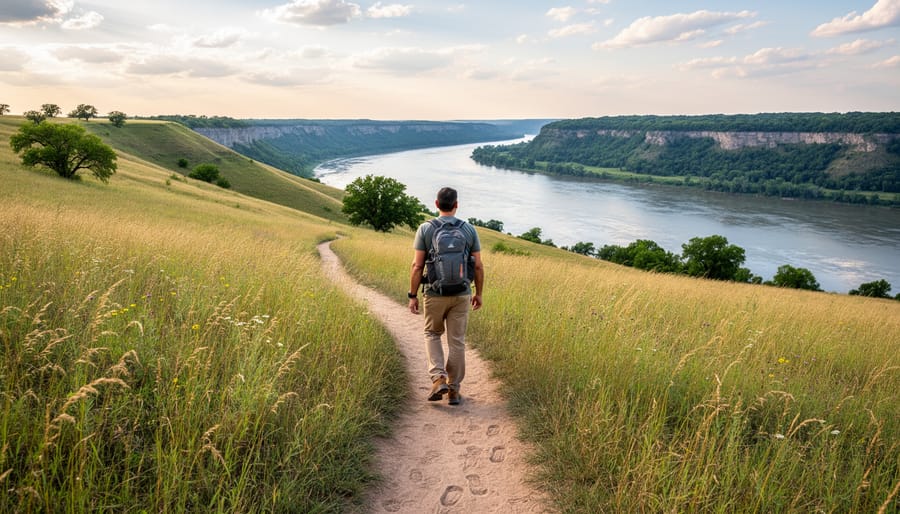
Indian Cave State Park sits in Shubert, Nebraska, right beside the Missouri River, and it’s the kind of place where the landscape does a lot of the work for you. The park covers roughly 3,400 acres, which is plenty of room to spread out. With over 22 miles of hiking trails, you aren’t stuck with one out-and-back route. You can string together a few shorter outings or save a longer loop for a day when your legs are feeling strong.
That’s a big part of the appeal for campers. If you like setting up a home base and exploring from there, a park this size gives you a reason to stay more than one night. Hike one stretch in the cool of the morning, rest at camp through the midday heat, then take a second, easier walk before dinner. The river-valley setting also makes for a different feel than the open bluffs out west, so it works well if you want variety on a Nebraska trip.
One honest caveat: we haven’t confirmed specific trail names or difficulty levels, so we won’t guess at them here. Before you go, contact the park or check its official trail map for current names, routes, and conditions. That’s especially worth doing if you’re hiking with kids or newer hikers, since you’ll want to match the route to your group.
Pack plenty of water, wear sturdy shoes, and check the forecast before you head out. River-valley weather can shift, and it’s always better to be ready than caught off guard.
2. Saddle Rock Trail, Scotts Bluff National Monument, Gering
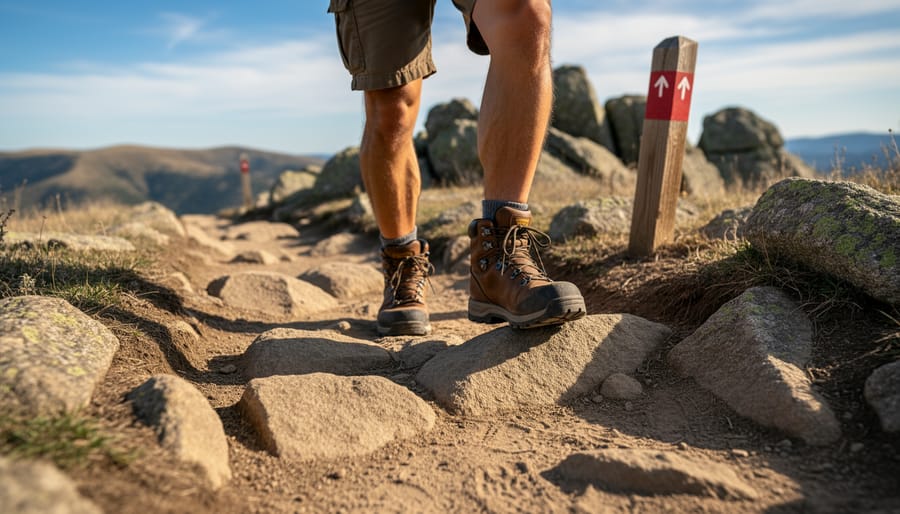
Scotts Bluff National Monument sits at 190276 Old Oregon Trail in Gering, Nebraska 69341, out in the western Panhandle where the land opens up and the bluffs rise from the plains. Saddle Rock Trail runs roughly 4.1 miles, which makes it a solid half-day outing for families and campers who want a real walk without committing to a full-day push.
Getting started is refreshingly simple. Entry to the monument is free, and there’s no reservation or park pass required, so you can build the hike into a flexible road-trip day without planning around permits. Pull in, park, and get moving.
Here’s the one thing worth slowing down for. Some stretches of the trail have softer, crumbly rock underfoot, and that changes how you should walk it.
That loose footing is the reason to think about your gear before you leave the car. Wear shoes or boots with real grip, not smooth-soled sneakers, and take your time on any stretch where the surface feels shifty. Shortcuts and off-trail wandering are exactly how people slip and how trails get worn down.
Open bluff country offers little shade and plenty of wind, so pack like you’ll be exposed. Carry more water than you think you need, add sun protection like a hat and sunscreen, and bring a light layer for gusts. We haven’t confirmed a difficulty rating for this trail, so treat it with the same respect you’d give any 4-mile outing on uneven ground: start early, pace yourself, and turn around if conditions turn.
3. Pairing the Two: Planning a Nebraska Trail Road Trip
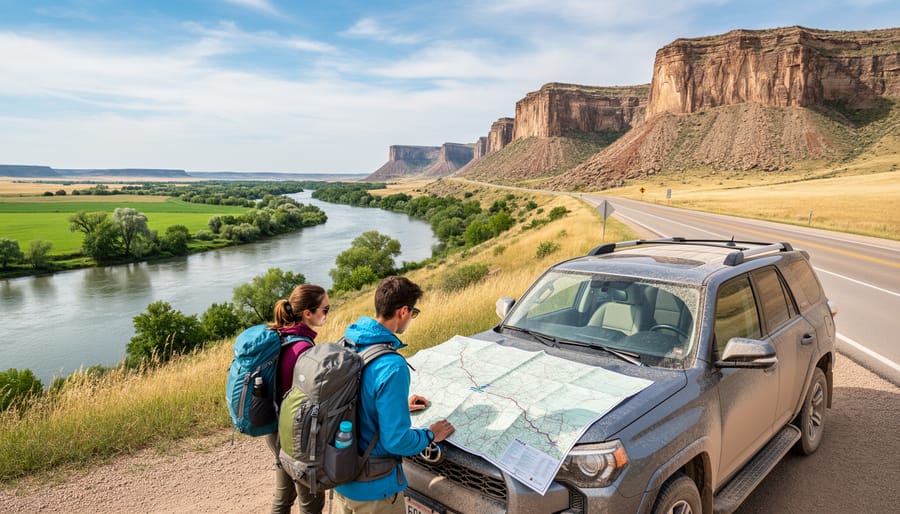
If you want both of Nebraska’s standout hikes in one trip, treat them as two separate legs rather than one easy loop. Indian Cave State Park sits along the Missouri River in Shubert, in the eastern part of the state, while Saddle Rock Trail at Scotts Bluff National Monument is out in the western Panhandle. That’s a big stretch of Nebraska between them, so check driving distances on a current map before you commit to a schedule.
Here’s an approach that holds up in any season. Pick one anchor hike per outing and let it be the whole point of the day. Indian Cave’s 22-plus miles of trail give you room for a river-valley trip, and Saddle Rock’s roughly 4.1 miles make a satisfying bluff day. Build in buffer days on both ends so a late start or a long drive doesn’t force you to rush the trail.
Keep your weather plan flexible too. If a forecast turns ugly, swap the days around or push the hike back instead of pressing on. A little slack in the plan is the best safety gear you can pack.
Practical Information: Getting There, Access, and Trail Details
Planning a Nebraska hike is mostly about knowing where you’re headed and what the ground will be like when you arrive. Here are the verified basics for both anchor destinations, side by side.
| Destination | Location | Trail Length / Size | Access Notes | Good to Know |
|---|---|---|---|---|
| Indian Cave State Park | Shubert, NE, beside the Missouri River | 22+ miles of trails across about 3,400 acres | Confirm current entry details with the park | Trail names and difficulty not confirmed here |
| Saddle Rock Trail, Scotts Bluff National Monument | 190276 Old Oregon Trail, Gering, NE 69341 | Roughly 4.1 miles | Free entry; no reservation or park pass required | Some crumbly rock sections; stay on the marked path |
Because Indian Cave covers so much ground, check in with the park for a current trail map before you pick a route. We haven’t confirmed trail names or difficulty ratings, and we’d rather point you to the source than guess.
At Scotts Bluff, the free, no-reservation entry makes it easy to build a flexible day around the hike. Still, wear shoes with solid grip, since softer rock underfoot is part of the experience.
For timing, aim to start early. That leaves room to turn around if the weather shifts, and it keeps you off open bluffs during the harshest part of the day. Whatever the season, pack more water than you think you’ll need, plus sun and wind protection, a basic layer for changing conditions, and a map you can read without a signal.
Weather and Safety Essentials Before You Hit the Trail
Nebraska trails can feel gentle until the wind picks up, so start with the forecast before you leave the driveway. Our weather basics guide covers the fundamentals, and they apply just as well on a prairie bluff as in the high country. Open ridges and bluffs offer little shelter, so plan for sun, wind, and sudden shifts in conditions.
Here’s a simple checklist to run through before you hit the trailhead:
- Extra water, more than you think you’ll drink
- Sun protection: hat, sunglasses, and sunscreen
- Layers you can add or shed as the wind changes
- Sturdy, traction-friendly footwear
- An offline map or paper trail map
- Snacks for energy
- A small first-aid kit
- A note to someone about your route and return time
Good footwear matters most at Scotts Bluff, where some sections of Saddle Rock Trail have softer, crumbly rock underfoot. Stay on the marked path to protect both yourself and the trail. If you’re newer to trails, brush up on what are switchbacks so climbs and descents feel less intimidating. Round out your pack with our survival essentials and if the weather turns, turn around. The trail will still be there tomorrow.
Local Tips for Hiking Near NE
A few habits make a Nebraska hiking day go smoother, and most of them are plain outdoor common sense. Start by confirming trail conditions with park staff before you head out. Indian Cave State Park has more than 22 miles of trail, and trail names and difficulty weren’t confirmed in our research, so a quick check for current maps and closures saves guesswork on the ground.
Get going early. You’ll beat the heat and the wind, and you’ll have daylight to spare if a trail takes longer than expected. Stay on the marked path, too. On Saddle Rock Trail, some sections have softer, crumbly rock underfoot, so sticking to the route keeps you safer and protects the trail for the next hiker. And pack out every scrap of trash, including the little stuff like wrappers and fruit peels.
If you’re planning several hikes, think about camping or lodging close to the trailhead. A cabin, a tent site, or an RV spot nearby cuts down on early-morning driving and gives you a comfortable base between outings. Scotts Bluff National Monument charges no entry fee and needs no reservation or pass, so it slots easily into a flexible road-trip day.
Hiking Near NE: Frequently Asked Questions
How long is Saddle Rock Trail?
Saddle Rock Trail is roughly 4.1 miles long. It’s at Scotts Bluff National Monument in Gering, Nebraska.
Do I need a pass or reservation at Scotts Bluff National Monument?
No. Entry is free, and no reservation or park pass is required.
How many miles of trail are at Indian Cave State Park?
The park has over 22 miles of hiking trails across about 3,400 acres beside the Missouri River in Shubert.
Is the footing on Saddle Rock Trail safe for everyone?
Some sections have softer, crumbly rock underfoot, so stay on the marked path and wear shoes with good grip. If you’re unsure about your group’s comfort on uneven ground, check with park staff first.
Where do you find current trail names and difficulty for Indian Cave? I can’t confirm those here, so check with the park directly for its latest trail map and conditions before you go. Official park sources will have the most reliable, up-to-date details.
If you’re still building your list of destinations, browse these more hiking trails closer to our Colorado home base.
Hiking near NE is more approachable than most people expect, and it pays off in big ways. Indian Cave State Park gives you over 22 miles of trail beside the Missouri River in Shubert, while Saddle Rock Trail at Scotts Bluff National Monument in Gering delivers about 4.1 miles of bluff scenery with free entry and no pass or reservation.
Before you go, check current conditions with the park or monument, watch the forecast, and stick to the marked path, especially where the rock turns soft and crumbly underfoot.
If you’re a Colorado adventurer or camper, consider Nebraska a fresh addition to your trail calendar. And when you’re ready to plan the trip, Dillon Camping & Outdoors is here to help you pack, prepare, and get on the trail.