
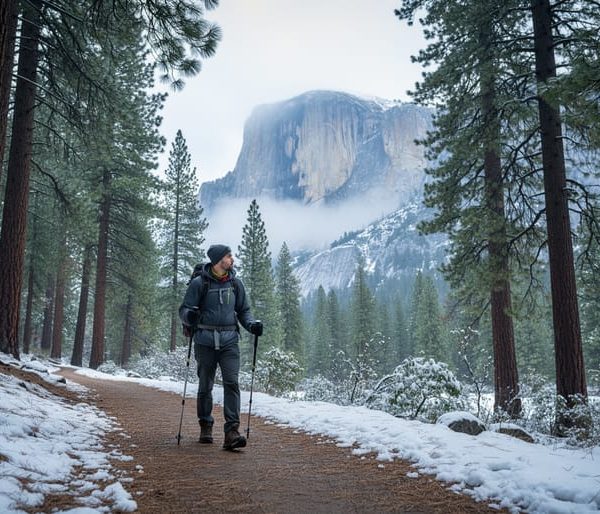
California’s nine national parks offer exceptional winter hiking, and seven of them provide accessible trails from December through March when conditions range from snow-dusted high Sierra peaks to sun-warmed desert valleys. The key to planning a winter park visit in California is matching your hiking goals to elevation and latitude: Yosemite Valley trails stay open year-round with snowy backdrops and smaller crowds, Sequoia and Kings Canyon offer dramatic winter scenery though recent wildfire damage and 2023 storm impacts have closed some trailheads, while southern parks like Joshua Tree deliver perfect 60°F hiking weather when the rest of the state shivers.
Winter transforms California’s national parks into quieter, more intimate spaces. You’ll find frost-rimmed giant sequoias standing silent in empty groves, waterfalls frozen mid-cascade in Yosemite, and desert wildflowers blooming weeks earlier than you’d expect. The tradeoff is real: you need to check current conditions before every trip, pack for rapidly changing weather, and accept that some high-elevation roads and trails simply won’t open until May.
The best winter hiking combines lower-elevation trails with flexible planning. Joshua Tree’s entire trail network stays accessible through the cold months, with occasional snow dusting Quail Mountain’s 5,814-foot summit while base elevations hover above freezing. Yosemite Valley roads remain open, though Hetch Hetchy Road closes during snow events. Further south, Channel Islands and Pinnacles offer completely snow-free hiking when Sierra parks are buried.
Success in California’s winter national parks depends on preparation. Always confirm road status and trail closures within 24 hours of your visit, particularly in Sequoia and Kings Canyon where tree hazards from recent wildfires create ongoing safety concerns. Stop at the nearest visitor center before hitting the trail for current conditions you won’t find online.
Why Winter Is a Prime Season for California National Park Hiking
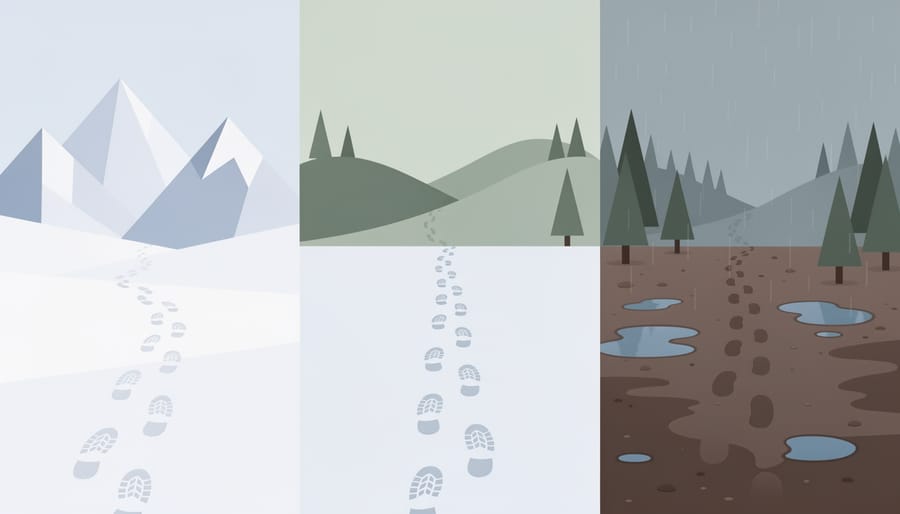
Winter transforms California’s national parks into quieter, more intimate versions of their summer selves. The crowds thin dramatically, trails that require shuttle reservations or predawn starts in peak season become accessible and peaceful. You’ll often have iconic viewpoints to yourself, or share them with just a handful of other hikers who appreciate the season’s subtle rewards.
The temperature advantage varies by elevation and location. Desert parks like Joshua Tree become genuinely pleasant, with daytime highs around 60°F replacing summer’s triple-digit heat. Coastal and foothill trails stay moderate, typically ranging from the 40s to low 60s. Higher elevations receive snow, creating postcard scenery but requiring extra preparation and gear.
Air quality improves noticeably during winter months. Wildfire smoke clears, summer haze dissipates, and you’ll see farther across valleys and to distant peaks. The light takes on a different quality, lower sun angles create longer shadows and richer colors, especially appealing for photography.
Conditions shift significantly across California’s diverse national parks. Joshua Tree experiences freezing nights and occasional snow at higher elevations above 5,000 feet. Yosemite Valley remains accessible while upper elevations close under snow. Sequoia and Kings Canyon see substantial winter precipitation, with some areas affected by previous storm damage and wildfire impacts requiring current condition checks. Redwood parks stay green and wet. Channel Islands offer cooler, clearer days ideal for coastal hiking and whale watching.
This variability means you can choose your winter experience, from snow-dusted granite domes to temperate desert walks to lush rainforest trails, all within the state’s national park system.
Top California National Parks for Winter Hiking
1. Yosemite National Park
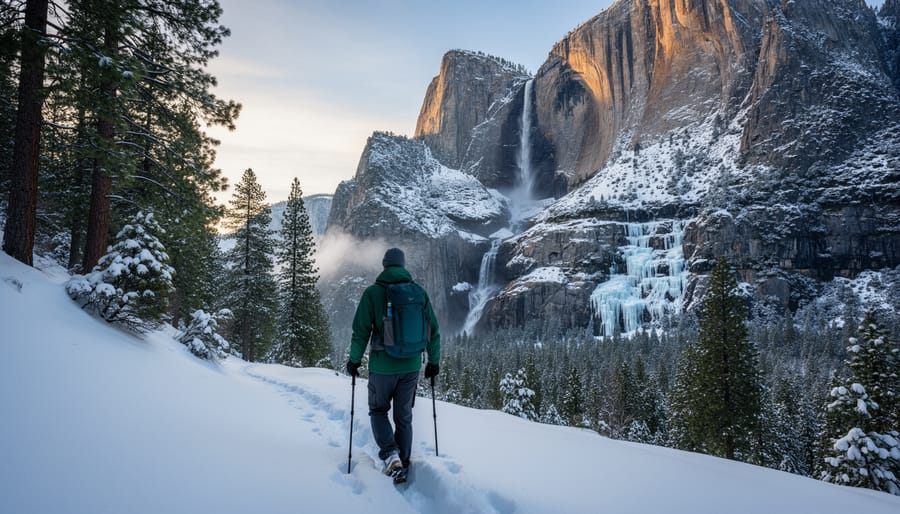
Yosemite stands as California’s crown jewel for winter hiking, transforming its granite walls and thundering waterfalls into a quieter, frost-kissed wonderland. The valley floor remains accessible throughout winter, offering miles of paved and dirt trails beneath Half Dome’s snow-draped silhouette while summer’s overwhelming crowds thin to a trickle.
Valley Loop trails provide gentle, family-friendly hiking with spectacular views of El Capitan and the ice-fringed upper reaches of Yosemite Falls. The Mirror Lake loop (though the lake itself is often just a meadow in winter) presents a peaceful 5-mile circuit through forest and open meadow, while the Lower Yosemite Fall trail rewards hikers with a close-up look at frozen columns clinging to the canyon walls. Both stay snow-free most winter days, requiring only standard hiking boots.
For slightly more adventurous routes, the Four Mile Trail to Glacier Point’s lower section and the Mist Trail’s first mile to the Vernal Fall bridge offer moderate elevation gain and increasingly wintry conditions. These trails may require microspikes or traction devices as you climb above the valley floor, especially after storms. The reward is solitude on paths that feel utterly transformed by snow and ice.
Road access remains relatively straightforward in winter. Yosemite Valley Roads stay open year-round, ensuring access to most trailheads. Hetch Hetchy Road operates sunrise to sunset but closes when snow falls or forecasts predict overnight accumulation, so plan accordingly if you’re targeting that quieter corner of the park. Tire chains may be required during and after storms on all park roads.
Before you set out, check Yosemite current conditions and review the park’s closure map for real-time information on roads, trails, campgrounds, and backcountry zones. Conditions shift quickly with each winter storm, and a trail that was clear yesterday may require snowshoes or be temporarily closed today.
2. Sequoia & Kings Canyon National Parks
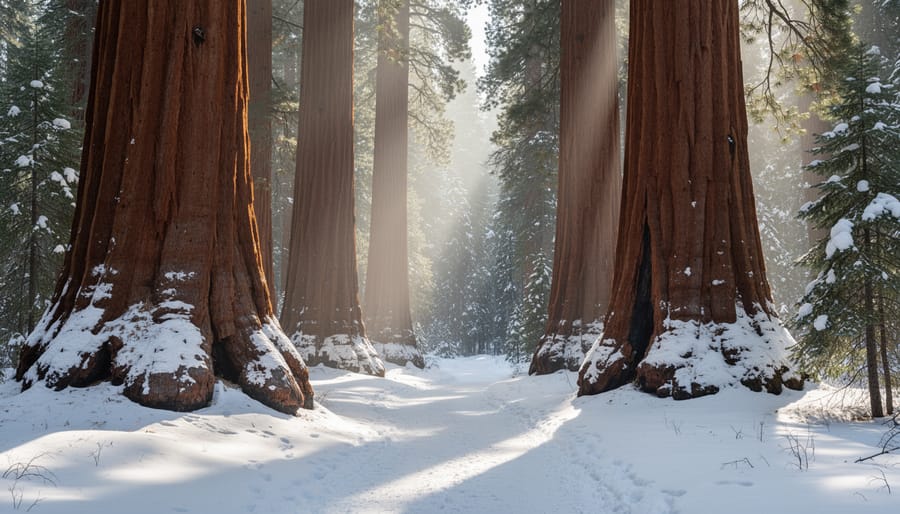
Sequoia & Kings Canyon sit side by side in the southern Sierra Nevada, offering some of California’s most memorable winter hiking through ancient groves and rolling foothill terrain. While high-country trails remain buried under snow, winter opens up lower-elevation experiences that showcase massive sequoias draped in fresh snowfall and foothill paths that stay accessible when the backcountry shuts down. The parks’ elevation range means you can hike through icy wonderlands in the Giant Forest one hour, then drop to sunny oak woodlands the next.
Recent wildfire activity and severe damage from 2023 winter storms have changed the trail landscape here, closing some trailhead access roads and leaving tree hazards in burned zones. Before heading out, stop at the visitor center nearest your planned trailhead to get current frontcountry trail information, conditions shift throughout winter, and what was open last week might not be passable today. Check the official Sequoia & Kings Canyon trail conditions page before your visit, but count on face-to-face confirmation from rangers who know which trees came down overnight.
The Giant Forest area typically remains accessible through winter and delivers stunning cold-season hiking. The Congress Trail loops through the largest concentration of giant sequoias on earth, staying mostly flat and easy to navigate even with a dusting of snow. The General Sherman Tree stands especially dramatic against winter skies, and the 2-mile round trip to see it becomes a quiet, contemplative walk when summer’s crowds vanish. Crescent Meadow trails offer another accessible option, weaving through sequoia groves and meadow edges that frost over on cold mornings.
Down in the foothills, trails near Ash Mountain and the Foothills Visitor Center stay snow-free and provide excellent winter hiking when higher elevations are impassable. These lower routes traverse rolling grasslands and oak savannas with views stretching across the Kaweah River canyon, comfortable in shorts and a light jacket on sunny winter afternoons.
3. Joshua Tree National Park
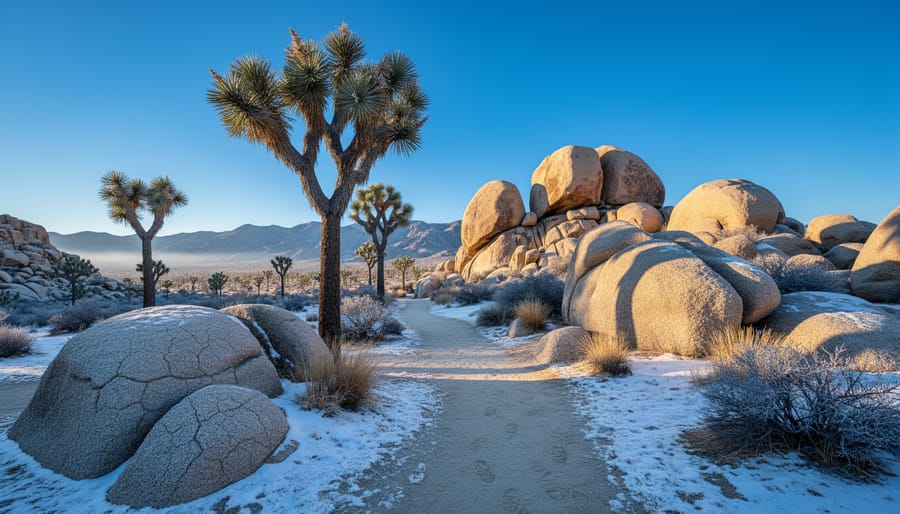
Joshua Tree transforms from a furnace into an ideal hiking destination when winter arrives. While summer temperatures regularly exceed 100°F and make daytime hikes dangerous, winter brings the desert to life with comfortable conditions that let you explore without risking heat exhaustion. The park’s Joshua Tree elevation range spans from 536 feet in the low desert to 5,814 feet atop Quail Mountain, creating diverse microclimates that all become accessible during the cooler months.
Expect daytime temperatures around 60°F at mid-elevations, perfect for hiking in a single long-sleeve layer. Nights drop to freezing throughout the park, and higher-elevation areas occasionally receive dustings of snow that create striking contrasts against the rust-colored rock formations. These cold nights mean an early start rewards you with crisp air and dramatic lighting on the boulder piles and twisted Joshua trees that define the landscape.
The park’s signature trails become genuinely enjoyable in winter rather than endurance tests. Ryan Mountain Trail climbs 1.5 miles to panoramic views of the entire park, a hike that would be brutal in July but energizing on a January morning. The 3-mile Lost Horse Mine loop combines mining history with classic high-desert scenery, passing through Joshua tree forests and offering views across the park’s interior. For an easier introduction, Barker Dam makes a 1.3-mile loop through boulder mazes to a seasonal water source that often hosts wildlife in winter.
The Skull Rock Nature Trail provides a quick 1.7-mile walk among photogenic rock formations, while the longer Boy Scout Trail stretches 8 miles one-way through some of the park’s densest Joshua tree stands. Winter’s lower sun angle brings out textures in the granite formations that harsh summer light washes out, making even short walks visually rewarding.
Arrive early to beat weekend crowds at popular trailheads, and always carry more water than you think you need, the dry desert air dehydrates you even in cool weather.
4. Pinnacles National Park
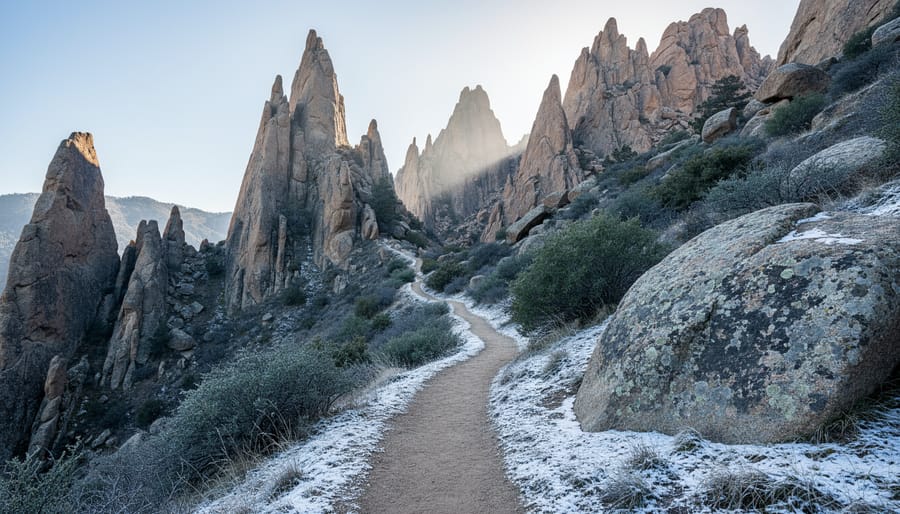
Pinnacles National Park offers some of California’s most rewarding winter hiking, with moderate temperatures that make the volcanic landscape far more inviting than during the scorching summer months. Winter days typically hover in the 50s and 60s, perfect for tackling the park’s steep climbs and rocky scrambles without the oppressive heat that can make summer trails unbearable. Early-season wildflowers begin appearing in late winter, adding splashes of color to the golden grasslands that blanket the hills between the dramatic volcanic spires.
The park’s unique geology, ancient volcanic remnants including towering rock pinnacles, narrow gorges, and talus caves, creates exceptional hiking year-round, but winter brings the added advantage of solitude and comfortable temperatures. The talus caves, formed by massive boulders creating cool, dark passages, become adventure highlights rather than relief from heat. Bring a headlamp for cave sections like Bear Gulch Cave and Balconies Cave, though check current status before your visit as these occasionally close for bat protection.
Both sides of the park offer excellent winter access. On the east side, the High Peaks Trail via Bear Gulch provides stunning views across the volcanic formations with moderate effort, while the Condor Gulch Trail offers a less-crowded approach to the peaks. The west side’s Balconies Trail loops through cave passages and past towering rock walls, accessible from the Chaparral Ranger Station. The Juniper Canyon Trail on the west side delivers a challenging climb to the High Peaks with superb views.
Winter is also prime time for spotting California condors, which often soar near the High Peaks. The park’s relatively small size means you can easily explore both sides in a long weekend, and the cooler temperatures let you tackle longer routes without carrying excessive water.
5. Redwood National and State Parks
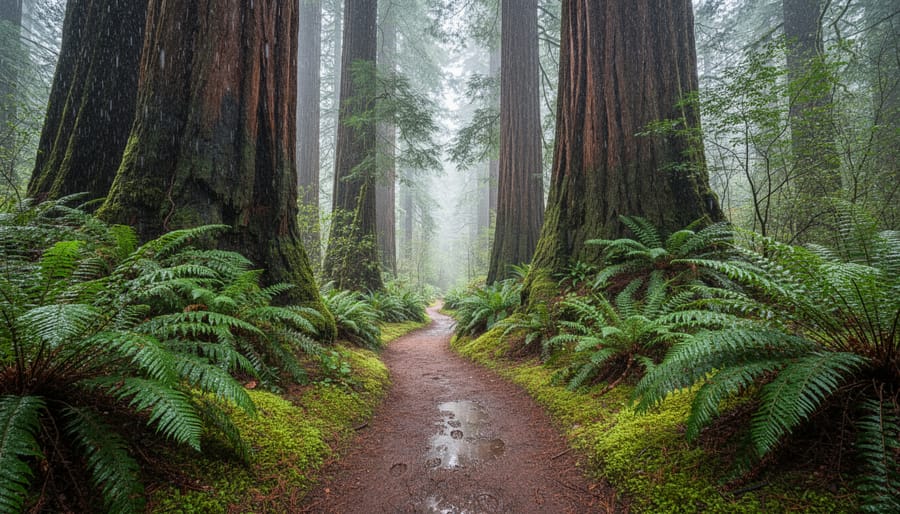
Redwood National and State Parks offer a different kind of winter hiking experience from California’s mountain parks: instead of snow-capped peaks, you’ll find towering old-growth forests at their most lush and dramatic. Winter rains transform these coastal forests into verdant wonderlands, with ferns unfurling across the forest floor, moss draping every surface, and creeks running full. The combination of ancient redwoods, Pacific coastal views, and cool, misty conditions creates an atmosphere that feels primordial.
Winter temperatures along California’s north coast hover in the 40s to low 50s, making for comfortable hiking conditions once you’re moving. Yes, you’ll need good rain gear, the park system receives most of its annual rainfall between November and March, but the reward is experiencing these forests when they’re most alive. The reduced summer crowds mean you can often walk for miles among 300-foot-tall trees without encountering another person.
For old-growth forest immersion, the Lady Bird Johnson Grove Trail (1.4-mile loop) winds through pristine redwood cathedral groves and stays accessible year-round. The Tall Trees Grove Trail (4 miles round trip) requires a free permit but delivers an intimate encounter with some of the world’s tallest trees. If you want coastal drama alongside your forest hiking, the Coastal Trail section from Lagoon Creek to Hidden Beach (8 miles one way, or shorter segments) combines redwood groves with stunning Pacific overlooks and sea stack views.
The James Irvine Trail to Fern Canyon (8 miles round trip from Prairie Creek) showcases the full spectrum of park ecosystems: you’ll start in dense redwood forest and emerge at a magical canyon where 50-foot walls drip with five-finger ferns. Rubber boots or waterproof hiking boots are essential for winter Fern Canyon exploration, as you’ll wade through shallow Horne Creek multiple times.
6. Channel Islands National Park
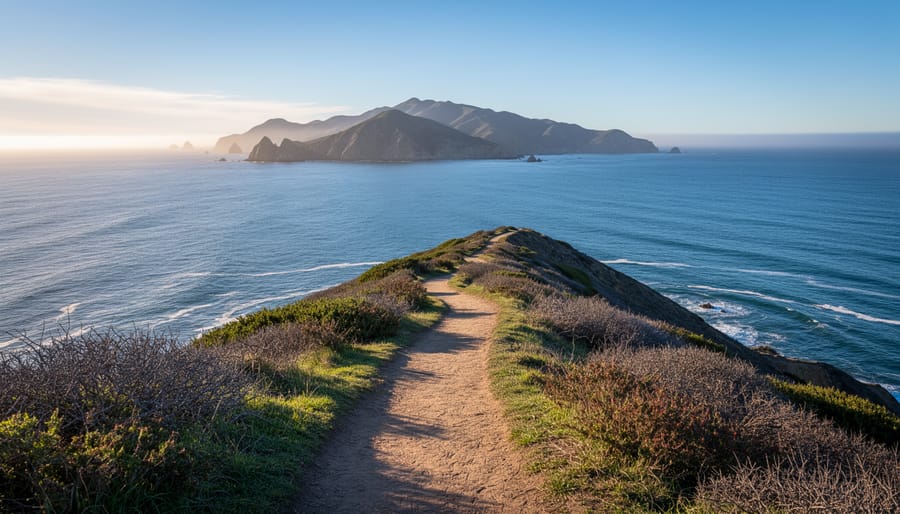
Channel Islands National Park sits eight miles off the California coast, and winter transforms these rugged islands into a hiker’s sanctuary. Cooler temperatures settle over the archipelago between December and March, bringing clearer skies and calmer seas than the foggy summer months. You’ll share the trails with far fewer visitors during this season, often hiking for hours without encountering another group on the remote paths that wind along dramatic coastal bluffs.
Winter is prime whale watching season in the park. Gray whales migrate through the Santa Barbara Channel from December through April, and you’ll often spot their spouts from elevated coastal trails. Elephant seals also arrive at island beaches during winter to breed and molt, adding wildlife spectacle to your hiking experience.
Santa Cruz Island offers the most developed winter hiking network and the shortest boat crossing from Ventura Harbor. The Cavern Point Loop (two miles) provides stunning coastal views and frequent whale sightings, while the Potato Harbor Trail (five miles round trip) showcases the island’s distinctive geology. Anacapa Island, the closest to the mainland, features a spectacular 1.5-mile loop trail atop volcanic cliffs with panoramic ocean views and seasonal wildflowers that begin blooming as early as February.
Santa Rosa Island appeals to more adventurous winter hikers with longer, wilder trails through windswept terrain. The Cherry Canyon Trail leads through rare Torrey pine groves, and the island’s size means true solitude on backcountry routes.
Boat access requires advance planning. Winter crossings can be rougher than summer, and schedules reduce during the season. Island Packers operates year-round service from Ventura, but departures are less frequent in winter and occasionally cancelled due to weather. Book early and maintain flexibility in your dates. Pack layers for variable conditions; island temperatures hover in the 50s and 60s, but wind chill along exposed ridges drops the perceived temperature. The boat ride itself can be cold and wet, so bring waterproof gear even if the forecast looks promising.
7. Lassen Volcanic National Park
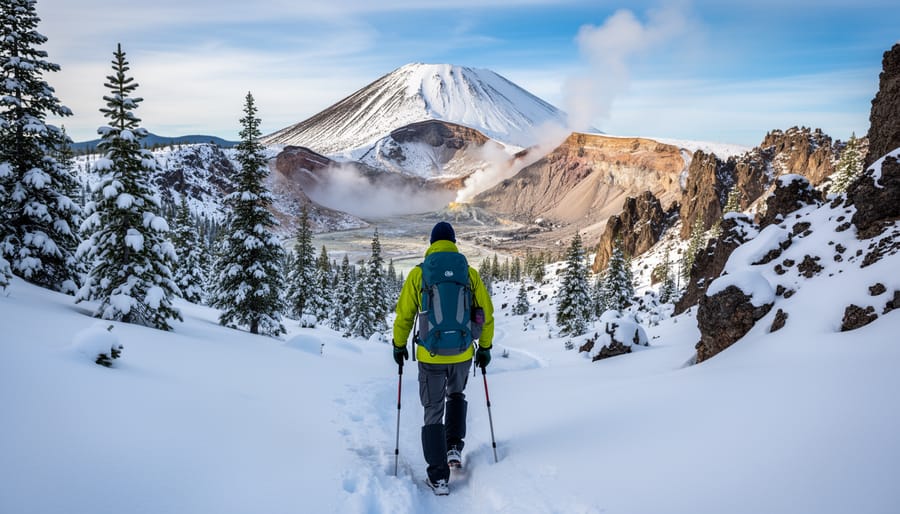
Lassen Volcanic National Park transforms into a winter wonderland when snow blankets its volcanic peaks, hydrothermal areas, and conifer forests. While the main park road closes seasonally (typically November through May, depending on snow), this 10,457-foot volcanic landscape offers exceptional opportunities for winter hikers and snowshoers willing to explore the accessible southern reaches of the park.
The Southwest Entrance and Kohm Yah-mah-nee Visitor Center remain open year-round, serving as the primary winter access point. From here, the 1.4-mile Sulphur Works Trail stays accessible through much of winter, offering views of steaming fumaroles and mudpots that create dramatic contrasts against snow-covered ground. When snow depth allows, this transforms into an excellent beginner snowshoe route with minimal elevation gain.
The transition between traditional hiking and snow sports at Lassen depends on elevation and recent weather. Early winter and late spring often provide ideal conditions for hiking with traction devices at lower elevations, while mid-winter typically requires snowshoes above 6,000 feet. The park’s southern trails near the visitor center can sometimes be hiked in sturdy boots with microspikes when snow is packed or limited.
For more adventurous winter visitors, ranger-led snowshoe walks launch from the visitor center on winter weekends, covering volcanic geology and winter ecology. The unplowed section of the main park road also becomes a popular route for experienced winter travelers exploring toward Bumpass Hell and beyond, though this requires proper navigation skills and avalanche awareness.
Check current conditions at the visitor center before venturing out, as weather can change rapidly in this volcanic terrain. Winter storms deposit significant snow, creating both opportunities and hazards that demand flexible planning and conservative decision-making.
Practical Information for Winter Hiking in California National Parks
Most California national parks remain accessible throughout winter, but conditions vary dramatically by elevation and location. Understanding the practical details, permits, fees, access constraints, and optimal timing, ensures you spend more time on trails and less time dealing with surprises at park gates.
Permits and Entry Fees
All seven parks charge entrance fees, typically $30-35 per vehicle for a seven-day pass, or you can use the America the Beautiful Annual Pass ($80, covering all national parks). Joshua Tree and Pinnacles accept payment at entrance stations year-round. Yosemite requires advance entry reservations during peak summer months, but winter visits rarely need reservations, check the park website before your trip to confirm current requirements.
Wilderness permits are required for overnight backcountry trips in Yosemite, Sequoia & Kings Canyon, and the Redwoods. Day hiking on established trails generally requires no additional permits beyond park entry, though some trail quotas may apply even in winter. Channel Islands requires boat reservations with authorized concessionaires; space is limited and books up weeks ahead even in cooler months.
| Park | Typical Winter Temps | Road/Trail Access | Entry Fee |
|---|---|---|---|
| Yosemite | Valley: 30-55°F | Valley roads open; Tioga Road closed | $35/vehicle |
| Sequoia & Kings Canyon | Foothills: 40-60°F | Some trails closed due to storm damage | $35/vehicle |
| Joshua Tree | Days 60°F, nights below freezing | Most roads and trails open | $30/vehicle |
| Pinnacles | 45-65°F | Both entrances accessible | $30/vehicle |
| Redwood | 40-55°F, frequent rain | Year-round access; wet conditions | Day use free |
Seasonal Road Closures and Access
Winter transforms park accessibility. In Yosemite, valley roads stay open, but Hetch Hetchy Road closes at sunset and during snow. High-elevation routes like Tioga Pass and Glacier Point Road shut down from first snow (usually November) until late May. Check Yosemite’s closure map before every visit for current road, trail, and campground status.
Sequoia & Kings Canyon face ongoing closures from 2023 storm damage and wildfire impacts. Check in at the visitor center nearest your planned trailhead for frontcountry trail updates. Tree hazards persist in burned areas. Lassen’s main park road typically closes mid-October through late May, limiting winter access to the southwest entrance and Kohm Yah-mah-nee Visitor Center area.
Timing Your Visit
December through February offers the quietest trails and smallest crowds, though weather is least predictable. January brings the wettest conditions to coastal parks and heaviest snowfall to higher elevations. Late February and March deliver more stable weather while maintaining winter’s solitude, ideal for most hikers. Arrive at trailheads by mid-morning to maximize daylight; winter days are short, and you’ll want to finish hikes well before dark.
Essential Winter Hiking Safety and Survival Tips
California’s variable winter conditions demand careful preparation and constant awareness. What works in Joshua Tree’s desert canyons won’t keep you safe in Yosemite’s snowy high country, so adapt your approach to each park’s elevation and forecast.
Start with proper layering. Base layers should wick moisture, mid-layers insulate even when damp, and your outer shell blocks wind and precipitation. Avoid cotton entirely. Pack extra layers beyond what you think you’ll need because temperatures drop fast once the sun dips behind ridges or clouds roll in. Understanding weather basics helps you read changing conditions before they become dangerous.
Check current conditions obsessively. Parks update closure maps and road status daily during winter, as storm damage and snowfall alter access without warning. In Yosemite, Hetch Hetchy Road closes when snow is forecast overnight, and valley conditions can shift within hours. Sequoia and Kings Canyon maintain specific trail closures due to wildfire damage and tree hazards in burned areas, so stop at the nearest visitor center for frontcountry trail updates before heading out.
At elevations above 8,000 feet, avalanche awareness becomes critical. Even in California’s milder winter climate, cornices and unstable snowpack form on north-facing slopes. If your route crosses avalanche terrain, carry proper gear and know how to use it, or stick to lower-elevation trails where snow accumulation stays minimal.
Your winter safety kit should include these essential items adapted for the season:
- Headlamp with extra batteries (cold drains power fast)
- Insulated water bottles or thermos to prevent freezing
- Fire starter and waterproof matches
- Emergency shelter and space blanket
- First aid kit with blister treatment and pain relievers
- Navigation tools: map, compass, and GPS with downloaded offline maps
- High-calorie snacks that won’t freeze solid
- Traction devices for icy trails
Cell service remains spotty to nonexistent in most backcountry areas, so never rely on your phone for emergency communication. Download offline maps before you leave, and tell someone your exact route and expected return time. Carry the standard survival items that let you shelter in place if weather forces you to wait out a storm.
Winter trails get slick on shaded sections where ice persists all day. Rocky sections that require scrambling safely in summer become treacherous when covered with frost or snow. Test each foothold and avoid exposure to steep dropoffs during icy conditions.
Stay flexible with your plans. If conditions deteriorate or a trail looks more technical than expected, turn back without hesitation. California’s national parks will still be there when conditions improve.
What to Pack for Winter Hiking in California National Parks
Winter packing for California’s national parks demands flexibility because you might encounter desert cold at Joshua Tree, rain in the Redwoods, or snow at Yosemite, sometimes on the same trip.
Start with a moisture-wicking base layer (synthetic or merino wool) that keeps sweat away from your skin, then add an insulating mid-layer like fleece or down, and finish with a waterproof, breathable shell jacket for wind and rain. Avoid cotton entirely; it holds moisture and loses all insulating value when wet. For lower body, quick-dry hiking pants work well in most parks, but bring waterproof pants or rain pants for the Redwoods and insulated layers if you’re heading to Yosemite Valley or Lassen.
Footwear choices depend on your destination. Sturdy, waterproof hiking boots with ankle support handle most winter trails, but if you’re hiking where snow is present, Yosemite Valley, Sequoia groves, or Lassen, carry microspikes or traction devices that slip over your boots for icy sections. Gaiters keep snow and debris out of your boots.
For navigation, bring a physical map and compass as backup since phone batteries drain faster in cold weather and cell service is limited or nonexistent in most parks. Pack a headlamp with fresh batteries (cold reduces battery life), a fully charged power bank, and the Ten Essentials adapted for winter: fire starter, first-aid kit, emergency shelter or space blanket, repair kit with duct tape, and a whistle.
Water considerations shift in winter, you still need plenty, but freezing is a real concern. Insulated bottles or bottles carried inside your pack prevent freezing. Energy-dense hiking snacks like nuts, jerky, and chocolate maintain energy levels when your body burns more calories staying warm.
Don’t skip sun protection. Snow and high elevations amplify UV exposure, so pack sunglasses, sunscreen (SPF 30+), and lip balm with SPF. A warm hat and gloves round out your kit, lightweight glove liners under waterproof shells offer versatility.
Local Tips for a Better Winter Hiking Experience
Start your hikes early in winter, especially at lower-elevation parks like Joshua Tree. You’ll catch soft morning light, avoid afternoon winds, and have trails largely to yourself. In Yosemite Valley, first light on Half Dome and El Capitan creates dramatic shadows that disappear by midday.
Weekdays transform the experience. Parks that see steady weekend traffic in winter become genuinely quiet Tuesday through Thursday. You’ll find parking at popular trailheads without circling, and you can actually hear the silence in places like the giant sequoia groves. If your schedule allows flexibility, skip Friday through Sunday entirely.
Winter light makes ordinary scenes extraordinary. The low sun angle between December and February creates long shadows and warm tones that last well into mid-morning and return by 3 p.m. Overcast days work beautifully in the redwoods, where diffused light brings out the deep greens without harsh contrasts. After storms, clear skies and fresh snow in higher parks like Yosemite produce some of the year’s best photography windows.
Gateway town accommodations drop significantly in winter. Towns near Sequoia, Yosemite, and Redwood parks often cut rates 30 to 50 percent from summer peaks, and you can book quality lodging days before arrival instead of months ahead. Camping inside parks becomes more available too, though facilities are limited and some campgrounds close entirely.
Connect with ranger programs when you can. Winter schedules are lighter than summer, but the programs that do run tend to be smaller and more interactive. Check bulletin boards at visitor centers for snowshoe walks, night sky programs, and weekend talks.
Combine parks on a winter road trip through the state. Sequoia to Death Valley makes a logical pairing, as does a coastal loop hitting Redwood and Point Reyes. Roads between parks stay clear at lower elevations, and you’ll cover more ground with less crowd stress than any other season allows.
Frequently Asked Questions
Do I need special permits for winter hiking?
Most day hikes in California’s national parks don’t require special permits during winter, though you’ll still need to pay the standard park entrance fee. Backcountry overnight trips typically require wilderness permits year-round, and some parks may have additional requirements for snow travel above certain elevations.
Are national parks crowded in winter?
Winter brings significantly fewer visitors to California’s national parks compared to summer, with the exception of holiday weekends. You’ll find the most solitude on weekdays, and even popular trails see a fraction of their peak-season traffic.
Can I camp in California national parks during winter?
Many campgrounds remain open with reduced services during winter, though some close entirely due to snow or seasonal maintenance. Reservations are generally easier to secure, and some campgrounds switch to first-come, first-served availability when demand drops.
What’s the best park for winter hiking beginners?
Joshua Tree offers the most accessible winter hiking for beginners, with well-marked desert trails, moderate daytime temperatures around 60°F, and minimal snow concerns at most elevations. The lower valley trails in Yosemite also provide beginner-friendly options with stunning scenery.
How do I know if trails are open?
Check each park’s official conditions page before your visit, as closures change frequently due to weather, snow, and maintenance. In Yosemite, view the map of current closures for roads, trails, campgrounds, and backcountry zones, while Sequoia and Kings Canyon visitors should check in at the visitor center closest to their intended trailhead for frontcountry trail updates.
Beyond these basics, winter hiking in California’s national parks requires adapting to variable conditions across different elevations and regions. What works for a desert trail in Joshua Tree differs completely from snow travel in Lassen or wet coastal hiking in the redwoods. Always carry the Ten Essentials regardless of how short your planned hike, since weather can shift rapidly even on clear winter days. Cell service remains limited or nonexistent in most park backcountry, so don’t rely on your phone for navigation or emergency communication.
California’s national parks transform into quieter, more intimate destinations during winter, offering hikers a chance to experience these iconic landscapes without the summer crowds and heat. Whether you’re walking beneath snow-dusted granite walls in Yosemite, exploring desert trails under cool Joshua Tree skies, or wandering among ancient redwoods in the coastal mist, winter reveals a side of these parks that many visitors never see.
The key to a successful winter hiking trip is preparation and flexibility. Always check current conditions before you head out, as road closures, trail access, and weather can change quickly across California’s diverse terrain. Visit park websites or stop at visitor centers for the latest information on what’s open and safe. Pack the Ten Essentials, dress in layers, and be ready to adjust your plans if conditions warrant.
Winter hiking in California’s national parks rewards those who venture out during the cooler months with solitude, dramatic seasonal beauty, and trails that would be uncomfortably hot or crowded in summer. Respect the weather, stay informed about changing conditions, and you’ll discover why winter is one of the best times to explore these protected landscapes. The parks are waiting, and they’re far less crowded than you might expect.