
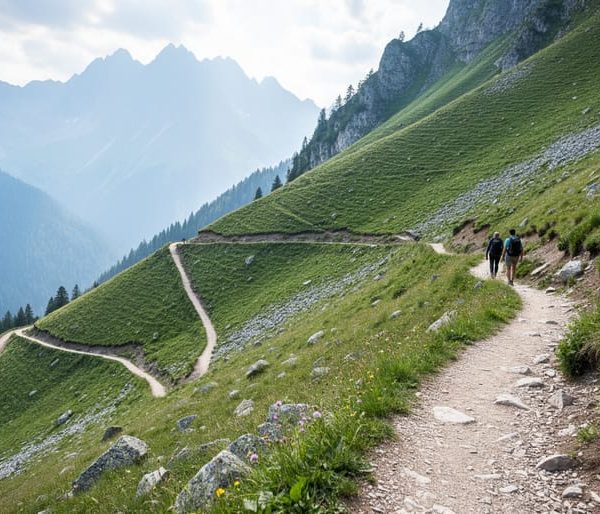
A switchback is a sharp reversal in trail direction that zigzags up or down steep terrain, cutting the grade into manageable segments rather than climbing straight up the fall line. If you’ve ever hiked in the mountains around Dillon and noticed the trail folding back on itself like a ribbon, you’ve encountered this essential piece of trail engineering.
Switchbacks exist for two critical reasons: they make steep climbs physically possible for hikers of all abilities, and they prevent the devastating erosion that would occur if water and foot traffic traveled straight down a slope. Trail builders from the U.S. Forest Service carefully design these zigzags to balance climbing efficiency with long-term sustainability, placing each turn at the optimal angle to shed water and distribute impact.
Despite their thoughtful design, switchbacks tempt hikers to cut corners. When the next segment of trail sits just a few feet above you, straight up the slope, the shortcut looks innocent. It’s not. Every boot that leaves the trail to bushwhack between switchbacks tears at soil and vegetation, creating scars that channel water and accelerate erosion. These shortcuts undo years of careful trail work in a single season.
Understanding how switchbacks function transforms them from frustrating detours into appreciated allies on the mountain. This guide explains the mechanics behind switchback design, why cutting them damages fragile alpine ecosystems, and how proper use fits into broader trail safety priorities for Colorado’s backcountry.
What a Switchback Means on the Trail
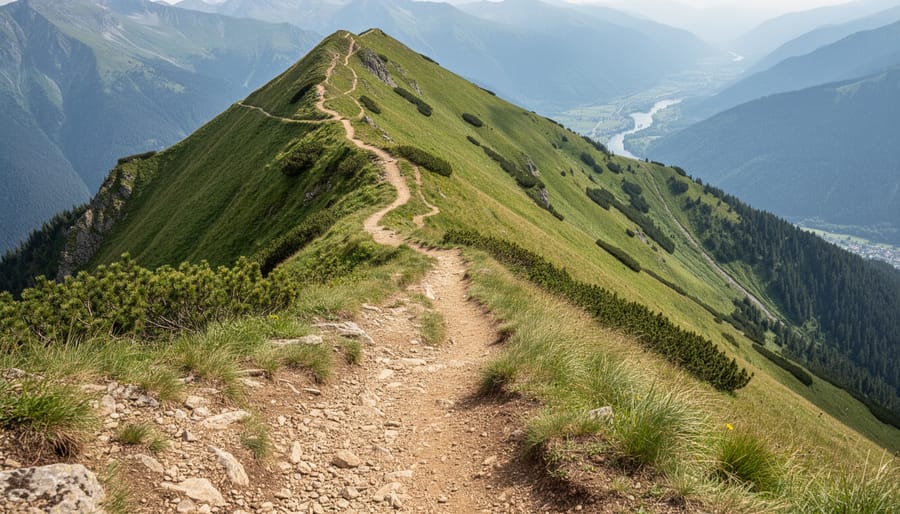
A switchback is a sharp, zigzagging turn built into a trail when the terrain gets steep. Picture hiking uphill and suddenly turning almost 180 degrees to continue climbing in the opposite direction, that’s a switchback doing its job.
When you’re on mountain trails, switchbacks appear as a series of angled segments that fold back on themselves rather than charging straight up the slope. The trail cuts horizontally across the mountainside, makes a tight turn at a relatively flat platform, then heads back the other way at a similar angle. From above, the pattern looks like a series of connected Zs climbing the hillside.
- Switchback
- A sharp directional turn where a trail reverses course to ascend or descend steep terrain at a manageable angle.
- Grade
- The steepness or incline of a trail section, typically measured as a percentage of vertical rise over horizontal distance.
- Trail Cut
- The physical path carved or constructed into a hillside by trail maintenance crews to create a stable walking surface.
- Elevation Gain
- The total vertical distance climbed during a hike, which switchbacks spread out over longer horizontal distances.
You’ll encounter switchbacks frequently on Colorado mountain trails where elevation changes quickly. The Dillon Reservoir hikes climbing toward higher peaks use switchbacks extensively to handle the region’s steep alpine terrain. Trail maintenance organizations like the U.S. Forest Service deliberately engineer these turns into the original trail design, cutting them at specific angles to balance hiker accessibility with erosion control. The tighter and more frequent the switchbacks, the steeper the underlying slope they’re conquering.
How Switchbacks Work on Steep Terrain
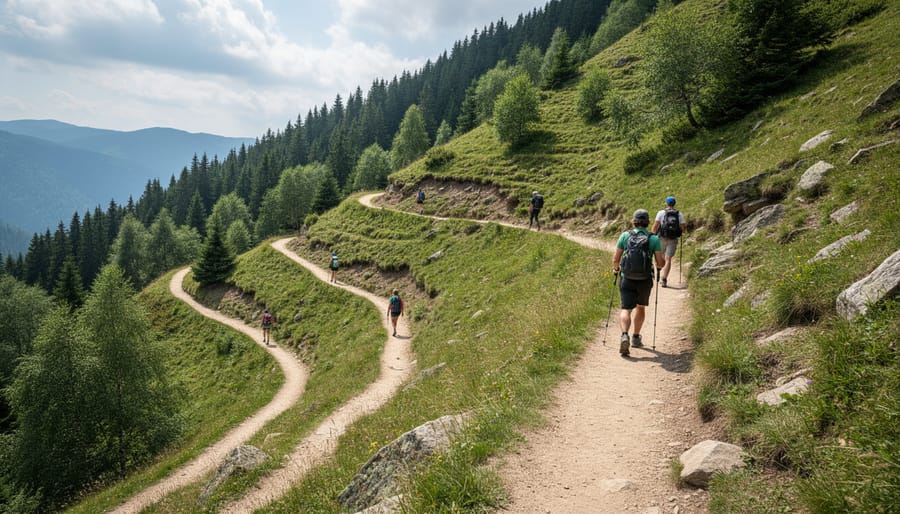
Picture a mountain face rising 1,000 feet straight up over a quarter-mile distance. A direct path would create a 75% grade, so steep you’d need both hands to scramble, and every step would dig into loose soil. Now imagine that same elevation gain spread over two miles of trail that zigzags back and forth across the slope. Suddenly you’re walking a manageable 10% grade, and that’s exactly how switchbacks work.
The engineering principle is straightforward: switchbacks trade distance for gentleness. Instead of pointing a trail straight uphill, designers fold it back on itself in a series of horizontal traverses connected by sharp turns. Each traverse segment climbs gradually at an angle across the slope face. When the trail reaches a turning point, it reverses direction and continues climbing from the opposite angle. This back-and-forth pattern extends the total trail length while keeping any single segment at a walkable pitch.
The grade reduction makes a massive difference in physical effort. A 10% grade means you gain one foot of elevation for every ten feet walked horizontally, challenging but sustainable for hours. A 30% direct climb gains one foot per three horizontal feet, forcing you to push hard against gravity with every step. Over a multi-hour mountain ascent, that extra strain compounds into exhausted legs and increased injury risk.
Beyond comfort, the physics favor switchbacks for stability. Gentler grades let hikers maintain normal walking mechanics instead of leaning forward and digging in with each step. Trail authorities like Parks Canada emphasize why hikers should stay on trail switchbacks rather than cutting between segments, the designed grade keeps foot traffic predictable and contained. When everyone follows the same gentle path, the trail bed stays intact and the surrounding slope remains undisturbed.
Why Trails Are Built with Switchbacks
Trail builders don’t add switchbacks randomly or because they like zigzag patterns. These engineered turns serve two critical purposes that determine whether a mountain trail remains accessible and intact for decades, or fails within a few seasons.
The most obvious benefit is making steep terrain physically hikable. When you climb a switchback trail, you’re spreading vertical elevation gain over a much longer horizontal distance. Instead of gasping your way straight up a punishing 40-degree slope, you’re walking a manageable 10- or 15-degree grade that loops back on itself. Your legs and lungs handle the climb without burning out halfway up, which matters especially at Colorado elevations where oxygen is already thin.
But erosion control drives switchback design just as much as hiker comfort. When trail maintenance crews from the U.S. Forest Service or Colorado Parks plan a new route, they’re thinking decades ahead about soil stability. A straight trail carved up a steep slope becomes a water channel the moment rain hits. Runoff accelerates downhill, carving deeper channels, washing away topsoil, and exposing roots and rocks that destabilize the entire path. Switchbacks interrupt that flow, dispersing water across the hillside instead of concentrating it in one destructive channel.
Modern trail design balances several goals:
- Reduced physical strain on hikers climbing steep grades
- Prevention of erosion by slowing and dispersing water runoff
- Protection of soil structure on vulnerable slopes
- Preservation of native plant life that stabilizes mountainsides
- Long-term trail sustainability requiring less maintenance
When switchbacks were originally built into trails around Dillon and across Colorado’s national forests, planners studied slope angles, soil composition, drainage patterns, and expected traffic levels. Each turn represents a calculated compromise between accessibility and environmental protection. That’s why well-designed switchbacks feel almost effortless to climb, they’re engineered to work with the terrain, not against it.
Different Types of Switchback Designs
Not all switchbacks look the same. Trail designers choose different configurations depending on what the mountain throws at them, how steep the slope is, what kind of soil they’re working with, and how many boots will pound the trail each season.
Hairpin switchbacks make the sharpest turns, often doubling back at close to 180 degrees. You’ll find these on the steepest terrain where there’s no room to spread things out. The trail flips direction in a tight arc, sometimes with the upper and lower segments running almost parallel just a few feet apart. These tight turns demand careful footing, especially when descending, but they let builders squeeze a trail up slopes that would otherwise be impossibly steep.
Gradual zigzags spread the turns over longer distances, creating gentler angles between segments. These work well on moderately steep terrain and handle heavy traffic better because the wider turns feel more natural to hike. You won’t feel like you’re constantly pivoting, the trail just flows back and forth up the mountain. Around Dillon, you’ll see this pattern on popular trails like the Peaks Trail, where designers balanced grade with distance to keep the climb steady without being punishing.
Terraced patterns combine short flat sections with the directional changes, creating natural rest spots built right into the switchback. The brief level stretches let you catch your breath before the next climb segment begins. Trail crews often terrace switchbacks on loose or sandy soil because the flat sections help slow water runoff and give vegetation a chance to anchor the trail edges.
The design you encounter reflects what the terrain demanded and what the trail could handle long-term.
The Temptation to Cut Switchbacks (and Why You Shouldn’t)
What Happens When Hikers Skip Switchbacks
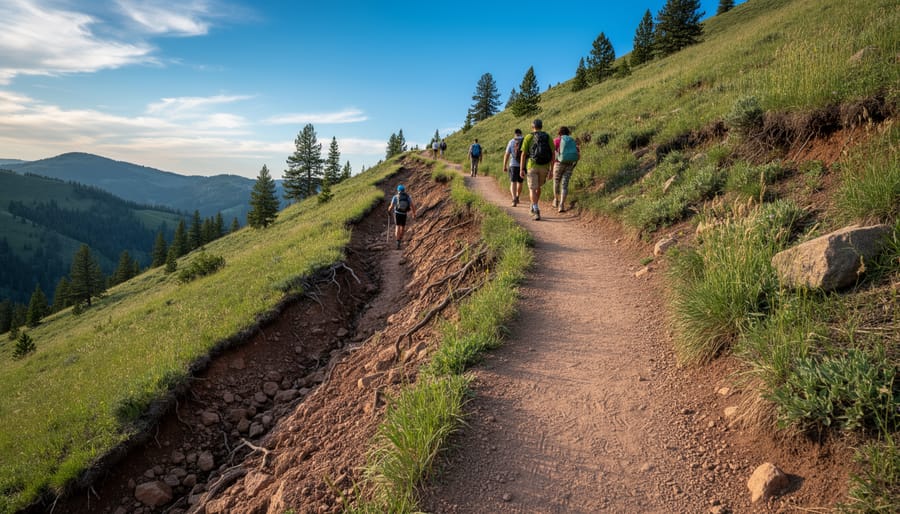
When you step off the designated trail to cut a switchback, your boot compresses and displaces the topsoil in seconds. That first footprint breaks the protective layer of vegetation and organic matter that holds the slope together. After a dozen hikers follow the same shortcut, you’ve created a bare channel of exposed earth. Without plant roots anchoring it, this soil becomes loose and unstable.
Rain hits that exposed dirt and immediately starts moving it downhill. What was once absorbed by vegetation now flows freely, carving deeper into the hillside with each storm. The short-cutting damages soil and plant life, creating scars that widen over time. A six-inch-wide bootpath becomes a two-foot gully within a season as water exploits the weakness.
These unofficial trails become susceptible to further erosion that compounds exponentially. Trail crews must then spend limited maintenance budgets repairing damage that a few impatient hikers caused. On popular Colorado trails near Dillon, you’ll see revegetation projects and barriers blocking old shortcut scars where the mountainside lost stability. The original switchback still works perfectly while the shortcuts require constant intervention.
Practical Switchback Etiquette for Hikers
Respecting switchbacks isn’t just about your own hike; it’s about preserving trails for everyone who comes after you. When you’re tackling nearby hiking trails around Dillon, following proper switchback etiquette protects the mountain terrain and keeps routes safe and accessible.
The golden rule is simple: stay on the trail. Even when the next segment is tantalizingly visible just a few yards uphill, resist the urge to cut straight across. Trail authorities emphasize this in backcountry guidance because those unofficial shortcuts trigger erosion that can take years to repair.
Here are practical tips for switchback hiking:
- Stay on the marked trail even when shortcuts look tempting
- Watch your footing on sharp turns where loose gravel can shift
- Pace yourself on long switchback climbs rather than rushing and needing frequent breaks
- Yield to uphill hikers on narrow switchback segments since they have momentum
- Report damaged or confusing trail sections to local forest service offices
On crowded Colorado trails, yielding protocols matter. When two hikers meet on a tight switchback turn, the person heading uphill typically has right of way because stopping mid-climb is harder than pausing on a descent. Step to the inside of the turn when yielding, which gives the other hiker secure footing.
For pacing, break long switchback climbs into mental segments. Count turns instead of watching the summit, and adjust your speed so you can maintain steady breathing without gasping stops. Check weather basics before you head out, since wet or icy switchbacks demand extra caution on those sharp turns.
Common Questions About Hiking Switchbacks
Why are switchbacks used on trails?
Switchbacks are built into trails to make steep climbs easier and to minimize erosion. By folding the trail back horizontally, they spread the vertical elevation gain over a longer distance, reducing the grade and making the ascent manageable for hikers while protecting the soil.
What happens if you cut a switchback?
Cutting switchbacks damages both soil and plant life, making the area highly susceptible to erosion. Water runoff follows these unofficial paths, carving deeper scars into the mountainside and forcing trail crews to spend time and resources repairing damage that never should have occurred.
Are switchbacks harder or easier to hike?
Switchbacks make steep trails significantly easier by reducing the grade you climb at any given moment. While they add distance, the gentler slope means less strain on your legs and lungs compared to charging straight up a steep grade.
How do I find the trail when switchbacks are overgrown?
Look for cut logs, cleared vegetation, or worn tread indicating the maintained route. If you lose the trail, backtrack to the last clear section rather than pushing forward and potentially creating new erosion paths.
These questions come up constantly on Colorado trails, especially when hikers new to mountain terrain encounter their first long switchback climb. The visibility problem is real: you can often see the next segment of trail just a few feet away uphill, which makes the urge to cut across nearly irresistible. But those few feet of shortcut multiply across thousands of hikers each season, turning stable slopes into eroded gullies.
When switchbacks feel confusing or poorly marked, trust the established tread. Trail maintainers design these turns deliberately, accounting for soil type, water drainage, and long-term sustainability. If a switchback seems to double back unnecessarily or takes you farther from your destination, remember that the people who built it knew the terrain better than a quick glance can reveal. Stay on the designated path, and you’ll protect both the trail and your own hiking experience.
Next time you’re climbing a trail near Dillon and spot those zigzag turns cutting across the mountainside, you’ll know exactly what you’re looking at and why it matters. Switchbacks aren’t just random bends, they’re carefully engineered features that make steep terrain accessible while protecting the landscape from erosion. The trail builders who placed them weren’t making things harder for you; they were making the mountain climbable for everyone.
Your choices on the trail have consequences that ripple far beyond your hike. Every time you stay on the designated path instead of cutting a corner, you’re helping preserve that trail for future visitors. You’re preventing erosion, protecting alpine plants, and reducing the maintenance burden on stretched-thin trail crews. It’s a small effort with a big impact.
Colorado’s high country offers incredible hiking opportunities, but only if we treat the trails with respect. Appreciate the switchback design, take your time on the climb, and stick to the path. The mountains will reward you for it, and so will the hikers who follow in your footsteps.