
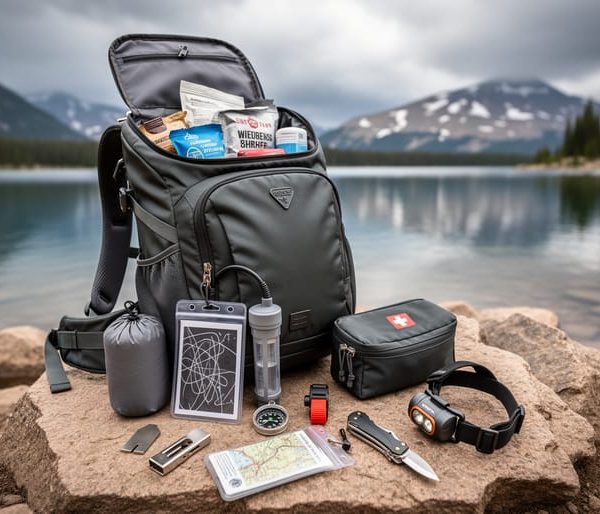
When you’re hiking the high-altitude trails around Dillon or camping near one of Summit County’s pristine alpine lakes, the right survival gear can mean the difference between an uncomfortable night and a life-threatening emergency. The 10 items you absolutely need in your pack are a reliable fire starter, emergency shelter, water purification system, navigation tools, first aid kit, signaling device, cutting tool, illumination, insulation layers, and emergency food. These essentials directly support the four priorities that will keep you alive if things go wrong: shelter, water, fire, and signaling for rescue.
At elevations above 9,000 feet where Dillon sits, conditions change fast. A sunny July afternoon can turn into a dangerous hypothermia scenario within hours when thunderstorms roll in across the Continental Divide. I’ve watched temperatures drop 40 degrees in less than two hours, and I’ve helped lost hikers who assumed their phone GPS would be enough. The wilderness around Dillon is stunning, but it doesn’t forgive poor preparation.
This list isn’t about cramming your pack with every gadget from the outdoor store. Each item here serves multiple purposes and addresses specific threats you’ll face in Colorado’s backcountry: sudden weather shifts, navigation failures, injuries, and the very real possibility that a day hike turns into an unplanned overnight. Whether you’re heading out for a few hours on the Mesa Cortina Trail or planning a multi-day backpacking trip into the Eagles Nest Wilderness, these 10 items belong in your pack every single time.
Why These 10 Items Make the Difference
The items on this list earned their place through a straightforward test: would they genuinely save your life in the Colorado backcountry, and can you justify carrying the weight? Every ounce in your pack matters at altitude, so these ten items passed both the survival-impact threshold and the weight-to-utility calculation that experienced hikers use around Dillon. Unlike generic survival lists built for sea-level forests, this selection accounts for what actually threatens you in the Rockies: rapid temperature swings that can drop 40 degrees between afternoon and midnight, summer thunderstorms that roll in with fifteen minutes’ notice, and thin air that makes everything, starting fires, treating injuries, thinking clearly, harder than you expect.
Multi-functionality determined the final lineup. A ferro rod serves as both ignition and signal device. Paracord builds shelter, repairs gear, and secures splints. A quality knife handles food prep, cordage cutting, fire feathering, and first aid tasks. Each item addresses at least two of the four survival pillars, shelter, water, fire, and signaling, which you’ll recognize if you’ve read about the 3 essential items framework. That foundation applies everywhere, but Colorado’s specifics demand you go deeper: afternoon electrical storms mean waterproof fire-starting isn’t optional, alpine sun requires real sun protection even in September, and the Dillon Ranger District’s vast terrain makes signaling capability critical since cell coverage disappears a mile from any trailhead. These ten items together create redundancy where it counts and cover the real-world scenarios that strand people in Summit County wilderness.
The 10 Essential Survival Items
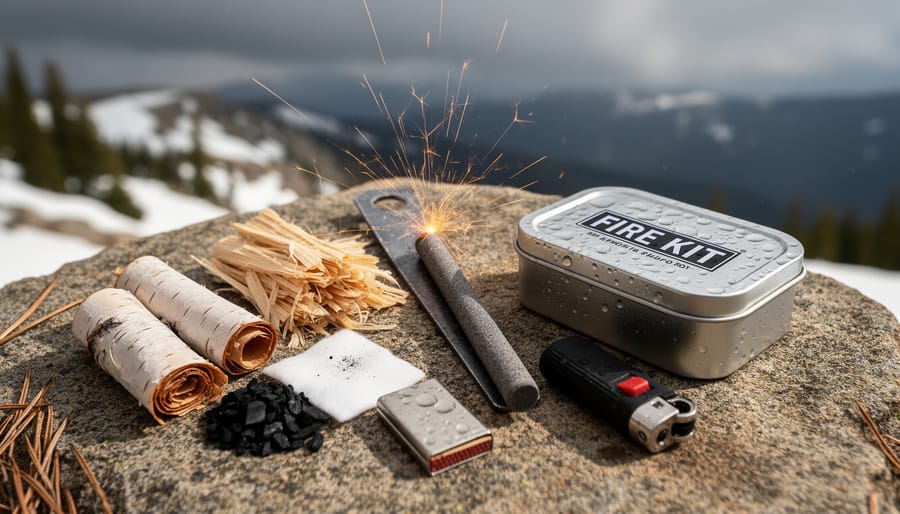
1. Fire Starter Kit (Waterproof Matches and Ferro Rod)
A fire starter kit tops the survival essentials for good reason, you can’t boil water, stay warm, or signal rescuers without reliable ignition. In Colorado’s high country around Dillon, afternoon thunderstorms roll in fast, soaking everything in minutes. That’s why you need two independent fire-starting methods, not just one.
Waterproof matches give you quick, easy ignition when conditions allow. Store them in a waterproof container (a pill bottle works great) and keep them accessible in your pack. But matches run out, and even “waterproof” versions can fail after repeated submersion.
That’s where a ferro rod becomes your backup hero. This magnesium-fire-steel combination works when wet, creates sparks at any temperature, and lasts for thousands of strikes. At 9,000+ feet elevation, the thinner air means tinder catches faster once you get a spark, a small advantage when your hands are cold and shaking.
Practice with both tools before you need them. Scrape your ferro rod at a 45-degree angle against the striker, aiming sparks directly at a small pile of dry tinder. In summer thunderstorms, birch bark and pine pitch stay relatively dry under tree cover. Carry a small ziplock of dryer lint or cotton balls soaked in petroleum jelly as foolproof starter material that ignites even when everything else is damp.
2. Emergency Shelter (Mylar Blanket or Bivy)
Emergency shelter isn’t optional in Colorado’s high country, it’s life insurance. A sudden afternoon storm can drop temperatures 30 degrees in minutes around Dillon, and hypothermia sets in fast at 9,000 feet when you’re wet and exposed.
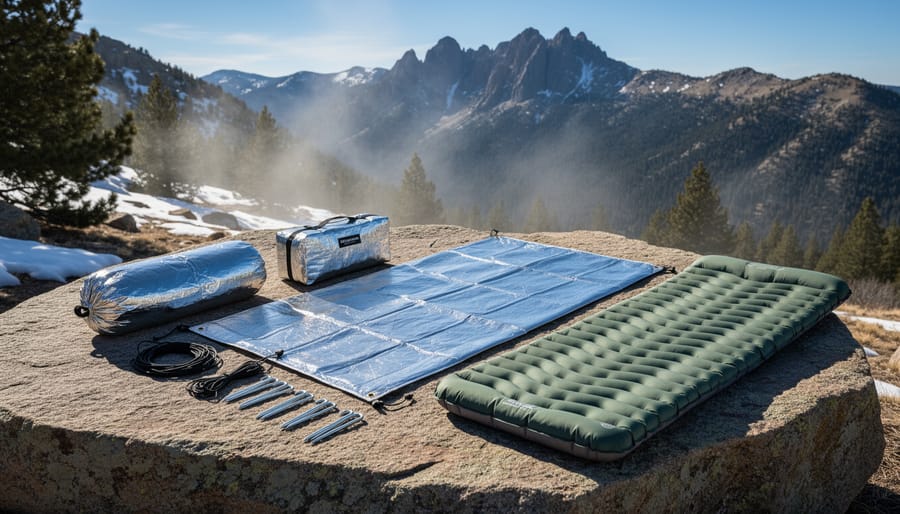
A mylar emergency blanket weighs two ounces but reflects 90% of your body heat. The crinkly space blanket you’ve seen in first aid kits works, but upgrade to a heavier-duty version that won’t tear the first time you spread it on rocky ground. Use it as a wind barrier, wrap yourself burrito-style, or string it between trees as an emergency lean-to. The reflective surface also doubles as a signal mirror in daylight.
For slightly more weight, an emergency bivy bag offers better protection. These sleeve-style shelters seal out wind and rain while trapping warmth. They’re easier to use than blankets when you’re cold and shaking, and they won’t blow away if you need to move around gathering firewood.
Pack both if space allows. The mylar blanket works as a ground insulator under a bivy, cutting heat loss from below, critical when September nights in the Dillon backcountry drop below freezing. Test your shelter at home so you know how to deploy it quickly when conditions deteriorate.
3. Water Purification Method
Water might look pristine in Colorado’s mountain streams, but it can harbor Giardia, Cryptosporidium, and bacteria that’ll ruin your trip, or worse, leave you dangerously dehydrated miles from help. Clean water is non-negotiable for wilderness survival, and having a reliable purification method ranks among your most critical survival items.
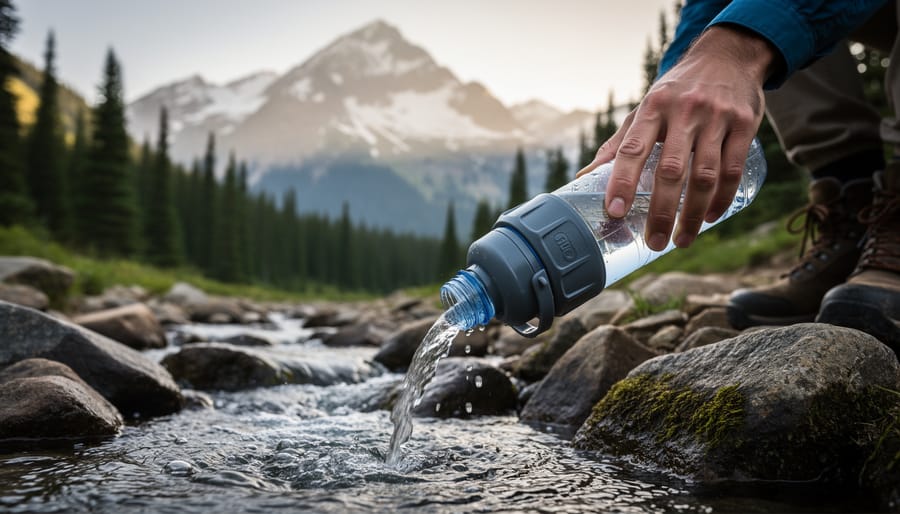
For Dillon Reservoir area camping, you’ve got two proven options: purification tablets and portable filters. Tablets (like Aquatabs or iodine-based options) are ultralight, foolproof in freezing temperatures, and work in any water clarity. They need 30 minutes to be effective, and some people dislike the taste. Filters give you instant drinkable water and handle the sediment common in runoff-fed alpine lakes around Dillon, but they can freeze and crack in cold weather or clog if the water’s particularly murky.
Carry both if weight allows. At minimum, pack chlorine dioxide tablets as your backup, they’re reliable at elevation, won’t fail mechanically, and weigh almost nothing. For day hikes, a filter straw covers most scenarios. On overnight trips in the backcountry, a pump or squeeze filter paired with tablet backup gives you redundancy when water sources matter most.
4. Navigation Tools (Map and Compass)
GPS devices fail. Batteries die in cold, screens crack on rocks, and satellites lose signal in narrow valleys, all common around Dillon’s steep, forested terrain. A paper map and baseplate compass don’t need power, can’t break from a drop, and work reliably at any elevation.
Carry a current USGS 7.5-minute topographic map of your area (Dillon, Frisco, or Copper Mountain quads cover most local trails). Learn to orient the map with your compass, identify terrain features like ridgelines and drainages, and triangulate your position using visible landmarks. This skill takes practice, but it’s the only navigation method guaranteed to work when everything else quits.
Colorado’s afternoon thunderstorms can roll in fast, turning a clear morning into zero-visibility conditions by noon. When you can’t see trail markers or recognize landmarks, knowing whether to go uphill or down, and which direction leads back to the trailhead, becomes critical. A compass gives you that directional certainty even in whiteout snow or dense fog.
Treat your phone’s map-and-compass or GPS as backup, not primary navigation. The analog tools work every time, and that reliability makes them non-negotiable survival gear for Colorado backcountry.
5. Signal Mirror and Whistle
A signal mirror can reach rescue teams up to 10 miles away on clear days, while a whistle carries sound farther than shouting without exhausting you. Together, they form your most reliable signaling system in Colorado’s backcountry.
The mirror works best above treeline where you have clear sightlines to potential rescuers. Around Dillon, areas like Officers Gulch or the slopes above Ptarmigan Peak offer the open terrain where reflected sunlight becomes a beacon. Aim for aircraft or distant search parties by creating a V with your fingers, placing the target in that V, then moving the mirror’s reflection across your hand until it hits the target.
In forested areas below treeline, your whistle becomes the primary tool. The internationally recognized distress signal is three sharp blasts, repeated at intervals. Sound carries differently through dense spruce and pine, so position yourself in clearings or near water where sound travels better. A pealess whistle won’t freeze or fail in wet conditions, crucial during Dillon’s afternoon thunderstorms.
Keep both items attached to your pack’s shoulder strap or around your neck. When you need them, fumbling through your pack wastes precious time and energy.
6. Multi-tool or Fixed Blade Knife
A knife or multi-tool earns its spot on any survival gear list through sheer versatility. You’ll reach for it constantly, carving tent stakes from green branches, shaving tinder for your fire starter, cutting paracord to precise lengths, opening blister packs in your first aid kit, or stripping wire on a broken backpack buckle.
For Colorado wilderness trips around Dillon, most experienced hikers carry both: a fixed blade knife (3-4 inch blade) and a compact multi-tool. The fixed blade handles heavy tasks like batoning wood or cutting through thick rope without fear of a folding mechanism failing. The multi-tool covers finer work, its pliers grip hot cookware, the scissors trim moleskin, and the screwdrivers tighten loose gear.
If you’re choosing just one, prioritize a full-tang fixed blade knife with a 4-inch carbon steel blade. It’s more reliable under stress than any folding option. Look for a handle that won’t slip when wet (common after handling melted snow for water) and a sheath that secures firmly to your belt or pack strap.
Keep the blade sharp. A dull knife forces you to apply dangerous pressure and limits what you can accomplish. Practice basic cuts at home, feathering sticks, notching wood, so the tool feels natural when conditions get rough.
7. First Aid Essentials
A compact first aid kit ranks among the most critical survival items because even minor injuries can become serious problems when you’re hours from help. In the Dillon area, you’ll face specific challenges: blisters from rocky trails, cuts from exposed alpine terrain, and altitude-related issues at 9,000+ feet elevation.
Your kit should prioritize these essentials: adhesive bandages in multiple sizes, sterile gauze pads, medical tape, and antiseptic wipes for treating cuts and scrapes. Include blister treatment supplies, moleskin or hydrocolloid bandages save hikes and prevent infection. Pack a triangle bandage that doubles as a sling, wrap, or tourniquet.
For altitude sickness, carry ibuprofen to address headaches and consider aspirin for more severe symptoms. Antihistamines handle insect stings and allergic reactions, which matter when you’re dealing with bees and wasps during Colorado’s summer months.
Add tweezers for splinter removal, safety pins for securing bandages, and a small tube of antibiotic ointment. Keep everything in a waterproof bag or container, moisture compromises sterile supplies. A pre-made wilderness first aid kit weighs around eight ounces and covers most scenarios, but customize it based on your group’s specific medical needs and any prescription medications required at elevation.
8. Cordage (Paracord)
Paracord ranks among the most versatile items you can carry into the Colorado backcountry. This lightweight cordage solves problems you didn’t know you had until you’re standing at 10,000 feet with a torn pack strap or needing to secure a tarp shelter against Dillon’s notorious afternoon winds.
Quality 550 paracord, the military-grade standard, gives you a working load of about 550 pounds and contains seven inner strands you can separate for fishing line, dental floss, or sewing thread. Fifty feet weighs roughly three ounces but handles everything from lashing tent stakes in rocky soil to creating a bear bag line over high branches. I’ve used mine to replace broken boot laces on trail, rig emergency gear repairs, and build debris shelters when weather turned unexpectedly.
Carry at least 50 feet for day trips and 100 feet for overnight adventures. The difference between cheap hardware store cord and genuine paracord becomes obvious the first time you need it, authentic 550 cord won’t stretch excessively or fray at cut ends when you’re working with cold fingers above treeline.
Wind it into a compact bundle or wear it as a survival bracelet. Either way, paracord earns its weight by turning “impossible to fix” situations into manageable problems when you’re miles from the nearest trailhead.
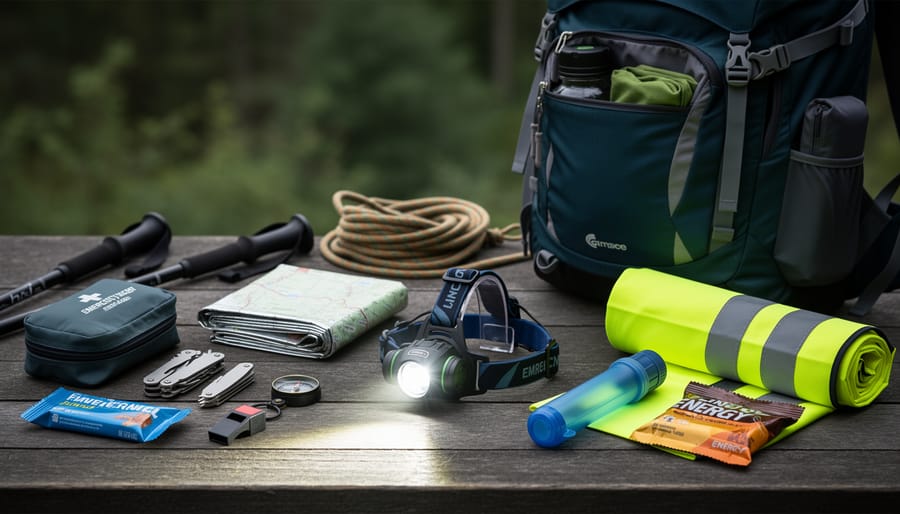
9. Headlamp with Extra Batteries
A headlamp beats a handheld flashlight every time when you’re setting up emergency shelter in the dark or navigating rocky terrain with both hands full. The hands-free design lets you build a fire, treat an injury, or read a map without juggling a light source, critical advantages when you’re dealing with an unexpected overnight in Colorado’s backcountry.
Look for a headlamp with at least 200 lumens output and multiple brightness settings. The red-light mode preserves your night vision and won’t blind camping neighbors if you need help. Around Dillon, where nighttime temperatures regularly drop 30-40 degrees from daytime highs even in summer, cold drains battery power fast. Lithium batteries outperform alkaline in freezing conditions, so pack extras in an inside pocket where your body heat keeps them warm.
Your backup batteries should stay in a waterproof container or sealed bag. Colorado’s afternoon thunderstorms don’t care about your electronics. Test your headlamp before every trip and replace batteries that show any sign of corrosion. The elastic strap should be adjustable enough to fit over a winter hat, you’ll appreciate that feature when you’re caught out after dark at 10,000 feet in October.
10. High-Energy Emergency Food
Emergency food isn’t about comfort, it’s about keeping your body functional when everything goes wrong. Pack calorie-dense options that won’t freeze solid, melt into mush, or crumble to dust in your pack during Colorado’s temperature swings.
Nut butters in squeeze packets deliver 180-200 calories per ounce and remain spreadable down to 20°F. Energy bars with minimal chocolate coating resist the freeze-thaw cycles common at Dillon’s elevation. Dried fruit provides quick sugar alongside fiber that slows digestion, preventing the crash that comes from pure glucose sources.
Plan 1,200 calories per unexpected day, half your normal intake but enough to maintain core temperature and decision-making capacity. That’s roughly three nut butter packets and four energy bars, weighing under eight ounces total. Rotate your stock every six months since oxidation degrades fats even in sealed packaging.
Skip freeze-dried meals unless you’re certain about water access. Dehydration compounds cold stress, and melting snow burns through fuel you might need for warmth. Test your emergency food on actual hikes before you need it. Some bars trigger nausea at altitude, and you won’t discover that pleasant fact while hypothermic at 11,000 feet.
Store everything in a waterproof stuff sack separate from your regular food. When fatigue clouds judgment, you want survival calories clearly marked and immediately accessible.
Packing and Organizing Your Survival Kit
The way you pack your survival items can make the difference between fumbling in a crisis and responding confidently. Organization isn’t just about neatness, it’s about access speed when your hands are cold and daylight is fading.
For day packs around Dillon’s trails, distribute weight strategically. Heavy items like your water bottle and multi-tool sit close to your spine, centered between your shoulder blades. Fire starters and your signal mirror belong in exterior pockets where you can grab them without unpacking everything. Keep your mylar blanket and first aid kit in the main compartment but near the top. I learned this the hard way on Buffalo Mountain when I needed moleskin for a blister and had to empty my entire pack to find it.
Waterproofing matters more at altitude than you’d expect. Even without rain, afternoon humidity and snowmelt crossings can soak gear. Use separate dry bags or ziplock freezer bags for fire starters, matches, and first aid supplies. Group items by category: one bag for fire, one for first aid, one for navigation. This system works whether you’re carrying a 20-liter day pack or a 65-liter backpacking setup.
- Keep fire starters in an outer pocket, never bury them deep
- Attach your whistle to your pack strap with a carabiner for instant access
- Store your headlamp where you can reach it in darkness
- Replace batteries and check expiration dates every spring
- Test your water purification method at home before hitting the trail
For overnight trips, the same ten items expand with duplicates and larger quantities, but the organizing principle stays identical. Accessibility trumps perfect weight distribution every time.
Putting It All Together: The Four Survival Pillars Recap
These 10 items aren’t a random collection of gear. They’re a carefully chosen system that addresses the four survival pillars: shelter, water, fire, and signaling. Your mylar blanket and multi-tool handle shelter construction. Water purification tablets and your knife keep you hydrated from Colorado mountain streams. The ferro rod and waterproof matches ensure you can start fire even after a thunderstorm rolls through. Your signal mirror and whistle get rescuers’ attention when you need help.
What separates prepared wilderness travelers from those who get into trouble isn’t just owning this equipment. It’s knowing how to use it before you’re cold, lost, and running low on daylight. Spend an afternoon practicing with your ferro rod. Build a shelter using your cordage and mylar blanket in your backyard. Learn to read your map and compass on a familiar trail before you’re navigating unfamiliar terrain in the Eagles Nest Wilderness.
The Dillon Ranger District office on La Bonte Street offers wilderness preparedness workshops throughout the season. They’ll review camping survival basics specific to our elevation and weather patterns. Your ten must-have survival items are your insurance policy for Colorado backcountry adventures, but only if you’ve practiced with them enough that using them becomes second nature.
Common Questions About Wilderness Survival Gear
Do I really need all 10 items for a day hike?
Yes. Weather can change in minutes around Dillon, and even experienced hikers get turned around. Carrying the full kit adds minimal weight but could save your life if you’re forced to spend an unplanned night out.
What survival items are most important in winter?
Fire starting tools and emergency shelter become critical. Cold drastically increases hypothermia risk, so prioritize items that create warmth and protect from wind. Add extra high-energy food since your body burns more calories maintaining temperature at altitude.
How much should I expect to spend on a complete survival kit?
You can assemble a solid kit for $75-150. Start with the shelter-water-fire essentials first, then add signaling and navigation tools. Quality matters more than brand names, a $15 ferro rod works just as well as expensive alternatives.
Can I substitute items to save weight?
Multi-functional items are smart, but don’t eliminate redundancy in critical categories. Carrying both waterproof matches and a ferro rod weighs ounces but provides backup if one system fails. Focus on eliminating duplicate non-essentials instead.
Should my survival gear change with seasons?
Absolutely. Summer requires more water purification capacity and sun protection, while winter demands better insulation and fire-starting redundancy. Review your kit every few months and adjust for conditions you’ll actually encounter on Colorado trails.
The weight question comes up constantly, but consider this: the complete 10-item kit typically weighs under three pounds. That’s less than a single water bottle. The real cost isn’t the extra ounces in your pack, it’s the risk of heading into the backcountry without them. Many newcomers to Dillon wilderness basics underestimate how quickly conditions shift at elevation, especially during spring and fall shoulder seasons.
Cost concerns are valid, but you don’t need premium gear for every item. A basic mylar blanket costs three dollars and performs the same core function as pricier bivy sacks. Invest in quality where it matters most, your knife, water filter, and headlamp, then fill gaps with budget-friendly options that still meet functional requirements.