
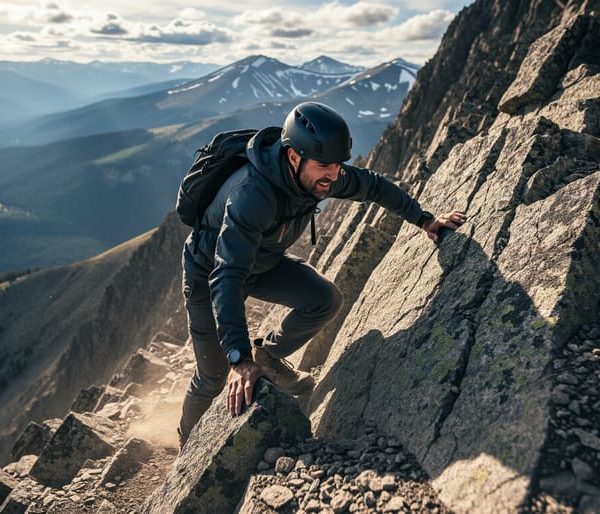
Scrambling is the middle ground between hiking and technical rock climbing: you’re moving over steep, rocky terrain where you need to use your hands for balance and progress, but you’re not roping up or relying on climbing gear. Think of it as uphill hiking that occasionally asks you to pull yourself over boulders, navigate rock slabs, or carefully pick your way through exposed ridgelines where a misstep could mean a serious fall.
If you’ve been exploring Colorado’s high country around Dillon, you’ve probably encountered scrambling terrain without realizing it. Those final few hundred feet to a summit where the trail dissolves into a boulder field? That’s scrambling. The exposed ridge on Ptarmigan Peak where you’re gripping handholds and testing each footstep? Scrambling again. It’s the kind of terrain that makes day hikers pause and wonder whether they should turn back, while experienced scramblers read the rock and push forward with confidence.
Understanding what scrambling actually involves matters because the stakes are higher than a standard trail hike. You’re operating in terrain where route-finding skills, weather awareness, and honest self-assessment can mean the difference between a rewarding summit and a dangerous situation. A summer afternoon thunderstorm in the Rockies transforms stable rock into slick, hazardous surfaces. Wind gusts on an exposed ridge can knock you off balance when you’re relying on three points of contact.
This article breaks down the core techniques you’ll need, the different classes of scrambling terrain you might encounter, the essential gear that keeps you safe, and the mountain awareness that separates confident scramblers from those taking unnecessary risks.
What Scrambling Means in Hiking
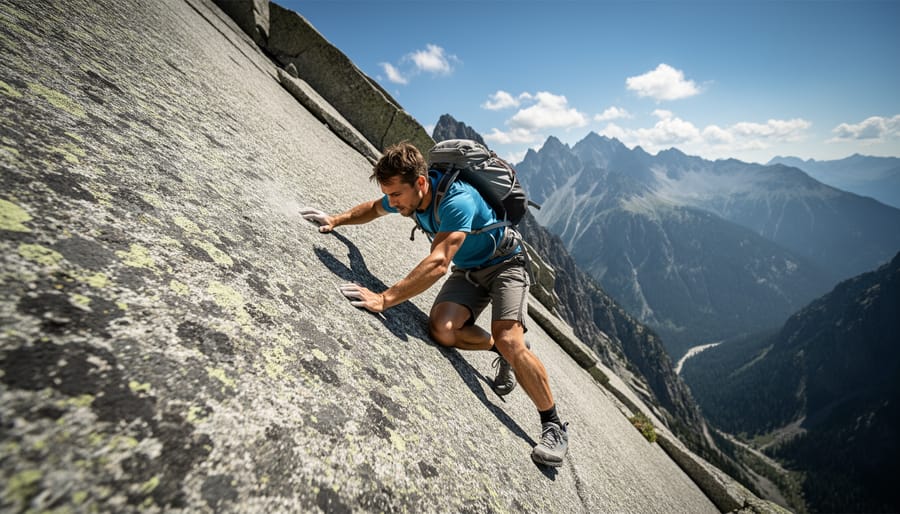
Scrambling sits in the middle ground between walking on a maintained trail and roped technical climbing. It’s the point where you can’t just put one foot in front of the other anymore. Your hands become essential for balance, grabbing holds, and pulling yourself upward over steep rock, boulders, or blocky terrain that lacks a clear path. Unlike hiking where trekking poles do the work, scrambling demands you engage directly with the mountain using all four limbs.
Think of mountain travel as a spectrum. At one end, you have flat trails through forests. Move up in difficulty and you hit steep trails with switchbacks, then rocky sections where you might occasionally steady yourself with a hand on a boulder. Scrambling begins when those occasional hand touches become continuous, when progress requires intentional use of your hands and feet together, choosing holds and testing stability as you go. At the far end of the spectrum lies technical climbing with ropes, harnesses, and protection.
- Scrambling
- Off-trail movement over steep, rocky terrain requiring hands and feet for balance and upward progress, falling between hiking and technical climbing.
- Class 2 Terrain
- Steep ground where hands are occasionally needed for balance but route-finding is straightforward and falls would likely result in bumps and bruises rather than serious injury.
- Class 3 Terrain
- Steeper scrambling where handholds are necessary for upward movement, exposure increases, and a fall could cause significant injury or death.
- Exposure
- The degree of consequence if you fall, determined by the steepness below you and the distance to the next landing, high exposure means serious injury potential.
- Three-Point Contact
- Maintaining three limbs securely placed on rock while moving the fourth, a fundamental safety principle in scrambling that prevents loss of balance.
The key distinction is commitment. On a hiking trail, you can zone out and let your legs carry you. Scrambling demands constant attention, decision-making, and physical engagement with variable terrain where every move matters.
How Scrambling Works: Techniques and Movement
Hand and Foot Placement
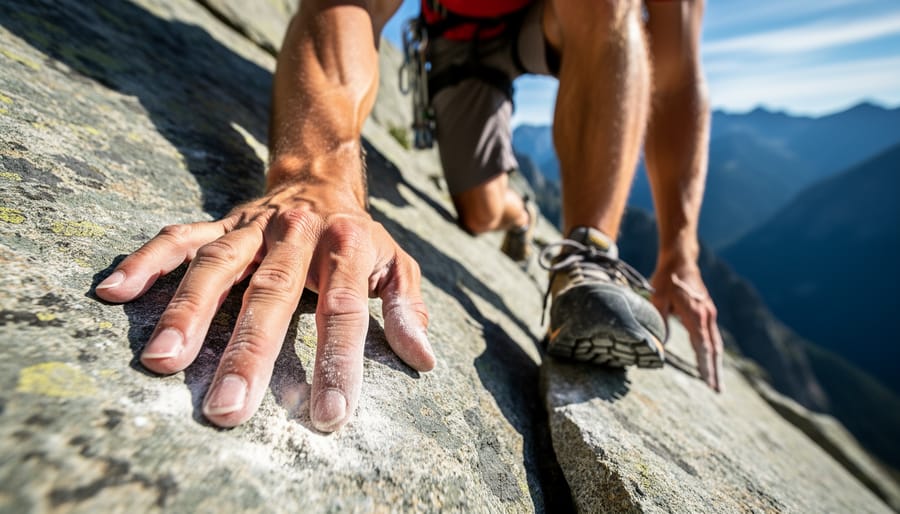
Solid hand and foot placement is the foundation of safe scrambling. Before committing weight to any hold, test it with a firm push or pull, loose rock can shift without warning, especially after freeze-thaw cycles in winter. Once you’ve identified stable holds, maintain three points of contact at all times: two feet and one hand, or two hands and one foot. This triangular base keeps you balanced and prevents overreliance on a single grip.
Weight distribution matters more than upper body strength. Keep your hips close to the rock and drive upward with your legs, using hands primarily for balance rather than pulling yourself up. This conserves energy and improves control. On low-angle slabs, trust friction: a flat palm pressed against smooth rock provides surprising stability when combined with proper foot placement.
Read the rock as you move. Look for features like cracks, edges, and textured surfaces that offer better purchase than smooth, polished areas. Shift weight deliberately and smoothly between holds rather than lunging or making sudden movements. In winter conditions, check every handhold for hidden ice or moisture that compromises grip.
Route-Finding on Scrambles
Route-finding on a scramble demands constant attention because there’s no trail to follow. You’re making decisions every few steps about where to go next, and a wrong choice can lead you into exposed terrain or force an exhausting backtrack.
Start by scanning 20 to 30 feet ahead, not just the next couple of moves. Look for natural lines where the rock forms a progression of stable ledges or where boulders create stepping-stone patterns. Experienced scramblers develop an eye for reading terrain, spotting where hand holds cluster together, where the angle eases, or where erosion has carved a manageable path through an otherwise vertical section.
In winter, snow completely changes route-finding. What looks like a gradual slope might hide ice underneath, and drifts can obscure crucial hand holds or the best line through a boulder field. Always have a mental picture of your descent route before committing upward. Scrambling down is harder than going up, and in deteriorating weather or fading light, you need a retreat plan that doesn’t require rappelling or technical skills you don’t have.
Managing Exposure and Risk
Exposure in scrambling means both physical danger, how far you’d fall, and psychological comfort with that danger. Learn to pause and assess: Is this move reversible? Can I downclimb what I just climbed? If you feel your breathing quicken or movements stiffen, you’re approaching your edge.
In California winters, ice transforms familiar scrambles into serious hazards. A patch of verglas, thin, invisible ice on rock, can turn a Class 3 move into a slide risk. Unstable snow bridges over gaps or frozen runoff streaks add hidden danger. If you’re testing holds with gloved hands and they feel slick, or if your boots aren’t biting, turn around. There’s no shame in retreat.
Set a personal rule: If you’re second-guessing a move, don’t make it. Descending safely matters more than any summit.
Different Types of Scrambling Terrain
Scrambling terrain varies widely depending on elevation, climate, and geological makeup. Each type presents unique challenges and demands specific techniques, making it essential to recognize what you’re getting into before you commit to a route.
Boulder fields dominate much of the alpine zone in both Colorado and California. These jumbles of angular, house-sized rocks require constant attention to balance and careful testing of each hold. Boulders can shift unexpectedly, especially after freeze-thaw cycles or snowmelt. Move deliberately, maintain three points of contact, and watch for gaps between rocks that can trap a foot or ankle.
Talus and scree slopes form when rock faces erode into loose fragments. Talus consists of larger, more stable chunks that shift underfoot but generally hold weight. Scree is finer, marble-sized stones that slide like ball bearings. Ascending scree feels like climbing a down escalator; descending requires a controlled glissade-style shuffle. Both demand strong ankles and a willingness to accept two steps forward, one step back.
Granite slabs are common in California’s Sierra Nevada and parts of Colorado’s high country. These smooth, angled rock faces rely on friction rather than distinct handholds. Your boot soles do most of the work. Stay low, keep your weight over your feet, and trust the rubber. Wet or icy slabs become dangerously slick, avoid them entirely in those conditions.
Snow scrambles add a seasonal dimension to many routes. Firm spring snow can provide straightforward passage over terrain that’s loose rock in summer. But snow obscures holds, conceals drop-offs, and introduces slip hazards. Winter scrambles in California often involve punching through a crust into softer snow beneath, which exhausts you quickly and makes route-finding harder.
Mixed terrain combines two or more of these elements on a single route. You might boulder-hop across a talus field, navigate a snowfield, then scramble up a granite headwall to reach a summit. Colorado’s Fourteeners frequently present mixed terrain, especially during shoulder seasons. The key challenge is adapting your technique on the fly as conditions shift every hundred yards.
Common scrambling terrain types include:
- Boulder fields: angular, unstable rock requiring balance and tested holds
- Granite slabs: smooth, friction-dependent surfaces best tackled dry
- Loose scree slopes: sliding gravel that makes ascent exhausting and descent tricky
- Snow-covered ridges: seasonal routes demanding crampons and ice-axe skills
- Alpine gullies: narrow chutes funneling rockfall and runoff
- Off-trail cross-country routes: vegetated or cliffy terrain without defined paths
Understanding these distinctions helps you anticipate what gear to carry, what pace to set, and when a route crosses from challenging into dangerous. The same peak can offer moderate scrambling in August and technical mixed climbing in February, so terrain type and season interact in ways that multiply risk if you’re unprepared.
When and Where You’ll Encounter Scrambling
Scrambling isn’t just an abstract skill, it shows up in specific, predictable situations where trails end and the mountain continues upward. Recognizing these scenarios ahead of time helps you prepare mentally and physically.
Peak bagging trips are the most common place you’ll encounter scrambling. Many summits in Colorado’s Tenmile Range near Dillon require short scrambles above treeline, and California’s Sierra peaks often demand sustained scrambling over granite slabs and boulder fields. The final push to a summit frequently leaves the established trail behind, replacing it with cairn-marked routes over talus or exposed ridgelines where you’ll need your hands.
Off-trail exploration naturally leads to scrambling terrain. When you leave maintained paths to reach alpine lakes, hidden basins, or remote campsites, you’re navigating the landscape on its own terms. Steep gullies, rocky outcrops, and stream crossings become obstacles requiring scrambling techniques rather than simple walking.
Winter route variations force scrambling even on summer hiking trails. Snow coverage can bury switchbacks, making direct ascents up scree slopes or rock ribs the safer option. What’s a gentle trail in July becomes a technical challenge in January when you’re working around cornices, ice patches, and unstable snow conditions.
Emergency detours occasionally demand scrambling when planned routes become impassable. A washed-out trail, unexpected rockfall, or dangerous snow bridge might require you to climb around the obstacle using terrain you didn’t plan to tackle.
Alpine approaches to climbing routes typically involve significant scrambling before the technical climbing even begins. Fourth-class approaches test your scrambling skills when you’re still fresh, preparing you for the mental demands ahead. Whether you’re heading up Quandary Peak or approaching a California winter route, expect scrambling to bridge the gap between trail and summit.
Essential Gear for Safe Scrambling
Your scrambling kit isn’t about carrying the lightest pack, it’s about bringing the right tools to survive in the wilderness when terrain demands hands-on movement. Start with footwear that grips rock: approach shoes with sticky rubber soles excel on dry scrambles, but in winter you need ankle-supporting boots that accommodate microspikes. Test your soles on wet rock before committing to steep terrain.
Gloves protect your hands from sharp edges and cold, but choose thin, dexterous models that let you feel holds. I keep a lightweight pair clipped to my pack and pull them on when grabbing icy or abrasive rock. Trekking poles help on the approach and during descent over scree, but they become liability on exposed scrambles where you need both hands free, stow them securely rather than dangling them from wrist straps.
Winter scrambling demands specific survival items you won’t shed even when moving fast:
- Approach shoes or boots with aggressive tread and edging capability
- Thin, protective gloves that preserve grip sensitivity
- Climbing helmet if scrambling near other parties or under rockfall zones
- Paper map and GPS device with extra batteries
- Microspikes or lightweight crampons for snow-covered rock
- Emergency bivy sack or space blanket
- First-aid kit including blister treatment and athletic tape
Navigation tools become critical when scrambles take you off marked trails. Carry both a waterproof map and a GPS or phone with downloaded maps, batteries die, but you still need to find your descent route. Pack an insulated jacket and emergency shelter even on short scrambles; getting cliffed out as temperatures drop turns inconvenience into crisis. A headlamp belongs in every scrambling pack regardless of your planned return time, because route-finding mistakes eat daylight faster than you expect.
Scrambling Safety in California Winters
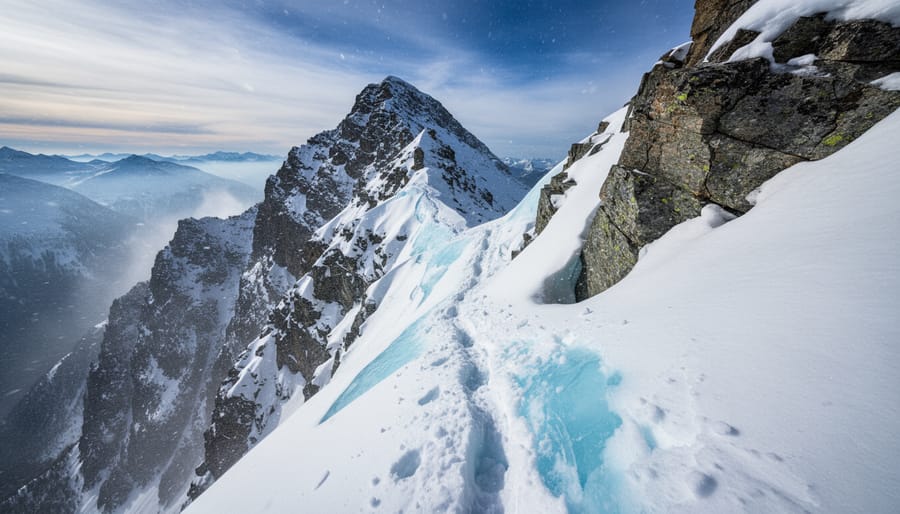
California’s winter mountains present scrambling hazards that demand different preparation than summer routes. Ice forms on north-facing rock faces where summer scrambles feel straightforward, turning solid holds into slick traps. What looks like stable snow can hide verglas, that thin, invisible ice layer that sends boots skating off holds without warning. Colorado scrambles share these winter challenges, but California’s coastal moisture creates freeze-thaw cycles that make conditions shift dramatically between morning and afternoon on the same route.
Avalanche terrain becomes your first concern when scrambling above treeline or across steep slopes. Gullies that offer easy summer scramble routes become natural avalanche paths in winter. Learn to recognize terrain traps, places where even a small slide can bury you, and give them wide berth. The life-saving backcountry priorities apply doubly in winter conditions where mistakes compound fast.
Shorter daylight means less margin for error. A route that takes three hours in July might take five in January when you’re testing every hold for ice and picking careful lines through snow patches. Start early, carry a headlamp with fresh batteries, and set a hard turnaround time based on when you need to be off exposed terrain, not when you reach the summit. Understanding weather basics becomes critical when afternoon storms can coat scramble routes in fresh snow within an hour.
Self-arrest skills matter whenever you’re moving across snow-covered slopes, even gentle ones. Practice with your ice axe before you need it. Traction devices, microspikes for moderate terrain, crampons for steeper ice, should live in your pack on every winter scramble. Pack extra layers and high-calorie hiking snacks because cold burns energy fast and weather can pin you down unexpectedly.
Common Questions About Scrambling
Do I need a rope for scrambling?
Most scrambles don’t require a rope, if you’re considering one, the terrain has likely crossed into technical climbing. Scrambling sits in that zone where hands provide balance and upward progress but roped protection isn’t necessary.
What’s the difference between scrambling and bouldering?
Bouldering is a climbing discipline focused on short, difficult rock problems close to the ground. Scrambling involves covering distance over variable terrain where hand use is intermittent and the goal is reaching a destination, not solving a specific move sequence.
Can I scramble alone safely?
Solo scrambling multiplies consequences, a twisted ankle or stuck position becomes a serious emergency without help. If you go alone, stick to easier terrain you’ve done before, tell someone your route and return time, and carry a communication device.
Is scrambling harder in winter?
Yes, significantly. Snow and ice hide holds, reduce friction, increase exposure to weather, and make route-finding harder. Winter scrambles demand more experience, appropriate traction devices, and conservative decision-making about when to turn around.
New scramblers often wonder how to build these skills without jumping straight into risky situations. Start on popular Class 2 scrambles during summer where other hikers are around and the terrain is forgiving. Practice deliberate hand and foot placement on easier sections, paying attention to balance and body position rather than rushing upward. Many climbing gyms offer bouldering areas where you can develop grip strength and movement awareness in a controlled setting, though gym climbing won’t replicate outdoor route-finding or loose rock.
Progression matters more than speed. Pick scrambles slightly outside your comfort zone, not wildly beyond it. If you feel panicked or frozen, the terrain is too hard for your current skill level. Back off, try something easier, and build confidence through repetition. Winter conditions reset this learning curve, even experienced summer scramblers should approach icy or snow-covered rock with the caution of a beginner until they’ve practiced self-arrest and understand how cold changes rock friction and their own movement.
Scrambling sits at the sweet spot between trail hiking and technical climbing, giving you access to terrain that would otherwise stay out of reach. It’s a skill worth developing, especially if you’re planning winter trips to California’s mountains or tackling exposed ridgelines around Colorado’s high country. The ability to move confidently over steep, rocky ground, whether you’re navigating a snow-covered slope or picking your way across a talus field above tree line, opens up a world of routes and summits that casual hikers never see.
Start small. Practice on low-angle scrambles close to established trails before committing to exposed routes or winter conditions. Build your comfort with hand and foot placement, route-finding, and recognizing when terrain exceeds your current ability. Every scramble teaches you something about rock quality, your balance, and your decision-making under pressure.
Winter scrambling in California demands extra respect. Ice transforms familiar rock into a different challenge entirely, and short daylight hours leave little margin for hesitation or mistakes. The same principles apply back home in Dillon, late-season snow on rocky passes, early-winter ice on boulders, and the need to read terrain fast when weather rolls in.
Treat scrambling as an evolving skill, not a checklist item. The mountains reward patience, preparation, and the honesty to turn around when conditions don’t feel right. Master the basics, respect the environment, and you’ll find scrambling becomes one of the most rewarding tools in your outdoor skill set.