
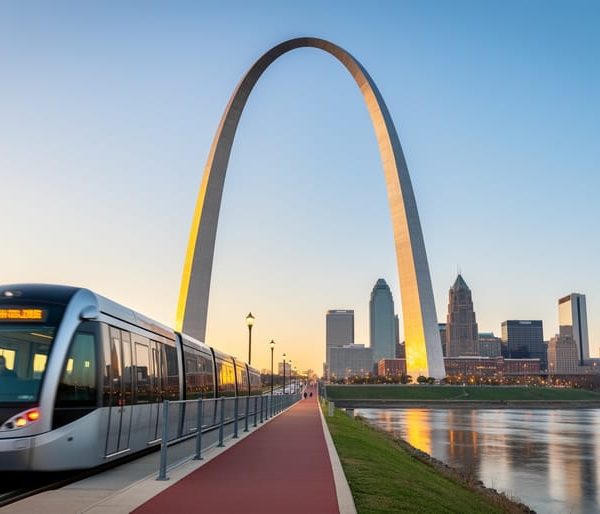
Gateway Arch National Park offers one of the most unique national park experiences in America: a 630-foot stainless steel monument rising from the heart of downtown St. Louis, accessible via tram ride, paired with a world-class museum and miles of Mississippi River trails. Unlike wilderness parks, this urban destination combines architectural wonder with American expansion history, making it perfect for families, road trippers, and outdoor enthusiasts looking to add a distinctive stop to their western adventures. The park grounds stay open from 5:00am to 11:00pm year-round, giving you flexibility whether you’re catching sunrise over the river or exploring after dinner downtown.
What sets this park apart is its dual nature. You’ll ride a unique tram system inside the arch’s legs to reach observation windows overlooking the Mississippi and the city skyline, then explore the Museum at the Gateway Arch underground where interactive exhibits trace the Lewis and Clark expedition and pioneer journeys. The riverfront itself provides five miles of trails connecting to historic courthouse grounds and modern St. Louis attractions. Tram tickets start at $15 for adults and $11 for children ages 3-15, with National Park Pass holders paying $12. The compact footprint means you can experience the main attractions in a half day, though many visitors spend longer soaking in the riverfront atmosphere and nearby Laclede’s Landing district.
Plan around seasonal crowds and weather. Summer brings heat and peak visitor numbers, while spring and fall offer comfortable temperatures for walking the grounds.
Why Gateway Arch National Park Is Worth the Visit
Gateway Arch National Park stands apart from the wilderness destinations that typically dominate national park conversations. This urban park offers something rare: a monument to American westward expansion that you can actually enter and experience from the inside. The 630-foot stainless steel arch isn’t just impressive from the ground, it invites you to ride a tram system to its peak for views spanning both the Mississippi River and the St. Louis skyline.
What makes this park worth your time is its layered experience. You’re not choosing between outdoor space and indoor learning; you get both. The underground museum traces the complex story of westward expansion through artifacts and interactive exhibits, while the 91-acre grounds above provide riverside walking paths and open green space in the heart of the city. It’s a park you can visit in sneakers rather than hiking boots, yet still feel connected to America’s frontier history.
For outdoor enthusiasts accustomed to Colorado’s mountain parks, Gateway Arch offers a different kind of adventure, one that combines architectural achievement with historical depth. The arch itself represents an engineering feat that rivals natural wonders in its own way. You’ll encounter families, history buffs, and architecture fans alongside traditional park visitors, creating an unusually diverse crowd.
The park proves accessible year-round, with grounds open from 5:00am to 11:00pm daily. Whether you spend two hours or half a day here, you’ll leave with perspectives on American expansion that feel more tangible than any textbook could deliver. It’s a monument that doesn’t just commemorate history, it lets you stand inside it.
Top Areas and Attractions to Explore
1. The Gateway Arch Tram Ride
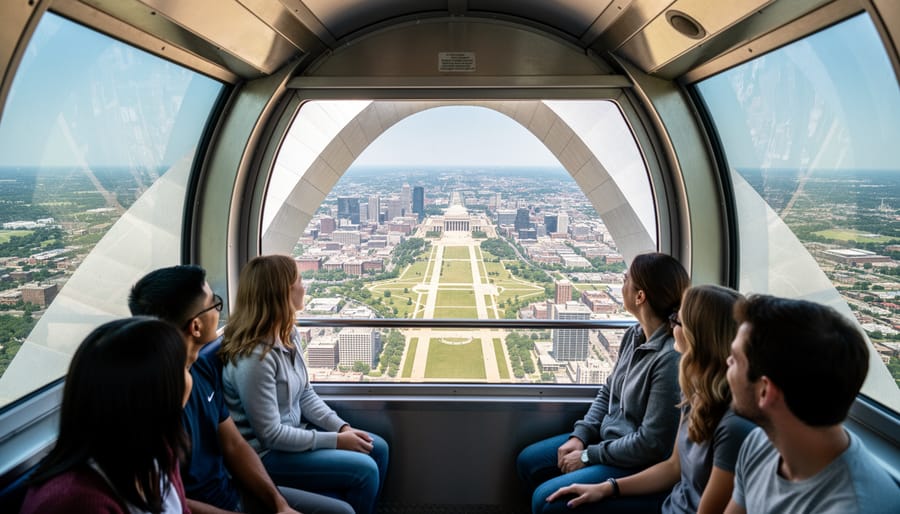
Stepping into a cramped, egg-shaped tram car feels awkward at first, but that five-person pod is your ride to the top of the 630-foot Gateway Arch. The four-minute journey travels inside the north or south leg of the monument, swaying slightly as the tram navigates the curved track upward. You’ll hear mechanical clicks and feel the tilt as the car adjusts to the Arch’s changing angle.
At the summit, windows stretch along each side of the observation deck, offering sweeping views of St. Louis to the west and the Mississippi River to the east. On clear days, you can see up to 30 miles in each direction. The narrow platform holds about 160 visitors at a time, so space feels tight during peak hours, but the perspective makes it worthwhile. Watch barges drift down the river, spot Busch Stadium, or look straight down at the park grounds below.
Booking ahead matters. Tram tickets cost $15 for adults, $11 for kids ages three to 15, free for children under two, and $12 if you hold a National Park Pass. Summer weekends and holidays sell out days in advance, so reserve your time slot online before your trip. Walk-up availability exists on slower weekdays, but counting on it risks missing the park’s signature experience. The ride up, the views, and the architectural feat combine to make this the one thing you shouldn’t skip.
2. Museum at the Gateway Arch
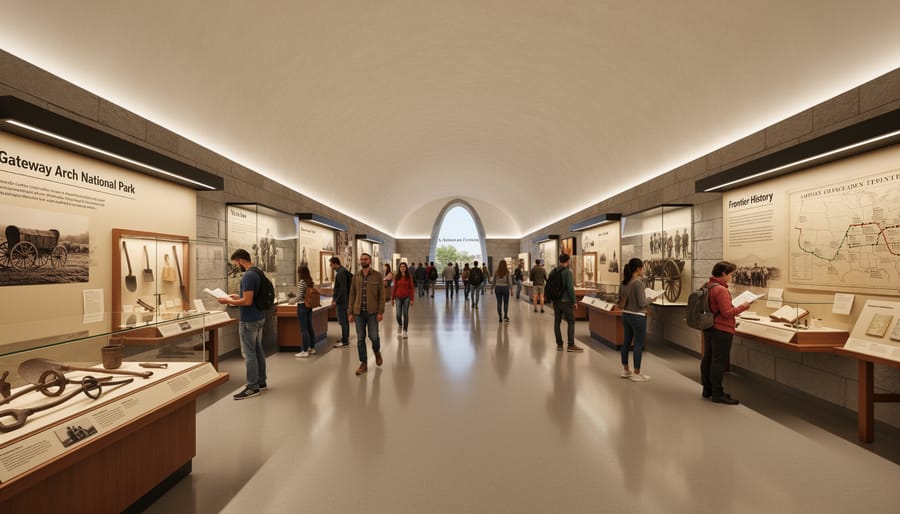
The Museum at the Gateway Arch sprawls beneath the monument’s legs in a modern underground space that reveals the human stories behind America’s westward expansion. You’ll spend 45 minutes to an hour exploring exhibits that bring the Lewis and Clark expedition to life alongside the experiences of pioneers, Native Americans, and the diverse communities who shaped the frontier.
Interactive displays let you pack a virtual wagon, compare trail provisions, and test your knowledge of expedition challenges. The museum doesn’t sugarcoat history, exhibits address the displacement of indigenous peoples and the complex realities of expansion alongside the adventure narratives. You’ll find authentic artifacts from the Corps of Discovery, including replica journals and period equipment that show what daily survival looked like on the trail.
Kids gravitate toward the hands-on stations where they can try on replica frontier clothing and examine fur trading goods. The museum’s theater screens a documentary about the Arch’s construction, revealing how engineers solved the puzzle of building a 630-foot stainless steel curve in the 1960s.
Plan your museum visit before or after your tram ride, the ticket booth sits right at the entrance, and you can access exhibits without a separate fee once you’re inside the park. The underground design keeps the space cool year-round, a welcome break during St. Louis summers.
3. The Arch Grounds and Riverfront
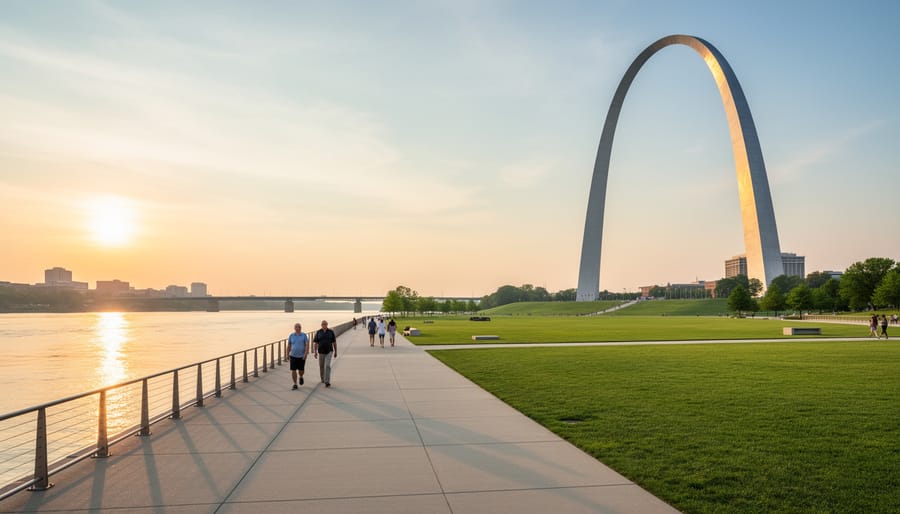
The 91 acres of park grounds surrounding the Arch transform an urban setting into an inviting green space where you can stretch your legs, spread out a picnic blanket, or simply sit and watch the Mississippi River flow past. Wide pathways crisscross the lawn from the Arch’s base toward the riverfront, offering multiple angles for photos and a quieter contrast to the museum and tram experience.
Head toward the eastern edge of the grounds to stand at the riverfront overlook, where you can see barges moving upstream and the Illinois shore across the water. The view shifts dramatically depending on where you position yourself, directly beneath the Arch’s legs, looking up through the span, or standing back on the lawn to frame the monument against the sky. Early morning and late afternoon light create the sharpest contrasts for photography.
Families gravitate to these grounds for the open space and easy walking. Kids can burn energy on the grass while adults take in the views without navigating crowds or indoor exhibits. Benches dot the paths if you need a break. The grounds stay open from 5:00am to 11:00pm year-round, so you can visit before or after the tram and museum if you want to experience the park at a less hectic pace.
4. Old Courthouse
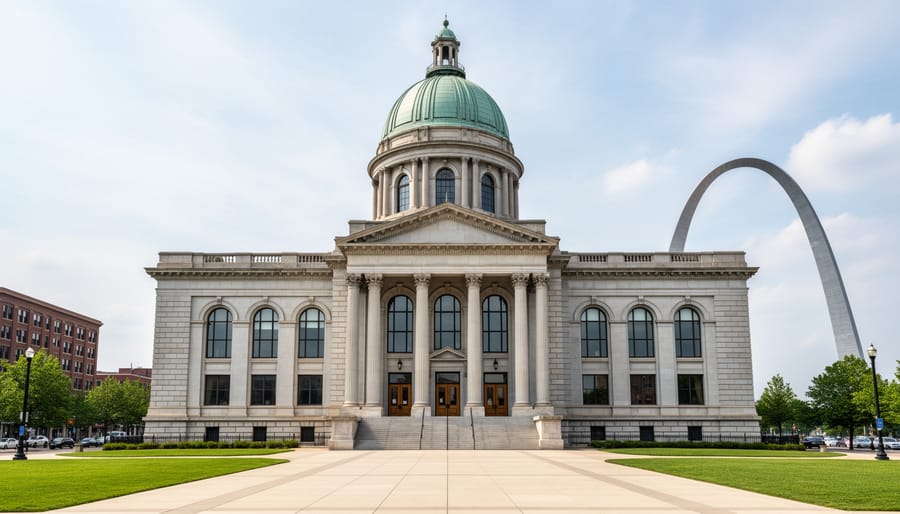
The Old Courthouse stands as one of the most historically significant buildings in American civil rights history, making it an essential stop during your park visit. This Greek Revival structure, completed in 1862, hosted the initial trials of Dred Scott’s freedom suit in the 1840s and 1850s, legal proceedings that eventually reached the Supreme Court and intensified the national divide over slavery. The building’s role in these landmark cases adds profound weight to what might otherwise be just another 19th-century courthouse.
Entry to the Old Courthouse is free, and ranger-led tours provide context you won’t get from simply walking through on your own. The building features a cast-iron dome that was cutting-edge engineering for its time, and the restored courtrooms let you stand where history unfolded. Exhibits on multiple floors detail westward expansion, St. Louis’s role as the “Gateway to the West,” and the legal battles fought within these walls.
The courthouse sits just two blocks west of the Arch grounds, making it an easy addition to your visit without backtracking. Plan for 45 minutes to an hour if you take a guided tour, the rangers’ storytelling brings the constitutional struggles and frontier justice system to life in ways that static exhibits cannot match.
5. Riverboat Cruises at the Gateway Arch Riverfront
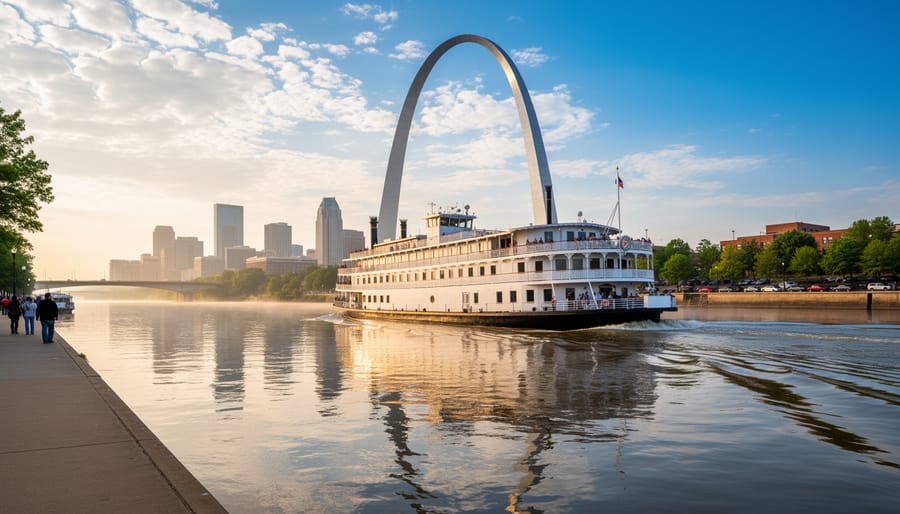
Stepping off the Arch grounds and onto a paddle wheeler gives you a different angle on St. Louis history. The riverboat cruises that dock near the Gateway Arch aren’t technically part of the national park, but they’re worth considering if you want to see the monument from the Mississippi River and understand why this spot became such a crucial gateway to the West.
Most cruises run between late March and early November, with operations pausing during winter months when the river gets rough. You’ll typically find hour-long sightseeing cruises that narrate the city’s riverfront story, including how the Arch site once teemed with warehouses and steamboats. Some operators offer lunch or dinner cruises that stretch to two hours, combining meal service with views of the Arch against the St. Louis skyline.
The boats depart from the Riverfront area adjacent to the park grounds. Prices and schedules vary by operator and season, so check availability and book ahead during peak summer weekends. If you’re already spending a full day at the Arch, a cruise adds maybe an hour and a half to your itinerary, including boarding time.
From the water, the Arch’s scale becomes even more impressive. You’ll see how it anchors the entire riverfront and why early settlers recognized this spot as the natural staging point for westward expansion.
Practical Information for Your Visit
Park Hours and Seasonal Access
Park grounds open year-round from 5:00am to 11:00pm daily, giving you flexibility whether you’re an early riser hoping to catch sunrise over the Mississippi River or prefer evening photography. The outdoor areas maintain these hours regardless of season, though St. Louis weather varies dramatically, summer brings humid heat while winter can drop below freezing.
Indoor attractions operate on different schedules. The Gateway Arch tram and museum typically run from 8:00am to 10:00pm in summer, with shorter hours during winter months. The Old Courthouse, located blocks away from the main arch grounds, keeps weekday hours that differ from weekend availability. Check current schedules before your visit since operational hours shift seasonally, and holiday closures affect certain facilities but not the outdoor grounds. Peak season from May through September sees all attractions fully operational with extended hours, while winter reduces staffing without closing the park entirely.
Getting There and Parking
Gateway Arch National Park sits in downtown St. Louis, easily reached from the metro area and beyond. If you’re driving, the park is accessible via Interstate 70 or Interstate 64, with clear signage directing you to the downtown exits. From Lambert-St. Louis International Airport, it’s a 20-minute drive covering about 15 miles.
Parking near the park includes several options. The official Gateway Arch Parking Facility sits directly beneath the park grounds, accessed from Memorial Drive and Leonor K. Sullivan Boulevard. Expect to pay around $18 for up to three hours, with rates increasing for longer stays. Additional commercial lots and street parking exist within a few blocks, though availability varies during peak times.
Public transit offers a convenient alternative. The MetroLink light rail system connects the airport and surrounding suburbs to downtown, with the Laclede’s Landing station sitting just steps from the park entrance. Buses also serve the area, and ride-sharing services operate throughout St. Louis.
For visitors walking from nearby hotels or attractions along the riverfront, pedestrian access is straightforward, with clear pathways leading to the park grounds from multiple directions along the Mississippi River.
Ticket Prices and Reservations
Access to the Gateway Arch grounds is free, but experiencing the tram ride to the top requires tickets. Tram ticket prices and passes start at $15 for adults (16 and up), $11 for children ages 3-15, and free for infants 2 and under. If you hold a National Park Pass, you’ll pay $12 per tram ticket instead of the standard adult rate.
| Ticket Type | Age Group | Price |
|---|---|---|
| Adult | 16 and up | $15 |
| Child | 3-15 | $11 |
| Infant | 2 and under | Free |
| Pass Holder | 16 and up | $12 |
Reserve your tram tickets in advance, especially during summer weekends and holidays. Same-day tickets sell out quickly, and booking ahead guarantees your preferred time slot. The underground museum and outdoor grounds remain free to explore without a ticket, so you can still enjoy substantial parts of the park even if tram reservations aren’t available.
Best Times to Visit
Spring (April through May) and fall (September through October) deliver the most comfortable conditions at Gateway Arch National Park, with mild temperatures in the 60s and 70s and lower humidity than summer. These shoulder seasons also see smaller crowds, meaning shorter tram wait times and easier photo opportunities on the grounds.
Summer brings heat and humidity, expect temperatures in the upper 80s and 90s, but also extended daylight for evening visits when the grounds stay open until 11:00pm. Weekday mornings before 10am offer the best chance to avoid tour groups. Winter visits are surprisingly pleasant on sunny days, with temperatures often reaching the 40s and 50s, though the exposed grounds can feel biting when wind whips off the Mississippi River.
For photography, golden hour lighting (the first hour after the 5:00am opening or the hour before sunset) creates dramatic shots of the Arch. Overcast days actually work well for minimizing glare on the stainless steel structure. Just as you’d review weather basics for trips to Colorado’s mountains, checking St. Louis forecasts helps you pack appropriately, the urban heat island effect makes the city warmer than surrounding areas. Basic adventure weather planning applies here too: sunscreen in summer, layers in spring and fall, and waterproof gear during the region’s frequent spring storms.
Local Tips for Gateway Arch National Park
Savvy visitors can elevate their Gateway Arch experience with a few strategic moves that go beyond the basics. Start by booking your tram tickets online at least a week ahead, especially during summer months, the popular morning and sunset time slots sell out quickly, and showing up without reservations often means settling for less-than-ideal times or missing the ride entirely. If you’re driving from Colorado and planning an extended Midwest trip, consider your packing essentials for transitioning between mountain and urban parks, as you’ll need very different gear for this concrete landscape.
Here are proven tips to maximize your visit:
- Arrive at 5:00am when the grounds open for unobstructed Arch photos in soft morning light, before crowds and harsh midday sun
- Book the earliest available tram slot to avoid afternoon heat buildup in the capsules and longer security lines
- Wear comfortable walking shoes for the underground museum and riverfront paths, plan on covering at least a mile
- Bring layers even in summer, as the underground areas stay cool while the grounds get hot and exposed
- Combine your park visit with the City Museum or Forest Park, both within 15 minutes, to fill a full day
- Skip the on-site food options and walk three blocks west to Laclede’s Landing for better riverfront dining
Photography enthusiasts should know the west side of the Arch grounds offers the best unobstructed shots with the Mississippi River backdrop, while the Old Courthouse steps provide an elevated angle that captures both legs of the Arch. For families, the north lawn has open space for kids to run while you frame shots, making it easier than jockeying for position directly under the monument where crowds cluster.
Planning Your Trip from Colorado
Coming from Colorado’s high-alpine wilderness, Gateway Arch National Park will feel strikingly different. There’s no backcountry here, no elevation gain, and no need for layers or trail maps. Instead, you’ll find a manicured urban park where the “trail” is paved sidewalk and the summit requires a tram ticket rather than hiking boots.
This contrast is exactly what makes it worthwhile. When you plan your national park adventures from Dillon, Gateway Arch offers something the Rockies can’t: a dense concentration of American history and architectural achievement accessible in a single afternoon. The drive from Colorado takes roughly 12 hours via I-70, making it a natural stop on cross-country road trips.
Leave your hiking gear at home. Pack comfortable walking shoes for concrete surfaces, dress for humidity (a sharp change from Colorado’s dry air), and expect crowds even on weekdays. The park’s urban setting means excellent dining and lodging within walking distance, unlike the limited services at remote wilderness parks.
Gateway Arch ranks high among national parks by access thanks to its central location and airport proximity. For Colorado outdoor enthusiasts, it’s a reminder that “national park” encompasses more than mountain peaks, sometimes the adventure is architectural rather than alpine.
Frequently Asked Questions
Visitors typically have similar questions when planning their Gateway Arch National Park trip, and knowing the answers helps shape realistic expectations for this unique urban park experience.
How long should I plan to spend at Gateway Arch National Park?
Most visitors spend 2-4 hours to experience the tram ride, museum, and grounds. If you’re just walking the park and taking photos without going up in the arch, plan for 1-2 hours.
Is Gateway Arch National Park suitable for young children?
Yes, children of all ages can enjoy the park, though the tram ride has small enclosed pods that may not suit kids prone to claustrophobia. The museum and outdoor grounds work great for families, and children 2 and under ride the tram free.
Can I visit the park without buying tram tickets?
Absolutely. The park grounds are free and open from 5:00am to 11:00pm year-round, and you can explore the riverfront, take photos, and enjoy the outdoor space without purchasing tram tickets.
Is Gateway Arch National Park wheelchair accessible?
The grounds, museum, and visitor center are wheelchair accessible. The tram itself can accommodate folding wheelchairs, though the small pods and loading process require transferring from your wheelchair.
Many visitors combine their park trip with other downtown St. Louis attractions like the City Museum, Forest Park, or the Anheuser-Busch Brewery, all within a short drive. The park’s central location makes it easy to build a full day or weekend itinerary around your visit, whether you’re interested in more history, dining in the Soulard neighborhood, or catching a Cardinals game at nearby Busch Stadium.
Gateway Arch National Park stands apart from traditional wilderness destinations, proving that national parks can thrive in urban settings while delivering profound historical and cultural experiences. Whether you’re drawn to the architectural feat of the Arch itself, the rich frontier history explored in its museum, or simply the chance to walk riverfront paths with one of America’s most recognizable monuments overhead, this park rewards visitors with substance beyond its iconic silhouette.
For outdoor enthusiasts accustomed to Colorado’s mountain trails and remote campsites, this urban park offers a different but equally valuable dimension of American exploration. It connects the pioneering spirit of westward expansion to the adventure mindset we carry today, reminding us that discovery happens in cities as well as backcountry.
Plan your visit with advance tram reservations, comfortable walking shoes, and a few hours to absorb both the exhibits and the grounds. Gateway Arch National Park delivers accessibility without sacrificing meaning, making it an ideal addition to any cross-country journey or a worthy destination in its own right. The view from 630 feet above the Mississippi proves some adventures rise vertically.