
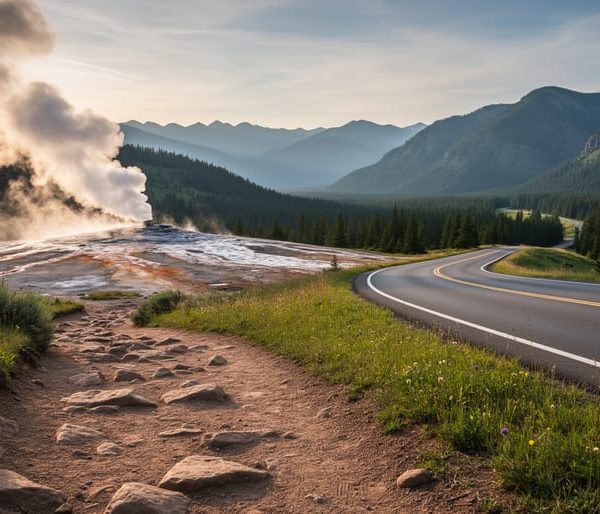
The United States is home to all 63 parks officially designated as national parks, each one protecting extraordinary landscapes from Yellowstone’s geothermal wonders to the remote wilderness of Gates of the Arctic in Alaska. This comprehensive list delivers exactly what you need: the complete roster of every national park, ranked guidance to help you choose your next adventure, and practical trip-planning tools that turn a simple list into a launchpad for unforgettable outdoor experiences.
Whether you’re a Colorado local eyeing Rocky Mountain and Great Sand Dunes for weekend escapes or plotting a cross-country park-hopping road trip, this guide goes beyond a raw inventory. You’ll find detailed breakdowns of the most adventure-ready parks, honest assessments of remote and specialized destinations that require extra planning, and essential logistics covering entrance passes, camping reservations, and safety considerations.
The challenge most park enthusiasts face isn’t finding a list, it’s deciding where to go first and understanding what each park actually offers. Some parks welcome millions of visitors annually with developed campgrounds and paved trails. Others demand backcountry skills, float plane access, and serious preparation. This ranked structure acknowledges both, giving you the information to match parks with your experience level, available time, and sense of adventure while ensuring you don’t miss hidden gems that might become your new favorites.
How We Ranked America’s National Parks
Ranking 63 national parks is not about declaring winners and losers, every park protects irreplaceable landscapes and offers distinct experiences. Instead, this ranking prioritizes the practical realities outdoor enthusiasts and camping families face when choosing their next adventure. We evaluated each park through the lens of someone loading gear into their vehicle, checking a national parks map and asking: which destination delivers the most rewarding experience for the effort invested?
Our methodology weighs six core factors that matter when you are actually planning a trip, not just browsing photos:
- Accessibility from major hubs, drive time, airport proximity, and road conditions that determine whether a park fits a weekend trip or requires a dedicated expedition
- Diversity of activities, variety of trails, camping environments, wildlife viewing opportunities, and water features that appeal to different skill levels and interests
- Family-friendliness, infrastructure like visitor centers, ranger programs, paved paths, and campgrounds that accommodate groups with children or varying abilities
- Weather and season length, parks with extended access windows and predictable conditions rank higher than those limited to brief summer openings or prone to extreme weather
- Facilities and infrastructure, developed campgrounds, reliable cell coverage zones, potable water access, and permit systems that simplify rather than complicate logistics
- Iconic landscape features, signature vistas, geological wonders, or ecosystems that define the park experience and justify the travel investment
Parks earning top spots excel across multiple criteria, offering the complete package for campers and hikers. Lower-ranked parks are not lesser destinations, many provide unmatched solitude and specialized ecosystems, but they demand more planning, specialized skills, or acceptance of logistical challenges. This perspective helps you match your available time, budget, and experience level with the right park for your next adventure.
Top-Tier National Parks: The Essential Eight
1. Yosemite National Park, California, Granite Cathedrals and Waterfall Majesty
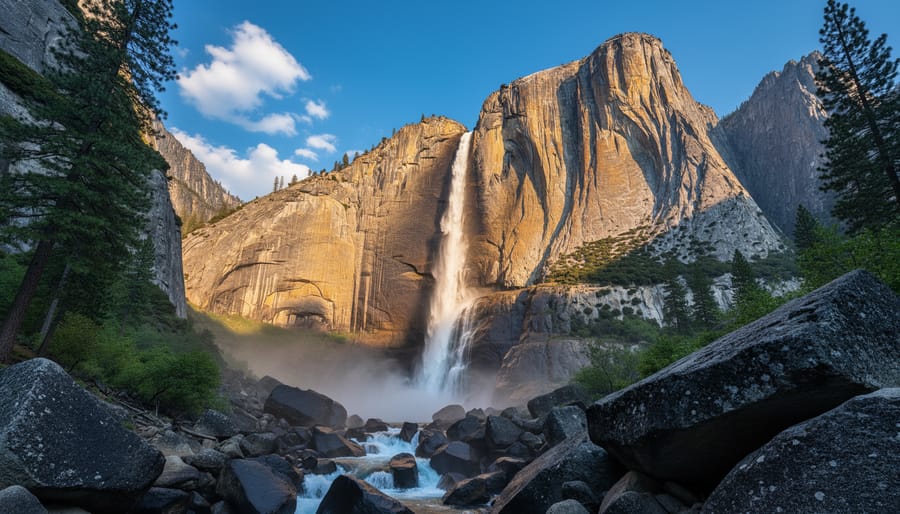
Yosemite claims the top spot for its unmatched combination of accessibility and jaw-dropping scenery. Designated in 1890 alongside Sequoia, this California icon delivers granite monoliths like El Capitan and Half Dome that tower thousands of feet above forested valleys, plus waterfalls, Yosemite Falls, Bridalveil Fall, Vernal Fall, that cascade year-round or surge spectacularly during spring snowmelt.
Unlike remote wilderness parks, Yosemite offers paved roads into the heart of the action, shuttle service through Yosemite Valley, and more than a dozen campgrounds ranging from RV-friendly sites to walk-in tent spots. Families can hike the easy Valley Loop or tackle the Mist Trail to Vernal Fall without serious backpacking gear, while experienced climbers find world-class granite routes.
The catch: crowds. Summer weekends pack the valley shoulder to shoulder. Visit mid-week or in shoulder seasons, late April through early June for waterfall peak, September through October for thinner crowds and fall colors. Reserve camping six months ahead through the park’s online system, or try first-come sites at Tamarack Flat and Yosemite Creek if you arrive early.
High-elevation zones demand preparation. Pack layers for sudden afternoon thunderstorms above 8,000 feet, carry extra water for dry stretches on exposed granite, and bring a headlamp, summer daylight stretches long, but trails take longer than maps suggest. Bears are active; use the provided lockers at every campsite without exception.
2. Rocky Mountain National Park, Colorado, Alpine Adventure in Your Backyard
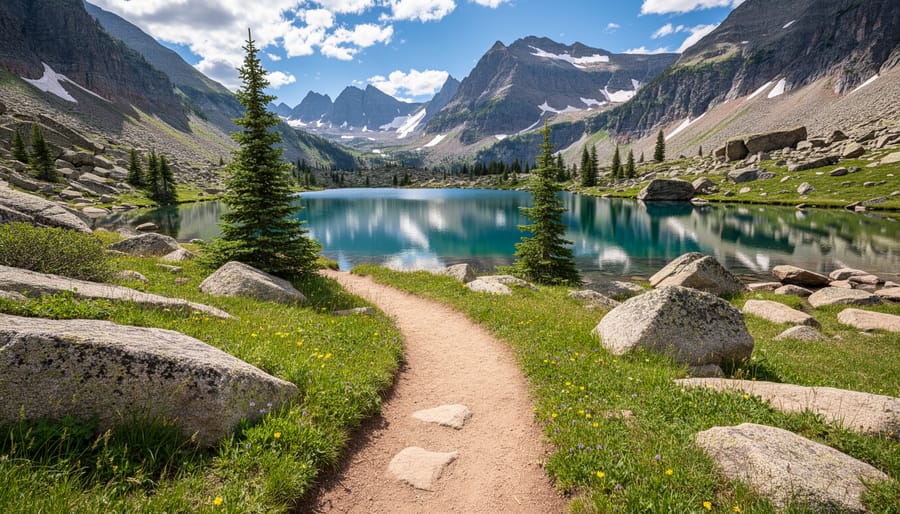
For Dillon locals and visitors, Rocky Mountain National Park sits practically on your doorstep, just 75 miles east, an easy 90-minute drive that transforms high desert into alpine tundra. This 415-square-mile wilderness offers over 350 miles of trails threading through subalpine forests, past turquoise lakes, and across windswept ridges above treeline where bighorn sheep graze unfazed by hikers.
Trail Ridge Road, the park’s crown jewel, climbs to 12,183 feet and delivers continuous views across the Continental Divide. Open roughly late May through mid-October (snow closes it in winter), this scenic highway provides access to high-country trailheads without a multi-day backpacking commitment. Elk herds congregate in Moraine Park and Horseshoe Park during fall rut, and marmots whistle from boulder fields along Flattop Mountain and Longs Peak routes.
Camping splits between developed sites like Moraine Park and Glacier Basin (reservable months ahead for summer) and backcountry zones requiring permits. Weather shifts fast at elevation, afternoon thunderstorms roll in with little warning from June through August, and temperatures can drop 30 degrees between midday sun and overnight frost even in July. Pack layers, rain gear, and extra insulation regardless of the morning forecast.
The park serves dual audiences seamlessly: families enjoy Bear Lake’s paved trail and short hikes to Emerald Lake, while experienced backpackers tackle the Longs Peak keyhole route or multi-day loops through Wild Basin. High altitude hits harder than visitors expect, hydrate aggressively, start early, and turn back if headaches or nausea set in.
3. Grand Canyon National Park, Arizona, The Ultimate Geological Wonder
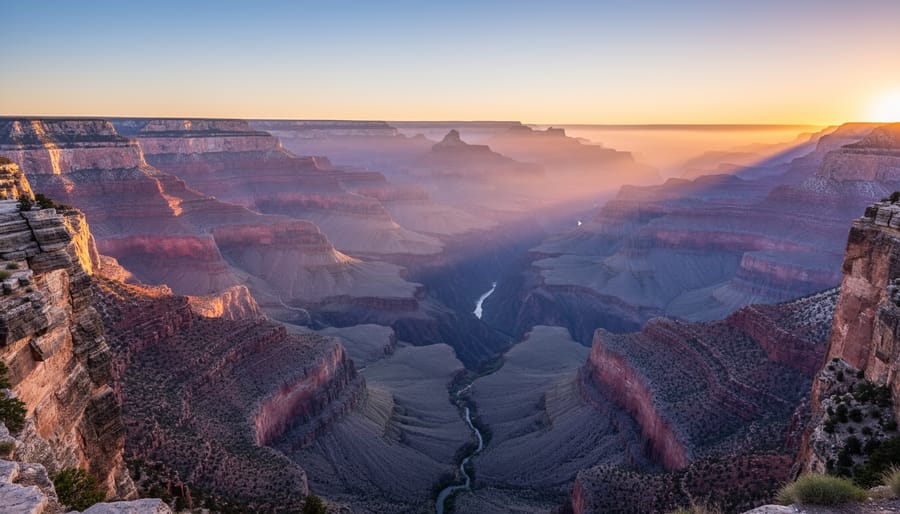
The Grand Canyon delivers a mile-deep chasm that redefines scale, standing at the rim, you’re looking at 277 miles of carved earth exposing nearly two billion years of geology. This park ranks third for good reason: it combines jaw-dropping vistas with a camping infrastructure that serves everyone from RV families to serious backpackers chasing multi-day rim-to-rim routes.
The South Rim stays open year-round and sits five hours from Phoenix, making it the accessible choice. Mather and Desert View campgrounds offer electric hookups and easy trail access, while Bright Angel and South Kaibab trails provide clearly marked descents for day hikers. The North Rim, 1,000 feet higher and reached via a 220-mile drive around the canyon, opens mid-May through mid-October and rewards visitors with cooler temperatures and thinner crowds, North Rim Campground books fast for good reason.
Backcountry permits unlock the Inner Canyon experience, but desert camping here demands serious water planning. Carry one gallon per person per day minimum, plus electrolyte supplements, summer rim-to-river temperature swings exceed 40 degrees, and hikers regularly underestimate the brutal ascent back out. Cache water at designated sources, never rely on creek flow, and start pre-dawn to avoid midday exposure. Heat exhaustion accounts for most canyon rescues, so pack a wide-brim hat, UV-blocking layers, and extra hydration capacity beyond what feels sufficient.
4. Yellowstone National Park, Wyoming/Montana/Idaho, The First and Still Iconic
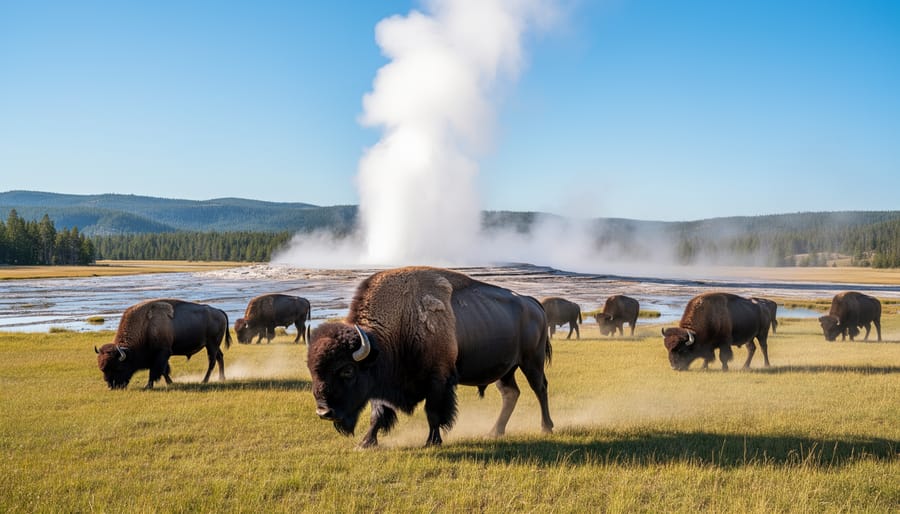
Yellowstone holds the distinction of being the world’s first national park, signed into law in 1872, and it hasn’t lost any of its draw. Spanning Wyoming, Montana, and Idaho, this 2.2-million-acre wonderland delivers unmatched geothermal spectacles, Old Faithful erupts roughly every 90 minutes, while the Grand Prismatic Spring’s vivid blues and oranges look almost alien against the surrounding landscape. Beyond the thermal features, Yellowstone’s wildlife density is staggering: massive bison herds graze the Lamar and Hayden valleys, wolf packs patrol the northern range, and grizzlies roam throughout, making bear-safe food storage non-negotiable.
The park’s camping network includes a dozen developed campgrounds plus extensive backcountry sites, but be prepared for seasonal access challenges. Snow closes many roads from November through April, and even summer can bring afternoon thunderstorms. Spring (April-May) and fall (September-October) offer the sweet spot: fewer crowds, active wildlife during mating or migration seasons, and more comfortable temperatures for hiking. Always carry bear spray, store all food and toiletries in hard-sided vehicles or bear boxes, and maintain 100 yards from wolves and bears. Yellowstone rewards preparation with experiences that justify its pioneering status.
5. Zion National Park, Utah, Red Rock Canyons and Slot Hikes
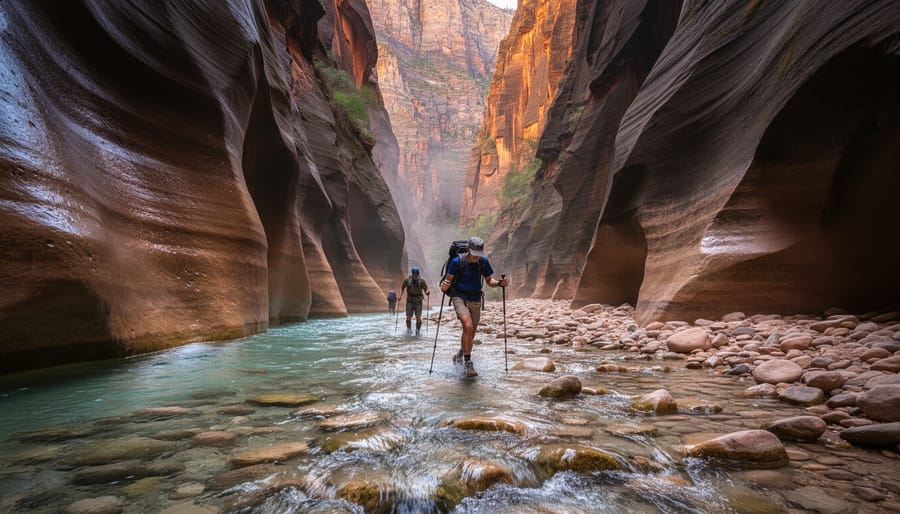
Zion’s red-rock amphitheater drops visitors into a landscape of towering sandstone cliffs striped orange, cream, and crimson, walls that rise over a thousand feet from the canyon floor. The Narrows, where you wade waist-deep through the Virgin River between sheer slot canyon walls, ranks among the most iconic hikes in any national park. Angels Landing delivers heart-pounding exposure on its final half-mile scramble to a narrow spine with 1,500-foot drops on both sides. The park’s mandatory shuttle system from April through October actually improves the experience, no circling for parking, less roadway congestion, and you can hop off at any trailhead along Zion Canyon Scenic Drive.
Watchman and South campgrounds offer the most convenient basecamp options with electric hookups and proximity to the visitor center, though reservations fill months ahead for peak season. Flash floods are the serious hazard here: summer monsoons can turn dry washes into torrents in minutes, especially in slot canyons like The Narrows. Never enter narrow canyons when storms threaten upstream, and always check the forecast at the visitor center. Pack a reliable water filter, you’ll be drinking straight from the Virgin River on longer hikes, and giardia doesn’t care how clear the water looks. Layer for desert temperature swings: scorching afternoons give way to chilly canyon-shadow evenings, even in summer.
6. Glacier National Park, Montana, Pristine Wilderness and Going-to-the-Sun Road
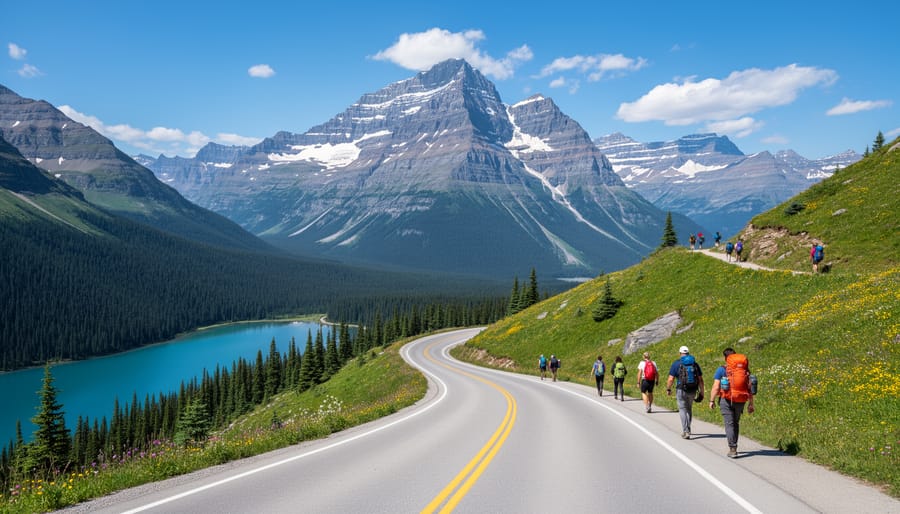
Glacier National Park delivers raw wilderness on a scale that humbles even experienced backcountry campers. More than 700 miles of trails wind through terrain carved by ancient ice, connecting glacial lakes so cold and clear you can see trout suspended ten feet down. Grizzly bears roam freely here, this is their home, and you’re the visitor. Prepare accordingly with bear spray, proper food storage, and constant awareness.
Going-to-the-Sun Road, a 50-mile engineering marvel that crosses the Continental Divide, offers jaw-dropping alpine vistas accessible to families and casual visitors. But the park’s true character reveals itself in the backcountry, where permits are required and civilization disappears behind you within an hour’s hike.
The challenge? Glacier’s accessible season runs roughly late June through mid-September, when snow finally clears from high passes and the road fully opens. Even then, mountain weather shifts violently, blue skies can turn to sleet in thirty minutes. Pack layers, rain gear, and insulation even for July trips. Early season means swollen streams and lingering snowfields; late season brings solitude but colder nights.
Backcountry camping permits book up months in advance for popular zones. Reserve early or remain flexible with your route. The reward for navigating these logistics is wilderness as pristine as anywhere in the Lower 48.
7. Acadia National Park, Maine, Coastal Peaks Meet Atlantic Shores
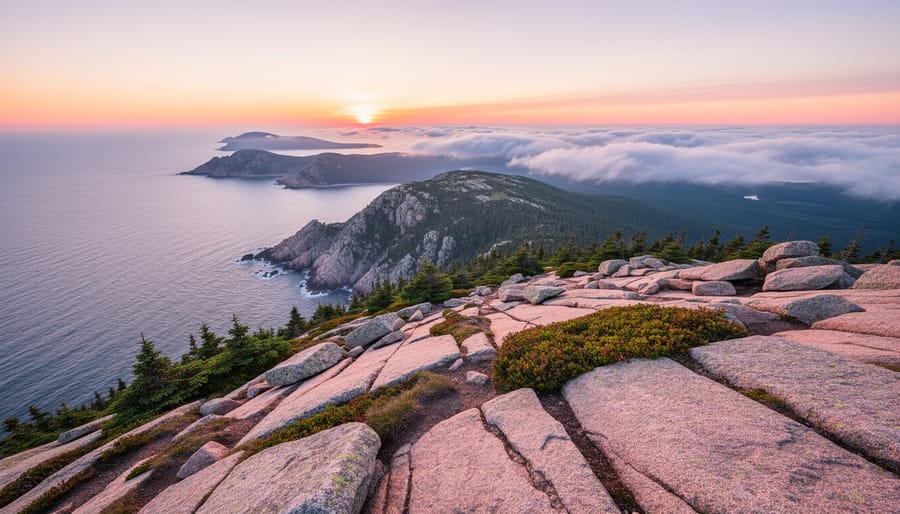
Acadia stands apart as the only national park where mountains rise directly from the Atlantic Ocean. This 47,000-acre coastal wilderness on Mount Desert Island delivers granite summits, rocky shorelines, and dense forests in a compact, accessible package that makes it ideal for families and first-time park visitors.
Cadillac Mountain’s 1,530-foot summit offers the earliest sunrise view in the United States from October through early March. Arrive before dawn to watch light spill across Frenchman Bay, reservations are required for summit vehicle access during peak season. The park’s 27 miles of historic carriage roads provide car-free biking and walking routes through woodlands and past stone bridges, perfect for kids and casual riders.
Camping at Blackwoods and Seawall campgrounds puts you within minutes of both mountain trails and tidal pools. Book months ahead for summer and fall foliage weekends in late September through mid-October, when maples and birches turn crimson against evergreen backdrops.
Maritime weather shifts fast. Pack layers for 50-degree mornings that warm to 70 by afternoon, and bring rain gear year-round. Fog rolls in without warning along the coast, so carry a headlamp even on short hikes. Check tide tables before exploring Thunder Hole and Otter Cliff, the intertidal zone reveals starfish, periwinkles, and sea urchins at low tide but becomes dangerous as water rises.
8. Olympic National Park, Washington, Three Ecosystems in One
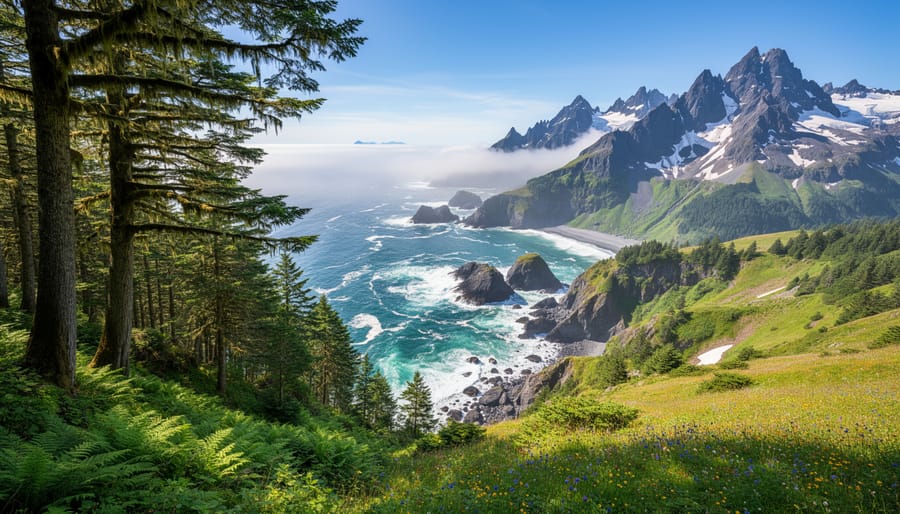
Olympic National Park stands apart as the only park in the system where you can hike through temperate rainforest in the morning, summit alpine peaks by afternoon, and camp beside tide pools by evening, all without leaving park boundaries. This 922,000-acre Washington wilderness delivers three distinct ecosystems that most visitors spend entire trips exploring separately.
The Hoh Rain Forest receives over 140 inches of annual rainfall, creating cathedral groves of moss-draped Sitka spruce and western hemlock. Hall of Mosses Trail offers an accessible introduction, while serious backpackers tackle the Hoh River Trail toward Blue Glacier on Mount Olympus. The park’s hurricane ridge area provides high-elevation meadows and mountain views accessible by paved road, with trails ranging from easy nature walks to challenging scrambles.
The coastal strip protects 73 miles of rugged Pacific shoreline. Rialto Beach and Second Beach are drive-up accessible, while backpackers can tackle multi-day coastal routes past sea stacks and natural arches. Tide tables are non-negotiable here, headlands become impassable at high tide, stranding unprepared hikers.
Camping options span developed campgrounds like Kalaloch (beachfront sites) and Heart O’ the Hills (mountain access) to primitive backcountry zones requiring bear canisters. Reserve summer spots months ahead. Pack rain gear regardless of season, the peninsula averages 12 feet of rainfall annually in some zones. Layer synthetic or wool base layers, never cotton, and seal electronics in dry bags. The weather shifts fast between ecosystems, so prepare for 40-degree temperature swings in a single day.
Outstanding National Parks Worth the Journey
9. Sequoia & Kings Canyon National Parks, California, Giant Trees and Deep Canyons
Sequoia and Kings Canyon, managed jointly since 1943 but with Sequoia’s roots stretching back to 1890, deliver one of California’s most dramatic contrasts: towering groves of ancient sequoias paired with North America’s deepest canyon. The General Sherman Tree, Earth’s largest living tree by volume, anchors the Giant Forest, where trails wind among sequoias that dwarf anything else in the forest canopy. Kings Canyon plunges 8,200 feet from rim to river, offering rugged backcountry routes and granite landscapes that rival Yosemite without the crowds.
Camping options range from developed sites in the foothills to high-country permits for multi-day loops through alpine lakes and granite basins above 10,000 feet. The elevation shift is significant: Grant Grove sits around 6,500 feet, while popular trailheads push past 7,000. Spend a day acclimating before tackling steep ascents, drink more water than feels necessary, and watch for afternoon headaches that signal altitude stress. Pack layers, mountain nights drop fast even in summer, and filter water from streams rather than relying solely on what you carry.
10. Great Sand Dunes National Park, Colorado, Tallest Dunes in North America
Great Sand Dunes stands apart as North America’s tallest dune field, with peaks reaching 750 feet above the valley floor. Located roughly three hours southwest of Dillon, this park delivers an otherworldly landscape where alpine peaks meet shifting sand, a stark contrast to Colorado’s typical mountain terrain.
The dunes reward adventurous campers willing to tackle the climb. Sand sledding and sandboarding down steep faces offer genuine thrills, though you’ll provide your own boards or sleds. Time your visit for late spring when Medano Creek flows at the dune base, creating a shallow seasonal stream perfect for cooling off between climbs.
Pinyon Flats Campground sits at 8,200 feet elevation, offering developed sites near the dune access. Prepare for dramatic temperature swings, summer days can exceed 90°F while nights drop to freezing. Pack layers and stake tents securely; afternoon winds can whip sand into every crevice. A bandana or buff protects airways during gusty conditions.
The park’s remote location and high altitude make it exceptional for stargazing. On clear nights, the Milky Way stretches vivid overhead, framed by dark dune silhouettes. Bring plenty of water, as exertion in sand drains energy fast, and the dry air amplifies dehydration at altitude.
11. Denali National Park, Alaska, Wilderness on an Epic Scale
Denali earns its spot in the top tier through sheer scale and wilderness authenticity. North America’s highest peak, 20,310 feet of granite and ice, dominates six million acres where grizzlies outnumber people and wolf packs roam unbroken tundra. The 92-mile park road penetrates deep into backcountry most visitors will never see on foot, accessible only via the park’s mandatory shuttle bus system that runs mid-May through mid-September. Book your bus seat months ahead; walk-on availability is rare during the compressed summer season.
Wildlife viewing here surpasses every other park on this list. Dall sheep dot ridgelines, caribou migrate across valleys, and grizzlies dig for ground squirrels within camera range. Binoculars aren’t optional, they’re essential gear. The shuttle stops for animal sightings, turning every trip into a mobile safari.
Backcountry camping requires a permit, bear-resistant food canister, and genuine self-sufficiency skills. Rangers brief you on river crossings and weather patterns that shift from sun to whiteout in an hour. Flights into Anchorage, then a four-hour drive or train ride to the park entrance, make this a true expedition rather than a weekend jaunt. The short season and Alaska logistics demand advance planning, but the payoff is wilderness few Americans ever experience at this intensity.
12. Everglades National Park, Florida, Subtropical Wetland Ecosystem
Everglades stands apart as the only subtropical wilderness in the national park system, where slow-moving water shapes an entire ecosystem. You’ll explore by canoe or kayak rather than hiking boot, paddling through sawgrass prairies and winding mangrove tunnels where alligators bask on muddy banks and roseate spoonbills wade in the shallows. The park protects critical habitat for endangered species like the Florida panther and manatee, and the sheer density of wading birds, herons, egrets, ibis, makes every paddle stroke a wildlife encounter.
Plan your camping trip for the winter dry season, roughly November through April, when lower water levels concentrate wildlife and mosquitoes drop to tolerable levels. Summer’s brutal heat, afternoon thunderstorms, and swarming insects make camping miserable for most visitors. Pack a head net, long sleeves, and DEET regardless, the mosquitoes here are legendary. The park offers drive-in camping at Flamingo and Long Pine Key, plus backcountry chickees (elevated wooden platforms) and ground sites accessible only by water. Bring your own freshwater for all sites, as the entire park sits in brackish or saltwater. A tide chart, marine GPS or waterproof map, and a dry bag for essentials are non-negotiable for paddle camping in this unique watery wilderness.
Specialized & Remote National Parks: Hidden Gems for the Dedicated
Beyond the well-trodden paths of Yosemite and Yellowstone lie national parks that demand more from their visitors, and return that effort with raw wilderness, profound silence, and landscapes few will ever witness. These specialized and remote parks test your remote park planning skills but deliver experiences that redefine what a national park adventure can be.
Alaska holds eight of these remarkable spaces. Gates of the Arctic sits entirely above the Arctic Circle with zero roads, trails, or facilities, just 8.4 million acres of tundra, mountains, and caribou migrations. Wrangell-St. Elias claims the title of largest U.S. national park at 13.2 million acres, bigger than Yellowstone, Yosemite, and Switzerland combined. Kobuk Valley protects shifting sand dunes inside the Arctic Circle, while Lake Clark and Katmai (home to the famous salmon-fishing brown bears) require floatplane access. Kenai Fjords and Glacier Bay reveal tidewater glaciers calving into the sea, accessible primarily by boat.
The National Park of American Samoa sprawls across three tropical islands in the South Pacific, protecting coral reefs and rainforest. Dry Tortugas floats 70 miles west of Key West, reachable only by seaplane or ferry, offering fort ruins and extraordinary snorkeling in crystalline Gulf waters.
Don’t overlook the accessible but specialized parks that reward niche interests. Death Valley’s extreme heat and Joshua Tree’s boulder fields challenge desert campers. Lassen Volcanic bubbles with hydrothermal features minus Yellowstone’s crowds. Black Canyon of the Gunnison drops 2,000 feet of sheer rock into shadowed depths. Mesa Verde preserves ancient cliff dwellings requiring guided entry. Biscayne protects an underwater landscape best explored by kayak or dive gear. Hot Springs, smallest in the system, centers on historic bathhouses. Channel Islands demand boat crossings for kayaking and kelp forest exploration. Pinnacles features California condors and talus caves. Redwood shelters the planet’s tallest trees along foggy northern coasts. Petrified Forest and Saguaro showcase desert ecosystems unique to the Southwest.
All 63 parks justify their designation. These remote and specialized spaces simply ask that you come prepared for their specific challenges.
Understanding Your National Parks Access: Passes and Planning
The America the Beautiful, the National Parks and Federal Recreational Lands Pass is your gateway to all 63 national parks and more than 2,000 federal recreation sites. The annual pass covers entrance fees and standard amenities at every National Park Service site, plus U.S. Forest Service, Bureau of Land Management, Fish and Wildlife Service, and Bureau of Reclamation locations. For families camping multiple weekends or planning a multi-park road trip, the pass pays for itself after three or four park visits.
Annual passes are valid for twelve months from purchase date and cover the pass holder plus all passengers in a single vehicle at per-vehicle fee areas, or the pass holder plus three adults at per-person fee sites. Lifetime passes offer the same coverage with no expiration, ideal for dedicated outdoor enthusiasts building a long-term park portfolio. Kids under sixteen enter free at all federal sites regardless of pass status.
Some high-traffic parks like Yosemite and Rocky Mountain also offer park-specific annual passes that cost less than the America the Beautiful option but cover only that single park. Standard multi-day passes work for short trips to one location. Run the math based on your plans, if you’re visiting two or more parks in a year, the interagency pass delivers better value.
The weather basics and seasonal access windows vary dramatically across parks, so check the National Park Service website for current pass pricing, purchase options, and specific park regulations before you head out. Passes don’t cover camping fees, backcountry permits, or guided tours, those require separate reservations.
Essential Camping and Survival Tips for National Park Adventures
Successful national park camping starts long before you arrive at the trailhead. Reservation systems for developed campgrounds can fill up six months in advance during peak season, especially at popular parks like Yosemite, Zion, and Rocky Mountain, so book early or plan for first-come, first-served sites with flexible timing. Backcountry permits often require separate applications with specific lead times, and some parks use lottery systems for high-demand routes.
Leave No Trace principles form the foundation of responsible park use: pack out all trash, stay on designated trails, camp at established sites or 200 feet from water sources, and respect wildlife by observing from distance. Wildlife food storage isn’t optional, it’s required and enforced. Most parks provide bear-resistant lockers at campgrounds, while backcountry travelers must carry approved bear canisters in grizzly country. Hanging food bags is insufficient and often prohibited.
Weather preparation varies dramatically by region and season. Alpine parks like Rocky Mountain and Glacier demand layers for sudden temperature drops and afternoon thunderstorms, while desert parks like Death Valley require sun protection and triple your expected water needs. Coastal parks like Olympic and Acadia bring maritime weather shifts that demand waterproof gear year-round.
Every camping trip requires core wilderness survival essentials:
- Water treatment system: filter, purification tablets, or UV device
- First-aid kit with blister treatment, pain relievers, and wound care
- Navigation tools: map, compass, and GPS device with fresh batteries
- Fire starter and waterproof matches for emergencies
- Emergency shelter: space blanket or bivy sack
- Headlamp with extra batteries
- Multi-tool or knife
- Two-way communication device for areas without cell service
- Sun protection: sunscreen, hat, and sunglasses
- Extra food and high-calorie emergency rations
Campfire regulations change by park and season, many prohibit fires during drought conditions or restrict them to designated rings only. Always check current fire status before departure. The complete list of survival items you’ll need depends on your specific destination and activities, but these fundamentals apply across all 63 parks. Each park maintains unique rules for group size limits, pet restrictions, and seasonal closures, so visit the National Park Service website for current regulations before your trip.
Frequently Asked Questions About US National Parks
How many national parks are there in the United States?
There are 63 designated national parks in the United States. However, these parks are just a fraction of the National Park System, the NPS manages 433 units covering more than 85 million acres across all 50 states, the District of Columbia, and U.S. territories. The broader system includes national monuments, battlefields, historic sites, seashores, and recreation areas, each with different designations and protections.
Which was the first national park?
Yellowstone became the first national park when President Ulysses S. Grant signed the Act establishing it on March 1, 1872. Sequoia and Yosemite followed in 1890, marking the early expansion of the national park concept.
Do I need a pass for every national park?
Not necessarily. The America the Beautiful Annual Pass covers entrance and standard amenity fees at all federal recreation sites, including all 63 national parks, for one year. Individual parks also offer single-visit passes and park-specific annual passes if you plan to visit one location repeatedly.
Can I camp in all national parks?
Most national parks offer camping, but not all. Some smaller or more specialized parks lack campgrounds due to their nature or location. Always check the specific park’s website for campground availability, reservation requirements, and whether backcountry permits are needed.
What’s the difference between a national park and other NPS units?
National parks receive their designation through an act of Congress and typically contain diverse ecosystems and significant natural features. Other NPS units, such as monuments, historic sites, or recreation areas, have different designations based on their primary purpose, whether cultural preservation, historical significance, or recreational access.
How do I plan a multi-park road trip?
Start by mapping your route based on seasonal access windows, since many high-elevation and northern parks have limited summer seasons. Book campground reservations six months in advance when possible, especially for popular parks like Yosemite and Yellowstone. Consider regional clusters, like Utah’s Mighty Five or Colorado’s Rocky Mountain and Great Sand Dunes, to maximize your time and minimize driving distances between parks.
Understanding these basics helps you navigate the system confidently, whether you are checking off all 63 parks or building a targeted adventure around specific landscapes and activities.
America’s 63 national parks represent the most diverse collection of protected landscapes on Earth. From the alpine tundra of Rocky Mountain, just 90 minutes from Dillon, to the tropical reefs of Biscayne, from Denali’s Arctic wilderness to the volcanic islands of American Samoa, these parks preserve every ecosystem the continent offers. You don’t need to visit all 63 to call yourself an adventurer, but each one waiting on your list holds something no other place can replicate.
Start with the accessible favorites near major hubs. Build your skills, test your gear, and gain confidence. Then push toward the remote specialists that demand more planning and reward you with solitude. Whether you’re pitching a tent at Yosemite’s valley floor or arranging a bush plane into Gates of the Arctic, the same principles apply: respect the land, prepare for the conditions, and embrace what makes each park irreplaceable.
Check the National Park Service website for current fees, alerts, and reservation windows. Secure your America the Beautiful Pass if you’re planning multiple visits. Then get out there, the parks aren’t going anywhere, but your next great outdoor adventure is waiting.