
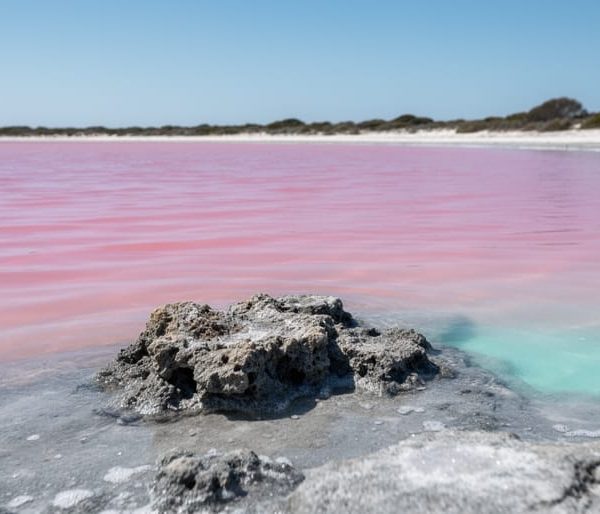
Yes, Australia’s pink lakes are real, and they’re one of nature’s most surreal spectacles. The country is home to several bubblegum-hued bodies of water, with the most accessible being Lake Hillier near Esperance and Hutt Lagoon along the Coral Coast in Western Australia. These vivid pink waters aren’t a trick of the light or seasonal algae bloom that might disappoint you on arrival. They maintain their striking color year-round, caused by salt-loving algae and bacteria that produce pink pigments as they thrive in the high-salinity water.
The Pink and Rainbow Lakes near Esperance sit about ninety minutes by flight from Perth, and they’re free to visit 24/7, though the best viewing window runs from June to January when the colors reach peak intensity. Unlike many natural phenomena that require perfect timing or luck, you can count on seeing pink water here. The Pink Lake in Esperance, located northwest of town, offers ground-level access, while Hutt Lagoon near Port Gregory delivers the most photogenic aerial views. Scenic flights with operators like Fly Esperance give you the full scope of these otherworldly landscapes, revealing just how dramatically pink several square kilometers of water can actually be.
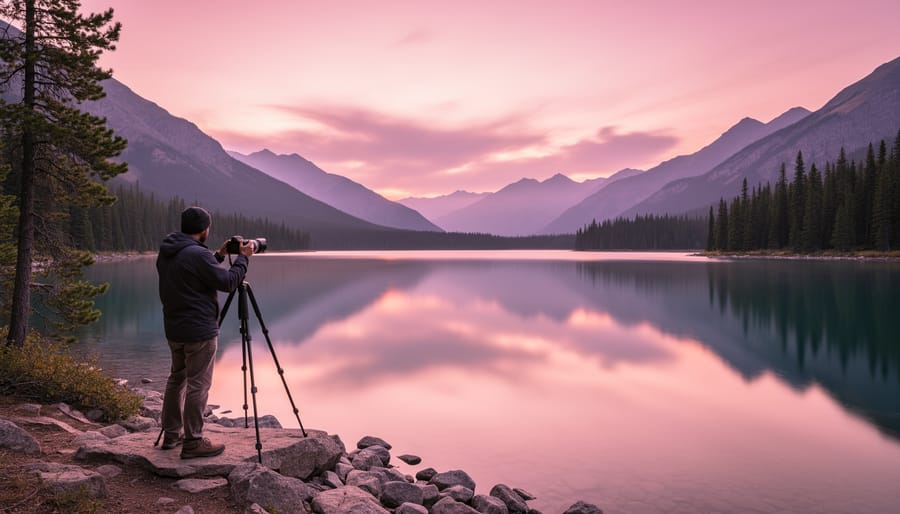
For outdoor enthusiasts used to Colorado’s alpine lakes, this Australian phenomenon feels like visiting another planet without leaving Earth.
What Makes Australia’s Lakes Turn Pink?
The surreal pink hue you’ll see at Australia’s lakes comes down to a fascinating interaction between microscopic life and extreme salt conditions. At the heart of the phenomenon is Dunaliella salina, a species of algae that thrives in hypersaline environments, water with salt concentrations far higher than the ocean. When these algae are stressed by intense sunlight and high salt levels, they produce beta-carotene (the same pigment that makes carrots orange) as a protective mechanism. This carotene accumulation turns the water varying shades of pink, from pale rose to deep magenta.
Salt concentration is the primary driver. Most pink lakes sit at salt levels between 10 and 20 percent, creating the harsh conditions that trigger the algae’s color response. When you add the right mix of temperature, sunlight intensity, and low rainfall, you get the perfect conditions for that vibrant color to develop.
Here’s why the pink isn’t consistent: the intensity shifts constantly based on environmental factors. During summer months when evaporation peaks and salt concentration rises, the color typically deepens. After heavy rainfall dilutes the salt levels, the hue fades noticeably. Time of day matters too, the pink appears most vivid in bright midday sun, which both intensifies the algae’s stress response and enhances the visual saturation you’ll see when photographing.
Cloud cover, wind patterns, and water depth all play roles in what shade you’ll witness on any given day. This natural variability means visiting during the optimal season matters, but it also means each visit offers a slightly different spectacle. The lakes are living systems, not painted backdrops, which makes timing your trip thoughtful rather than guaranteed.
The Major Pink Lakes of Western Australia
Pink Lake (Esperance)
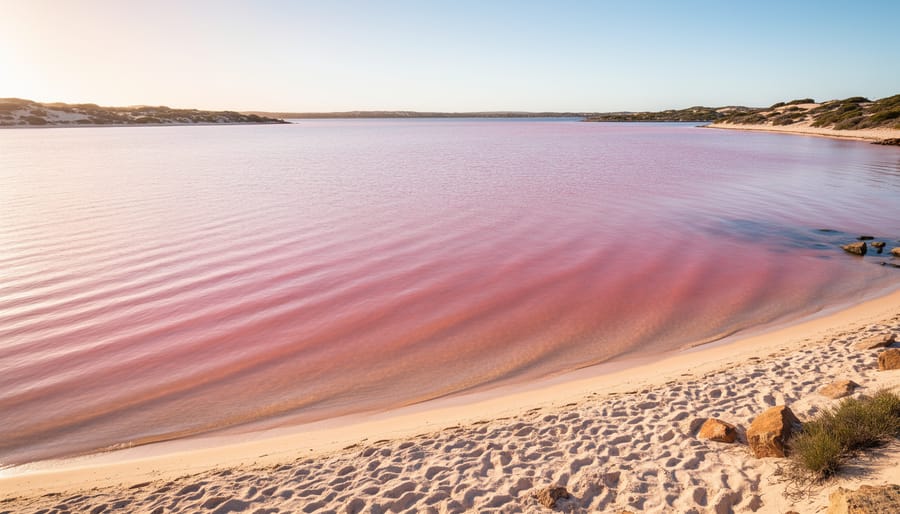
The Pink Lake in Esperance sits just northwest of town, making it one of the most accessible pink lake destinations in Western Australia. Esperance itself is about a one-and-a-half-hour flight from Perth, positioning this lake as a convenient stop for travelers exploring the region’s coastline and natural attractions.
What makes this particular lake appealing for outdoor travelers is the practical access. It’s free to visit and open year-round, 24/7, so you can build it into your itinerary without worrying about entry fees or restricted hours. You can pull up, walk to the viewing areas, and take in the phenomenon on your own schedule, whether that’s dawn, midday, or sunset.
The pink intensity here varies with weather, salt levels, and seasonal conditions, so don’t expect the same vivid hue every visit. Some travelers report the color appearing more muted depending on recent rainfall or cloud cover. For the best viewing, aim for clear, sunny days when the algae activity is high and the light enhances the natural tones.
Pack water, sun protection, and a decent camera or smartphone for photos. The area around the lake is exposed with minimal shade, typical of Western Australia’s coastal environment. If you’re camping or road-tripping through the Esperance region, this lake makes a quick, worthwhile detour that doesn’t require extensive hiking or specialized gear, just curiosity and a willingness to experience one of Australia’s stranger natural displays.
Hutt Lagoon (Coral Coast)
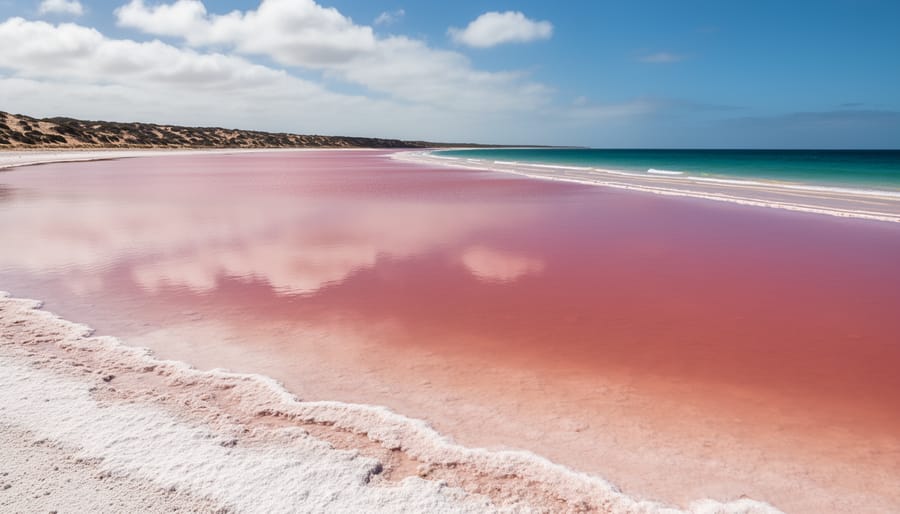
Hutt Lagoon stretches across 14 kilometers of Coral Coast shoreline, making it one of Western Australia’s largest and most vibrant pink lakes. The sheer scale sets it apart, this isn’t a small pond tucked behind dunes, but a massive body of water that shifts from bubble-gum pink to deep magenta depending on the season and sunlight.
Port Gregory offers the most accessible viewing point. Drive into this tiny coastal town and you’ll find lookouts right along George Grey Drive where the lagoon meets the road. Early morning light produces the most intense color, while midday sun can wash out the pink tones. Afternoon visits work well when cloud cover diffuses the harsh Australian sun.
For photographers, the elevated vantage points north of Port Gregory deliver sweeping compositions. The contrast between the pink water, white salt deposits along the shoreline, and the deep blue Indian Ocean creates striking color layers. Bring a polarizing filter to cut glare and boost saturation, the salt flats reflect intensely under full sun.
The lagoon sits roughly 500 kilometers north of Perth, a six-hour drive up the Indian Ocean Drive route. Most travelers combine Hutt Lagoon with stops at the Pinnacles Desert and Kalbarri National Park, turning it into a multi-day coastal road trip. Unlike some remote pink lakes, you don’t need four-wheel drive or special permits. The paved road runs right alongside the water, making this the easiest pink lake to photograph without leaving your vehicle.
Rainbow Lakes Near Esperance
The Pink and Rainbow Lakes near Esperance offer one of Western Australia’s most spectacular natural color displays, where multiple lakes create a shifting palette across the landscape. Located in the same region as the better-known Pink Lake, this combination of water bodies shows varying shades of pink, purple, and occasional violet depending on algae activity and salt concentration levels.
Your window for viewing these lakes at their most vibrant runs from June through January. During these months, the environmental conditions align to produce the most intense coloration, with salt levels and algae blooms reaching their peak. Outside this period, you might still see some pink hues, but the intensity drops significantly.
The best way to experience the full scope of these lakes is from above. Fly Esperance operates scenic flights that give you an aerial perspective impossible to achieve from ground level. From the air, you can see how the different lakes sit in the landscape, how the colors contrast with the surrounding terrain, and how the intensity varies between bodies of water. The aerial view also reveals patterns and color gradients that ground visitors miss entirely.
If you’re planning a camping trip in the region, coordinate your dates within that June to January timeframe. The rainbow effect comes from viewing multiple lakes together, each showing slightly different pink tones based on its individual composition. Book your scenic flight in advance during peak travel months to secure your spot.
Comparing the Pink Lake Experiences
Choosing which pink lake to visit depends on your route through Western Australia, your schedule, and how you prefer to experience these natural wonders.
| Lake | Region | Best Viewing | Optimal Season | Access |
|---|---|---|---|---|
| Pink Lake | Northwest Esperance | Ground level | Year-round | Free, 24/7 |
| Rainbow Lakes | Near Esperance | Scenic flight | June-January | Flight required |
| Hutt Lagoon | Coral Coast | Port Gregory viewpoint | Year-round | Roadside access |
If you’re road-tripping the coast, Hutt Lagoon offers easy roadside viewing without backtracking. The Esperance area gives you flexibility, Pink Lake for free, accessible viewing and the Rainbow Lakes for that aerial perspective if your budget allows a scenic flight. Travelers focused on a single destination should weigh whether they want the convenience of ground-level access or the expansive views from above.
Planning Your Pink Lake Visit: Timing and Conditions
Timing your visit to Australia’s pink lakes can mean the difference between vivid magenta waters and a disappointing pale hue. The color intensity shifts throughout the year based on salt concentration, algae activity, and weather patterns.
The June to January Sweet Spot
The Pink and Rainbow Lakes near Esperance display their most dramatic coloring from June through January. During this window, Western Australia’s cooler months and early summer create ideal conditions, lower rainfall maintains higher salt levels, and sunlight triggers the algae bloom that produces the pink pigment. Plan your trip during this period if these lakes are your primary destination.
Outside this timeframe, you’ll still see color, but expect softer pastels rather than the vibrant pink that makes these lakes famous. February through May brings higher rainfall to the region, diluting the salt concentration and muting the hue.
Weather Considerations for Western Australia
Western Australia’s climate varies dramatically by season. June through August offers mild daytime temperatures (60-70°F) but cool nights, so pack layered clothing and a warm sleeping bag if you’re camping nearby. September through November brings warming temps and wildflower blooms, ideal for combining pink lake visits with broader outdoor exploration.
December and January turn hot, with temperatures often exceeding 95°F inland. Carry extra water, sun protection, and plan lake visits for early morning or late afternoon when harsh midday light washes out the pink tones anyway.
Outdoor Planning Essentials
Weather can change rapidly in remote Western Australia. Check forecasts before departure and prepare for windy conditions that kick up dust and affect visibility. The Pink Lake at Esperance offers year-round access, but road conditions to more remote spots like Hutt Lagoon depend on recent rainfall.
Allow flexible dates in your itinerary. Cloud cover enhances pink visibility, while bright cloudless days sometimes reduce contrast. If conditions aren’t ideal when you arrive, waiting a day often pays off.
Getting There and What to Bring
Most pink lake visitors start from Perth, Western Australia’s capital. For Pink Lake and Rainbow Lakes near Esperance, you have two main options: a scenic seven-hour drive southeast along the Coolgardie-Esperance Highway, or a one and a half-hour flight directly to Esperance. The flight saves time but the drive lets you explore stops along the way and gives you a vehicle for lake access.
Hutt Lagoon on the Coral Coast sits about four and a half hours north of Perth via Indian Ocean Drive. This route is more straightforward for a single pink lake visit, and the coastal highway offers excellent scenery. A rental car with good clearance handles these routes well, though standard vehicles work for the main access roads to all three lake areas.
Pack for Western Australia’s intense sun and remote conditions. You need broad-spectrum sunscreen, a wide-brimmed hat, polarized sunglasses, and lightweight long-sleeved shirts. Carry more water than you think necessary, at least three liters per person for a full day. The lakes sit in areas with limited facilities, so bring all drinking water from your last major town stop.
Navigation tools matter here. Download offline maps before you leave Perth, and carry a physical Western Australia road map as backup. Cell coverage drops significantly once you leave main highways. Check weather basics before departure and plan for weather changes, especially during the June to January viewing window when conditions shift.
For photography, bring a polarizing filter to cut glare and enhance the pink hues. Early morning and late afternoon light produces the most dramatic shots.
Accommodation clusters around Esperance town for the southeastern lakes, with motels, caravan parks, and campgrounds available. Near Hutt Lagoon, Port Gregory and Kalbarri offer basic lodging options. Book ahead during Australian school holidays.
Common Questions About Australia’s Pink Lakes
Can you really swim in these pink lakes? The quick answer is no, most of Western Australia’s pink lakes have extremely high salt concentrations that make swimming uncomfortable and potentially harmful to skin and eyes. Hutt Lagoon and the Pink Lake near Esperance are both protected environments where swimming is discouraged to preserve the delicate ecosystem. The Rainbow Lakes are similarly off-limits for direct contact, though you can appreciate them from viewing platforms and scenic flights.
Are the lakes always pink?
The pink intensity varies dramatically with season, time of day, and weather conditions. The best time to see vibrant color is from June to January, with midday sun producing the strongest hues.
How long should I plan to spend at each lake?
Budget 30 minutes to an hour for ground viewing and photography at each location. A scenic flight with Fly Esperance adds about 90 minutes to your schedule but delivers unmatched aerial perspectives.
What facilities are available near the lakes?
The Pink Lake near Esperance offers free 24/7 access but minimal on-site facilities. Port Gregory near Hutt Lagoon has basic amenities, while more comprehensive services are available in Esperance town, a one and a half-hour flight from Perth.
What’s the best way to photograph pink lakes?
Shoot during harsh midday light when the pink color peaks, use a polarizing filter to cut glare from the water surface, and bring your wilderness survival kit including extra water since shade is scarce.
Pack your photography gear alongside standard camp essentials but add serious sun protection, Western Australia’s UV index is brutal. A wide-brimmed hat, SPF 50+ sunscreen, and at least three liters of water per person are non-negotiable. The remote locations mean limited cell service, so download offline maps before you leave Esperance or Perth. Drone pilots should check current regulations, as protected areas change status seasonally.
Why Pink Lakes Are Worth the Journey
Standing at the edge of a pink lake ranks among the most surreal moments you’ll experience in the outdoors. The vibrant hues shift with the light, the salt crust crunches underfoot, and the sheer improbability of the color creates a sense of discovery that regular lakes can’t match. This isn’t a manufactured attraction or a filtered photo, it’s a genuine geological phenomenon that reminds you why exploring remote corners of the world matters.
The growing interest in pink lakes reflects a broader shift among outdoor adventurers toward unique natural experiences that test your planning skills and reward your effort. Western Australia’s remoteness means you can’t wing it, you need the same preparation mindset you’d bring to backcountry camping in Colorado, adapted to heat and distance instead of altitude and cold.
Whether you’re expanding your bucket list beyond familiar trails or chasing that one-of-a-kind photograph, the pink lakes deliver. Pack smart, plan your route around the seasonal window, and give yourself enough time to appreciate the changing light. The journey out there becomes part of the experience, and the landscape stays with you long after you leave.