
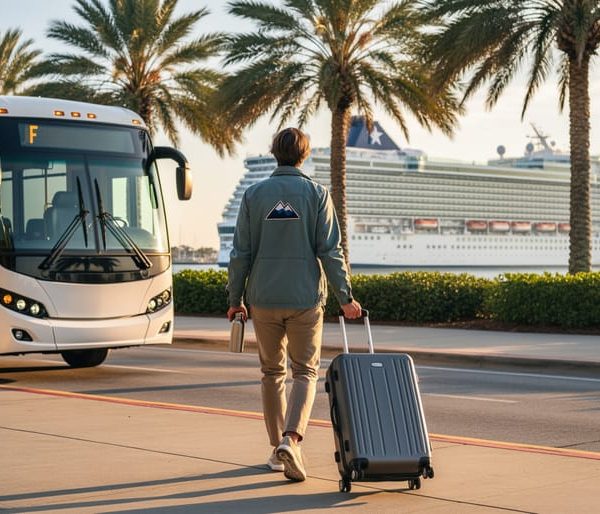
Book your flight to Orlando International Airport at least three months in advance to secure the best rates from Denver or Colorado Springs, giving yourself a full day buffer before your cruise departure to account for weather delays and altitude adjustment time. Your body needs 24-48 hours to acclimate from Colorado’s 5,000+ foot elevation to sea level, so plan to arrive early and hydrate aggressively to avoid fatigue on embarkation day.
Pack layers strategically by bringing a light jacket for Colorado’s cool mornings but focusing your suitcase on lightweight, moisture-wicking clothes for Florida’s 85-degree humidity and sudden afternoon downpours. The climate shift from our dry mountain air to coastal moisture catches many Colorado travelers off guard, making breathable fabrics essential for comfort both at the port and onboard.
Arrange ground transportation from Orlando Airport to Port Canaveral before you leave home, since the 45-mile drive takes roughly an hour and ride-sharing costs fluctuate dramatically. Just as you’d plan logistics for Colorado outdoor adventures, treating your cruise departure like a backcountry expedition requires advance preparation. Consider booking reliable services like Always Superb Transport to eliminate pre-cruise stress and start your vacation the moment you land.
Submit your cruise line’s online check-in and upload required documents 30 days before sailing to streamline embarkation day and secure your preferred arrival time slot. Download your cruise line’s app, set up onboard payment methods, and book any must-do excursions early, as popular activities sell out weeks in advance.
Planning Your Colorado-to-Florida Travel Day
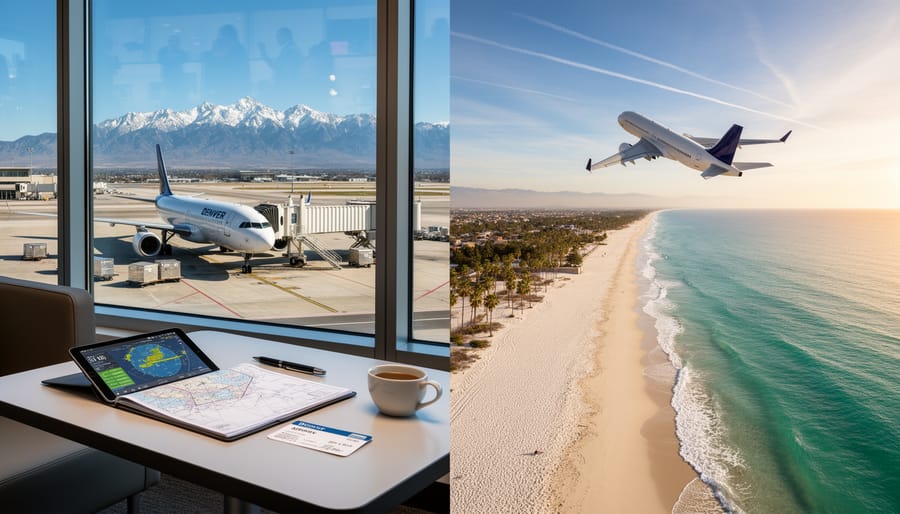
Best Flight Routes from Colorado Airports
Planning your journey from Colorado to Port Canaveral starts with choosing the right departure airport. Denver International Airport offers the most flight options and typically the best prices, with several airlines running daily routes to Orlando International Airport. From there, you’ll need just an hour’s drive to reach the port. Think of DIA as your basecamp for this coastal adventure.
Colorado Springs Airport provides a smaller, less hectic alternative that many families prefer. While you’ll likely face a connecting flight through Dallas or Atlanta, the trade-off means easier parking and shorter security lines. For those living in mountain communities near Dillon, the drive to Denver is familiar territory, but consider your cruise departure time when booking early morning flights.
Regional airports like Grand Junction or Durango can work if you’re already nearby, but expect limited schedules and higher fares. The connecting flights add travel time, which matters when you’re racing to make embarkation.
Here’s a practical tip from experience: book flights that land in Orlando by early afternoon the day before your cruise. This buffer protects against weather delays and gives your body time to adjust from Colorado’s altitude to sea level. Direct flights from Denver to Orlando run about four hours, making them ideal for families with restless kids.
Compare total travel time, not just ticket prices. A cheaper connecting flight that adds three hours might cost more in stress and missed port time than a slightly pricier direct route. Choose wisely, just like selecting the right trailhead for your destination.
Timing Your Arrival (Don’t Make This Mistake)
Here’s the hard truth from someone who’s learned this lesson the expensive way: flying out of Denver on the morning of your cruise departure is like planning a summit attempt without checking the forecast. Don’t do it.
You absolutely need to arrive in Port Canaveral at least one day early, and here’s why this is non-negotiable for us Colorado folks. First, weather delays out of Denver International Airport are legendary, especially during winter months when snow can shut down operations for hours. Missing your cruise ship means watching thousands of dollars sail away without you, and the cruise line won’t refund your trip because of a delayed flight.
Second, your body needs time to adjust. At 9,000 feet in Dillon or 5,280 feet in Denver, you’re acclimated to low humidity and thin air. Florida’s sea-level humidity hits differently, and adding a two-hour time zone shift means you’ll feel jet-lagged even without crossing an ocean. Arriving early gives you time to hydrate properly and adjust to the moisture-heavy air before boarding.
Think of this like planning any backcountry adventure. Just as you’d use weather planning strategies before a camping trip, build in buffer time for this journey. Book a hotel near the port for the night before departure. Many offer park-and-cruise packages where you can leave your vehicle during the voyage.
The cost of that extra hotel night is minimal insurance compared to missing embarkation entirely. I recommend arriving two days early if traveling between November and March, when Colorado winter weather is most unpredictable. Use that bonus time to explore nearby Kennedy Space Center or relax at Cocoa Beach.
What to Pack When You’re Coming from High Altitude
The Altitude-to-Sea Level Clothing Strategy
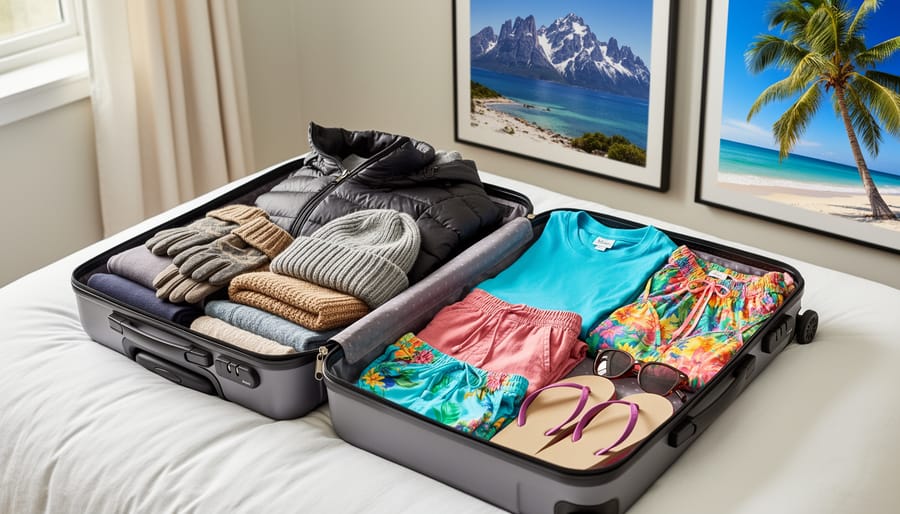
Packing for both Colorado’s crisp mountain air and Florida’s subtropical humidity feels like preparing for two different expeditions, but smart layering makes it manageable. Think of your suitcase as a backcountry pack where every item serves multiple purposes.
Start with a foundation of moisture-wicking base layers. Those same merino wool or synthetic shirts you wear hiking in Dillon work perfectly under Florida’s sun and transition seamlessly to air-conditioned ship interiors. Pack three to four lightweight, quick-dry shirts that can layer under a fleece or jacket during your Colorado departure, then stand alone in Florida’s 80-degree warmth.
Your go-to Colorado fleece or lightweight down jacket is essential for the plane and ship’s overly enthusiastic air conditioning. Roll it tight and use it as a pillow during travel. Once aboard, you’ll appreciate having it for evening deck strolls when ocean breezes can surprise you.
For bottoms, convertible hiking pants are your secret weapon. Zip-off legs mean you’re ready for both climates without dedicating extra suitcase space. Pack one pair of long pants for the plane and cooler ship areas, plus two pairs of shorts.
Don’t forget the climate transition essentials: your trusty Colorado sun hat works overtime in Florida, while a lightweight rain jacket handles both mountain weather surprises and tropical downpours. Swap heavy hiking boots for comfortable walking sandals with arch support, and pack one pair of closed-toe shoes for ship dining rooms. This streamlined approach keeps your luggage under 50 pounds while covering all temperature zones from departure to deck.
Essential Items Colorado Cruisers Often Forget
Colorado’s dry, high-altitude climate doesn’t prepare you for Florida’s intense humidity, and many mountain dwellers discover this the hard way. Just as you’d use essential packing strategies for wilderness camping, smart cruise packing requires anticipating different environmental challenges.
Your Colorado-adapted skin will react differently to sea-level sun. The UV rays reflect off ocean water more intensely than mountain snow, and humidity amplifies sun exposure. Pack reef-safe mineral sunscreen with zinc oxide or titanium dioxide, as many Caribbean ports prohibit chemical sunscreens. Reapply every 90 minutes, even on cloudy days.
Anti-frizz hair products become essential gear in 80-percent humidity. Bring leave-in conditioner, humidity-blocking styling cream, or hair ties to manage the inevitable poof. Your normally manageable mountain hair will rebel against tropical moisture.
Moisture-wicking clothing saves the day in humid climates. Pack quick-dry shirts, breathable shorts, and moisture-absorbing undergarments. That cotton tee you’d wear hiking at altitude becomes a sweat magnet at sea level. Consider bringing Gold Bond powder or anti-chafing balm for areas where damp clothing causes irritation.
Don’t forget a small portable fan for your cabin. Cruise ship air conditioning varies, and Colorado natives unaccustomed to sleeping in humidity appreciate the extra airflow. Finally, pack waterproof phone cases and dry bags. Florida’s sudden afternoon thunderstorms rival our mountain storms but pack far more moisture.
Your Pre-Cruise Overnight Stay Strategy
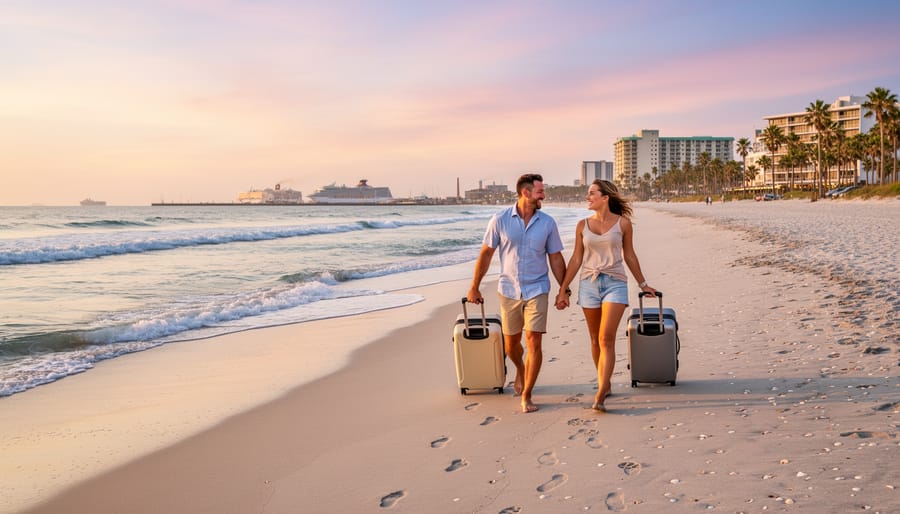
Best Areas to Stay Near Port Canaveral
Choosing the right base camp before your cruise sets the tone for your entire adventure. After flying in from Colorado’s high country, you’ll want accommodations that help you transition to sea level while keeping that outdoor spirit alive.
Cocoa Beach stands out as the top choice for adventure-minded travelers. Located just 15 minutes south of the port, this laid-back surf town offers easy beach access, waterfront dining, and that coastal vibe Colorado lacks. The area features numerous hotels with balconies perfect for watching sunrises over the Atlantic – a dramatic change from our mountain sunrises back home. Many properties include pools and beach gear rentals, letting you acclimate to the humidity while enjoying outdoor time before boarding.
Cape Canaveral sits even closer to the port, literally minutes away. This option works best if you’re arriving the morning of departure or prefer maximizing sleep before your early boarding time. While less beachy than Cocoa Beach, the area provides quick access to restaurants and the Kennedy Space Center Visitor Complex, an excellent stop for families seeking educational outdoor experiences.
For budget-conscious campers, consider Port Canaveral’s nearby RV parks and campgrounds. Jetty Park Campground offers beachfront sites with full hookups, combining your love of camping with ocean views. Book early though – these spots fill quickly during cruise season.
Pro tip: Stay at least one night pre-cruise. Colorado flights can face weather delays, especially during winter, and missing your ship means losing your entire investment. Think of it like planning buffer time before a backcountry permit – always build in contingency.
Pre-Cruise Adventures for Outdoor Lovers
If you’re arriving a day or two early—and trust me, you should—take advantage of exploring the Space Coast like you’d tackle a Colorado trail system. Kennedy Space Center Visitor Complex sits just 15 minutes from Port Canaveral and deserves a full morning. The Rocket Garden and Saturn V Center will blow your mind as much as any fourteener summit view. Arrive when gates open to beat the crowds and Florida heat.
For beach time, Jetty Park Beach and Campground offers that rare combination Colorado outdoor lovers appreciate—pristine shoreline with actual amenities and shade. The fishing pier extends 1,000 feet into the Atlantic, perfect for watching cruise ships depart while trying your hand at saltwater fishing. Pack reef-safe sunscreen; the Florida sun hits different than our high-altitude rays back home.
Nature seekers shouldn’t miss Merritt Island National Wildlife Refuge, sharing borders with Kennedy Space Center. This 140,000-acre preserve features hiking trails, kayak launches, and incredible bird watching—think herons, pelicans, and maybe even manatees if you’re lucky. The Black Point Wildlife Drive offers a seven-mile auto tour through diverse ecosystems that’ll remind you why exploring Florida’s attractions before your cruise enhances the whole experience.
Pro tip: Download offline maps and carry plenty of water. While Florida trails are flatter than anything back home, humidity and heat require the same respect you’d give a backcountry excursion. Start activities early morning to avoid peak temperatures.
Parking and Transportation Options
Planning your parking strategy is like preparing your basecamp before a big adventure – the right choice saves you money and stress. Port Canaveral offers official cruise terminal parking for around $17-20 per day, convenient but pricey for week-long voyages. Off-site lots typically run $7-12 daily with shuttle service included, cutting costs significantly for budget-conscious families.
Park-and-cruise hotel packages provide excellent value, especially after your long flight from Colorado. You’ll get overnight accommodation, parking for your cruise duration, and shuttle service for roughly $100-150 total. This option lets you arrive the day before sailing, adjust to sea level, and start your adventure refreshed rather than rushing from the airport.
If staying with family near the Space Coast, shuttle services like GO Port Canaveral charge $20-35 per person round-trip. Compare this against parking fees based on your group size. Solo travelers often find shuttles economical, while families of four or more benefit from parking their rental car. Book everything in advance during peak season – popular off-site lots fill quickly, just like campsites on holiday weekends.
Cruise Embarkation Day Survival Tips
What to Expect at Port Canaveral’s Terminals
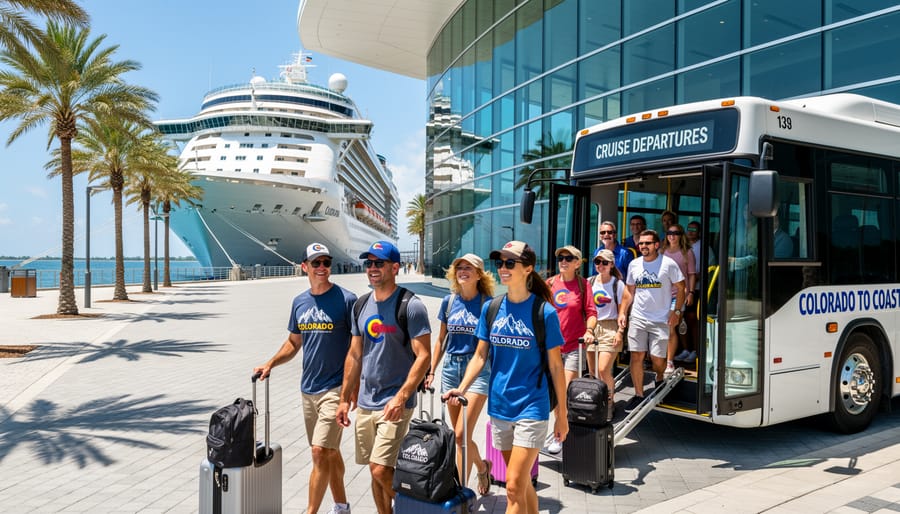
Arriving at Port Canaveral feels like reaching a trailhead after a long approach hike. The facility operates six main cruise terminals, and your boarding pass will specify which one you need. Plan to arrive between 11:00 AM and 1:00 PM for optimal boarding, though your cruise line will provide specific arrival windows.
The terminal process flows similarly to airport security but moves faster. You’ll first reach the check-in area where you’ll present your boarding documents, passport, and any required health forms. Security screening comes next, where you’ll send your carry-on bags through X-ray machines. Unlike backcountry permits that take minutes, this entire process typically takes 30-45 minutes during peak times.
Inside the terminal, you’ll find a waiting area with seating, restrooms, and sometimes snack bars. Think of it as a large, air-conditioned base camp where groups board by zones or deck numbers. The massive ships dock right outside the terminal windows, giving you your first real glimpse of your floating home.
Practical navigation tips: Keep your boarding pass and ID easily accessible throughout. Port Canaveral’s terminals are well-marked with clear signage, but arrive with patience as thousands of passengers funnel through simultaneously. Wear comfortable walking shoes since you’ll cover considerable ground from parking or rideshare drop-off to the ship. The Florida heat and humidity hit hard after Colorado’s dry climate, so dress in breathable layers you can adjust. Most terminals offer porter services at curbside for checked luggage, which gets delivered directly to your cabin later.
Managing the Heat and Humidity Shock
Stepping off the plane in Florida after living at Colorado’s high elevation feels like walking into a wet blanket. The humidity hits you immediately, and your body needs time to adapt to this drastic climate shift. Think of it as reverse altitude adjustment – instead of thin mountain air, you’re now breathing what feels like soup.
Start hydrating 24 hours before your flight. Pack a reusable water bottle in your carry-on and drink consistently throughout your travel day. The combination of airplane cabin air and Florida’s moisture-sapping heat can dehydrate you faster than a summer hike in Rocky Mountain National Park. Aim for at least 16 ounces of water every two hours during your first day in Florida.
Dress in layers you can shed quickly. While Colorado mornings might be crisp, Florida maintains its warmth and humidity from sunrise to sunset. Choose lightweight, moisture-wicking fabrics similar to what you’d wear on summer trails, but leave the heavy hiking gear at home. Cotton becomes uncomfortable when damp, so synthetic or merino wool blends work better.
Give yourself a full day buffer between arriving in Florida and boarding your cruise. This acclimatization period lets your body adjust gradually, preventing the exhaustion that comes from jumping straight from Colorado’s dry climate into cruise activities. Spend this time near your hotel pool or in air-conditioned spaces, venturing out for short periods to build tolerance. Keep electrolyte packets handy – the same ones you use for backcountry adventures work perfectly for combating humidity-related fatigue.
First-Timer Cruise Essentials with a Colorado Twist
Onboard Survival Kit for Mountain Folk
Trading mountain peaks for ocean swells can feel disorienting for Colorado natives accustomed to solid ground beneath their feet. Your body has adapted to living at altitude, and now you’re asking it to handle the constant motion of the sea. Pack motion sickness remedies before you leave home, including wristbands that apply acupressure, ginger candies, and over-the-counter medications like Dramamine or Bonine. Start taking preventative medication the night before boarding if you’re prone to motion sensitivity.
Once aboard, your cabin choice matters significantly for comfort. Request a midship cabin on lower decks where movement feels less dramatic, similar to staying in the center of a canoe rather than the bow. Keep your eyes on the horizon when outdoors, just as you’d focus on distant peaks during a challenging hike. Fresh air helps tremendously, so spend time on deck rather than staying enclosed below.
Eat light meals during your first day at sea, avoiding heavy, greasy foods that can worsen nausea. Stay hydrated and well-rested, as fatigue amplifies seasickness symptoms. Most cruisers find their sea legs within 24 hours as their inner ear adjusts to the ship’s rhythm. Think of it as acclimating to a new environment, much like adjusting to elevation changes when you summit a fourteener. Your body is remarkably adaptable when given time and proper preparation.
Shore Excursions vs. Independent Exploration
Deciding between shore excursions and independent exploration is like choosing between a guided nature tour and a self-planned backcountry adventure. Both have their merits, depending on your family’s experience level and comfort zone.
Shore excursions offer the cruise equivalent of having a trail guide – they handle logistics, timing, and get you back to the ship safely. This is particularly valuable for first-time cruisers still learning to navigate port schedules. Popular stops like Cozumel or Nassau offer everything from snorkeling adventures to historical tours, and the cruise line guarantees the ship won’t leave without you if the excursion runs late. Think of it as your safety net, similar to staying on marked trails when you’re unfamiliar with terrain.
Independent exploration appeals to seasoned adventurers who prefer flexibility. Just like planning your own camping route, you’ll need to research transportation, create a realistic timeline, and build in buffer time to return before the ship’s departure. Download offline maps, carry the ship’s port agent contact information, and always check the “all aboard” time, not the departure time. Port towns are generally walkable, and many beaches, markets, and local restaurants sit within easy reach.
Consider a hybrid approach for your first cruise. Book one organized excursion to test the waters, then try independent exploration at a simpler port. Set your watch to ship time, pack a small daypack with essentials, and remember that missing the boat means expensive catch-up transportation. The key is matching your comfort level with the adventure, just like choosing appropriate trails based on your group’s abilities.
Weather and Safety Considerations
Hurricane Season Reality Check
As Colorado adventurers, we’re used to planning trips around unpredictable weather, but Atlantic hurricane season presents a different challenge than our mountain storms. The official season runs June through November, with peak activity hitting August through October. Unlike sudden Colorado thunderstorms that clear quickly, hurricanes can disrupt cruise itineraries days in advance or even cancel departures.
Here’s your reality check: cruise lines closely monitor weather patterns and will reroute ships or modify ports of call for safety. While modern cruise ships can handle rough seas, the experience differs significantly from our calm mountain lakes. Most itinerary changes happen during peak season, so if you’re planning your first cruise, consider booking between December and May for calmer Caribbean waters and more predictable weather.
Travel insurance becomes essential, especially since you’re investing in flights from Colorado plus the cruise fare. Look for policies covering trip interruption, medical emergencies, and hurricane-related cancellations. Many Colorado travelers underestimate this protection, but when a storm threatens and you’re facing rebooking flights from Denver or Colorado Springs, you’ll appreciate the coverage. Think of it like bringing extra gear on a backcountry trip – better to have it and not need it than face an expensive situation unprepared.
Sun Safety for High-Altitude Adapted Skin
Here’s a reality check from someone who’s learned this lesson the hard way: your Colorado skin isn’t nearly as sun-ready as you think. While living at altitude exposes us to intense UV rays during our mountain adventures, our skin typically sees less total sun exposure because we’re bundled up much of the year. Florida’s sea-level sunshine operates differently, and that humid, reflective environment near the ocean amplifies UV exposure in ways high-altitude sun doesn’t prepare you for.
Before you even leave Colorado, stock up on reef-safe sunscreen with at least SPF 50. The ocean reflects up to 25% of UV rays back at you, essentially hitting your skin twice. Apply sunscreen 30 minutes before heading outside, and reapply every two hours without fail, especially after swimming or sweating through Florida’s humidity.
Your cruise ship’s decks are UV amplification zones. White surfaces, water, and metal reflect sunlight from every angle. Even on overcast days, 80% of UV rays penetrate clouds. Wear a wide-brimmed hat, UV-blocking sunglasses, and consider long-sleeve sun shirts for extended deck time.
Pay special attention to often-missed spots like ears, feet, backs of knees, and that strip of skin where your sunglasses end. These areas rarely see sun during Colorado winters but burn quickly in tropical conditions. Start your sun protection routine on day one of your cruise because there’s no such thing as a base tan, just accumulated skin damage.
Your Colorado roots have already prepared you perfectly for cruise adventures. Think about it: you’ve planned camping trips in unpredictable mountain weather, adjusted to altitude changes, and packed gear for multi-day outdoor excursions. A cruise from Port Canaveral is just another adventure with different terrain. The same mindset that helps you prepare for a weekend in the Rockies—checking weather, packing layers, planning ahead—translates directly to cruise success.
The journey from Colorado’s peaks to Florida’s shores might seem like a big leap, but it’s really just swapping hiking boots for deck shoes. You’ve already mastered the art of adapting to new environments, whether breaking camp at dawn or navigating backcountry trails. Apply that same resourcefulness to your cruise experience. Stay flexible with your plans, embrace the transition from dry mountain air to humid ocean breezes, and remember that adjustment period matters just as much on the water as it does at elevation.
Your final checklist is simple: confirm your flight and shuttle reservations, pack those dramamine tablets alongside your sunscreen, download the cruise app before you lose cell service, and give yourself buffer time at every step. The ocean awaits with the same sense of discovery you find in Colorado’s wilderness, just with better buffets and less wildlife. Trust your outdoor instincts, stay prepared, and enjoy every moment of this new adventure from mountains to sea.