

Kisspeptin is a small signaling protein that tells your brain when to start the reproductive hormone cascade, and the GnRH pathway is the chain of command it switches on. Researchers often study it using kisspeptin 10 vials. Think of kisspeptin as the trailhead sign and GnRH (gonadotropin-releasing hormone) as the route that follows: neurons release kisspeptin, GnRH neurons respond, and the pituitary gland gets its marching orders for the hormones that drive puberty and fertility.
Why does this matter? Because the whole system acts like a campsite headcount. Miss one signal and everything downstream stalls. That’s why researchers keep returning to this pairing when they study reproductive timing, hormone balance, and how the body decides whether conditions are right to proceed.
Laboratory researchers who work with kisspeptin typically start with compounds such as a shortened fragment used to examine how this signal behaves in controlled studies.
If you’ve ever packed for a Dillon weekend, you know the best trips start with a clear map. This guide gives you one. We’ll define the key terms in plain language, walk the signal step by step, and outline what scientists are exploring today, with no prior biology required. A quick safety note: this article is educational only and isn’t medical advice.
What Kisspeptin and GnRH Mean in Plain Language

Think of your body’s reproductive system like a camp radio chain strung across a mountain range. One station sends a message, the next one passes it along, and the last one gets the crew moving. Kisspeptin and GnRH are the first two stations on that chain, and both live in a small, ancient part of the brain called the hypothalamus, which sits near the base of the brain and keeps tabs on everything from body temperature to hunger.
Kisspeptin is the starter signal. It’s a tiny protein made by specific brain cells, and its job is to wake up the next station. GnRH, short for gonadotropin-releasing hormone, is the relay. Once kisspeptin nudges the GnRH-producing cells, they send their own message downstream to the body’s master gland, the pituitary. The “pathway” is simply that chain of handoffs, from kisspeptin to GnRH to the pituitary and beyond.
Here’s a quick glossary so no one gets lost on the trail:
- Kisspeptin
- A small signaling protein that switches on GnRH-producing brain cells. Researchers often describe it as the upstream trigger of the reproductive hormone system.
- GnRH
- A hormone released in pulses from the hypothalamus. It tells the pituitary gland when to send out its own hormones.
- Hypothalamus
- A small control center deep in the brain that links the nervous system to the hormone system.
- Pituitary gland
- A pea-sized gland below the hypothalamus that receives GnRH and responds by releasing hormones into the bloodstream.
- KISS1R receptor
- The docking point on GnRH cells where kisspeptin attaches, like a key fitting into a lock.
So why do scientists call this a master switch? Because without that first signal, the whole chain stays quiet. When kisspeptin speaks up, GnRH follows, and the rest of the reproductive system gets its marching orders. That’s what makes this pathway such a popular focus in the research.
How the Kisspeptin GnRH Pathway Works
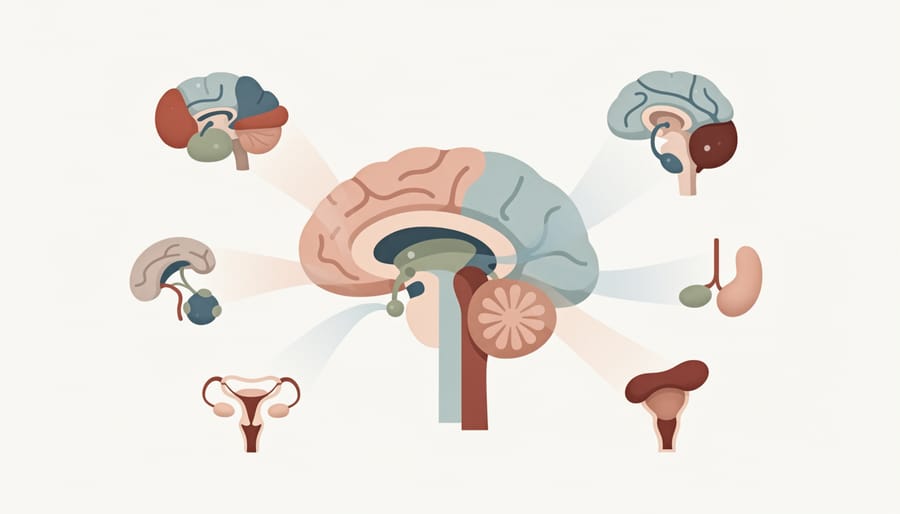
The Feedback Loop: How the Body Adjusts the Signal
Think of your body’s reproductive signaling like tending a campfire through a cold Colorado night. Too much heat and you pull back on the wood. Too little and you add more. Scientists call these feedback loops and they keep hormone levels from running too high or too low.
Most of the time, the loop works like a thermostat. When sex hormones such as estradiol or testosterone rise, they travel back to the brain and quiet the signal. Researchers believe kisspeptin neurons in the arcuate nucleus are a major place where this happens, and studies of estradiol negative feedback point to these cells as key sensors. When they sense plenty of hormone, they ease off, GnRH pulses stay steady and modest, and the system holds its balance.
Positive feedback is the surprise twist. Around mid-cycle, rising estradiol flips the message in a different group of kisspeptin neurons. Instead of calming things down, the signal gets louder, which scientists think helps trigger the big LH surge. It’s a bit like fanning a fire right before the flames catch.
Key Components Researchers Focus On
Think of the pathway as a pack list for a long trek. Every piece has a job, and researchers are still working out how the pieces fit together. Here’s the gear list:
- Kisspeptin neurons: brain cells that release kisspeptin, the upstream “go” signal for the whole system.
- KNDy co-signals: neurokinin B and dynorphin, which appear to help shape how kisspeptin neurons fire.
- KISS1R receptor: the docking point on GnRH neurons that receives kisspeptin’s message.
- GnRH neurons: the relay cells that send pulses of GnRH onward.
- Pituitary gland: the next station, which responds by releasing LH and FSH.
One of the biggest questions involves where the kisspeptin neurons live. Studies point to at least two main groups. One sits in the arcuate nucleus, and many researchers think it helps set the steady rhythm of GnRH pulses. The other sits in the anteroventral periventricular area, which is often linked to the mid-cycle surge discussed earlier. Scientists are still debating how these two groups divide the work, and how much that division differs between species.
The “KNDy neuron” model adds another layer. In this picture, arcuate kisspeptin cells also make neurokinin B and dynorphin, and the trio may work like a built-in pacemaker. Neurokinin B is thought to nudge the pulse along, while dynorphin helps wind it back down. It’s a compelling idea, but it’s still being tested and refined.
Then there’s the KISS1R receptor itself. Researchers want to know how it responds to kisspeptin, what happens inside the cell once it’s activated, and why it matters so much for the pathway to run smoothly.
What Researchers Are Studying and Why It Matters
Puberty, Fertility, and Reproductive Health Questions
Some of the strongest clues about kisspeptin came from rare family studies. Around 2003, separate research groups reported that people carrying inactivating changes in the gene for the KISS1R receptor (originally called GPR54) did not go through normal puberty. Their brains were not making the usual GnRH signal, even though the pituitary and reproductive organs themselves could still respond. That pointed squarely at kisspeptin signaling as a gatekeeper for puberty.
Later work looked at the other end of the chain. Rare variants in KISS1, the gene for kisspeptin itself, have been described in people with delayed or absent puberty. Other variants that boost signaling have been linked to unusually early puberty. Together, these “natural experiments” showed that the pathway has to be in working order for puberty to start on schedule.
Those findings shape much of today’s research. Scientists are asking how kisspeptin signaling contributes to fertility, why the system sometimes falls out of rhythm in conditions involving hormone imbalance, and whether measuring or nudging this pathway could someday help clinicians understand reproductive disorders. Much of that work is still early and being refined. If you have questions about puberty or fertility, a healthcare provider is the right trail guide, not a science explainer.
Energy, Stress, and the Outdoors Connection

Researchers have noticed that the kisspeptin pathway doesn’t operate in a vacuum. It seems to listen to the rest of the body, which makes sense for a system that decides when reproduction is a good investment. Several signals appear to feed into it, including nutrition, stored body energy, stress, and daylight.
Think of it like packing for a long trek. You wouldn’t head up a big climb on an empty pack, and your body seems to keep a similar ledger. Studies in animals suggest that hormones tied to fat stores and food intake, such as leptin, can influence kisspeptin neurons. When energy runs low, signaling may shift. If you’re curious how this idea works in everyday life, energy balance basics are a handy starting point for thinking about fuel in and fuel out.
Stress and seasonal light are also active research topics. Stress hormones may dampen the pathway, and changing day length appears to shape it in seasonal breeders. That’s a loose echo of how mountain weather and daylight shape your trips, so a bit of adventure weather planning fits the spirit here.
None of this means outdoor activity treats any condition. It simply shows how connected these systems are.
Common Questions About Kisspeptin and GnRH
Curious readers tend to land on the same handful of questions, so here they are in plain language. This is general education about ongoing science, not medical advice.
Is kisspeptin a hormone?
Kisspeptin is a neuropeptide, a small protein that brain cells use to signal each other. Some scientists also describe it as acting like a hormone, so the labels overlap a bit, and the details are still being refined.
How is it different from GnRH?
Kisspeptin sits upstream and helps switch on the brain cells that release GnRH. GnRH then carries the message onward to the pituitary gland, like one trail marker pointing to the next.
Does kisspeptin only matter for reproduction?
Reproduction is where most of the research focus has been. Scientists are also looking at links to metabolism and energy balance, but that work is ongoing and conclusions are not settled.
Is kisspeptin available as a treatment?
Kisspeptin is mainly studied in research settings right now. Anyone with questions about fertility or hormone health should talk with a qualified healthcare provider rather than rely on an article like this one.
Where can I learn more from reliable sources?
Look for peer-reviewed journals, university health pages, and national health organizations. A provider can also point you toward trustworthy summaries.
Think of learning about this topic the way you’d plan a trip into the backcountry: start with solid maps and trusted guides, and double-check anything that sounds too good to be true. The same habit applies to science headlines, which sometimes run ahead of what studies actually show. And if you’re packing for a Dillon adventure while you read, our rundown of camp safety essentials is a handy companion for your gear list.
Think of the whole pathway as a trail map. Kisspeptin is the upstream signal at the trailhead, GnRH is the relay that carries the message onward, and researchers are still mapping the terrain between them. Some routes are well marked. Others are still blank spaces on the page.
If you want to stay current, follow reputable sources like university research centers, peer-reviewed journals, and established health organizations. Be wary of anything that sounds like a sure thing.
So keep your curiosity packed alongside your gear. Whether you’re hiking around Dillon Reservoir or watching alpenglow fade over the Gore Range, there’s always more to explore, in the mountains and in the science.