
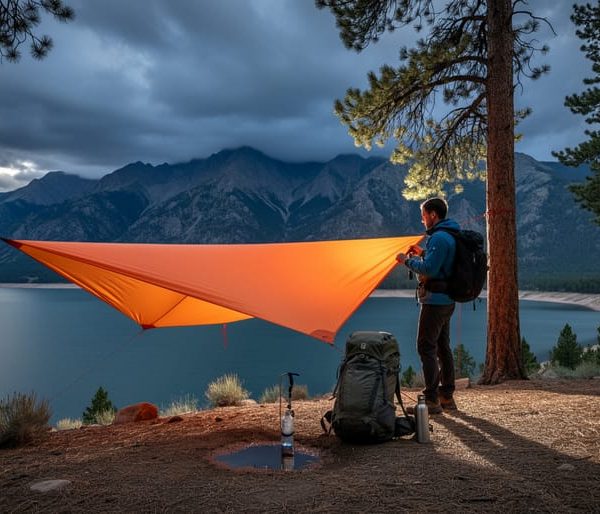
Understand the Rule of Threes to prioritize your survival needs in any wilderness emergency: you can survive three minutes without air, three hours without shelter in harsh conditions, three days without water, and three weeks without food. This hierarchy becomes your roadmap when things go wrong in the backcountry around Dillon, where sudden afternoon thunderstorms and temperature drops can turn a pleasant hike into a survival situation within minutes.
Master your breathing first by staying calm and avoiding panic, which is your greatest enemy at altitude. The high country surrounding Dillon sits above 9,000 feet, where thinner air makes every breath count. Next, establish shelter immediately when weather threatens—hypothermia kills faster than dehydration in Colorado’s mountains, even during summer when temperatures plummet after sunset.
Locate and purify water sources before you feel desperately thirsty, as the streams and lakes around Dillon Reservoir provide abundant options if you carry proper filtration methods. Finally, address food needs only after securing the first three priorities, since your body can function far longer without calories than without protection from the elements.
Pack your essential survival gear according to this framework, dedicating the most space and attention to shelter materials and water purification tools rather than elaborate meal planning. Whether you’re camping at Heaton Bay or hiking the trails near Silverthorne, these four priorities remain constant and could save your life when adventure takes an unexpected turn.
Understanding the 4 Priorities of Survival
When you’re facing an emergency in the backcountry around Dillon, understanding the four priorities of survival could mean the difference between a challenging night and a life-threatening situation. The hierarchy is simple: shelter, water, fire, and food, in that exact order. This sequence isn’t random—it’s based on how quickly each element can kill you in wilderness conditions.
At Dillon’s elevation of 9,111 feet, exposure is your most immediate threat. Hypothermia can set in within hours, especially when you’re dealing with afternoon thunderstorms, sudden temperature drops, or those notorious Colorado wind chills. That’s why shelter comes first. You can survive three hours in harsh weather without adequate protection, but you can go three days without water, three weeks without food, and fire, while incredibly valuable, ranks third because it supports both warmth and water purification.
The mountain environment here intensifies these priorities in unique ways. The high altitude means thinner air and more intense UV exposure. Weather systems roll in fast across the Continental Divide, sometimes changing from sunshine to snow in under an hour. The rocky, alpine terrain can make finding shelter materials challenging, while icy streams provide abundant water sources—but you’ll need fire or purification methods since giardia and other parasites are common in Colorado’s backcountry.
Understanding this hierarchy helps you make smart decisions with limited resources. If you’re caught unprepared as daylight fades and temperatures plummet, building a windbreak becomes more critical than boiling water. That water can wait until morning when you’ve survived the night. This prioritization framework keeps you focused on what matters most when stress and fear try to cloud your judgment.
Priority #1: Shelter – Your First Line of Defense Against the Elements
What You Need to Carry
When packing for Dillon-area adventures, your shelter kit should balance weight with functionality. Start with an emergency space blanket, which weighs just 2-3 ounces but reflects up to 90% of your body heat. Choose the bright orange versions rather than silver-only options since they’re more visible to rescue teams and work just as well.
A lightweight tarp transforms your shelter game. Look for 8×10 options made from ripstop material, weighing around 12-16 ounces. This versatile tool serves as ground cover, overhead protection, windbreak, or rain catchment. At Dillon’s elevation of 9,111 feet, wind protection matters as much as overhead coverage, so a tarp offers more flexibility than fixed emergency shelters.
Pack 50 feet of 550 paracord, which weighs about 3 ounces but provides incredible versatility. Beyond securing your tarp, paracord creates emergency repairs, builds gear lanyards, or even serves as fishing line when inner strands are removed. The seven-strand variety offers the best strength-to-weight ratio.
Consider multi-use items to reduce pack weight. A large contractor-grade garbage bag weighs less than an ounce but works as emergency poncho, pack liner, or improvised shelter. Duct tape wrapped around your water bottle handles gear repairs and tarp patching.
For Colorado’s unpredictable mountain weather, these lightweight essentials provide serious protection without turning your daypack into a burden. Total weight for this complete shelter kit runs under two pounds while offering genuine life-saving capability.
Quick Shelter Skills Every Hiker Should Know
When weather turns nasty around Dillon, knowing how to quickly build emergency shelter can literally save your life. At 9,000 feet elevation, temperatures drop fast, and afternoon storms roll in without much warning.
Your first move is finding natural windbreaks. Look for large boulders, dense evergreen groves, or fallen logs that can block prevailing winds. These natural features do half the work for you and are abundant throughout the trails around Dillon Reservoir.
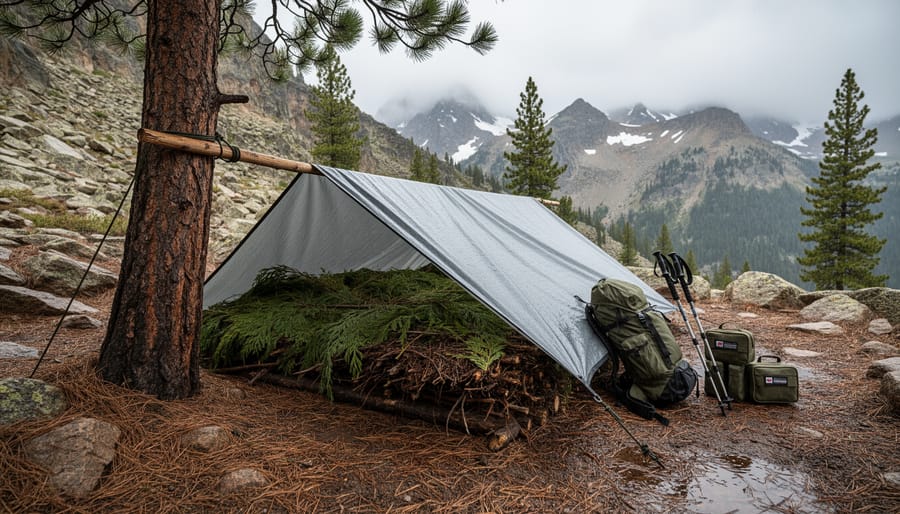
If you’re carrying a tarp or emergency blanket (and you should be), creating a lean-to takes just minutes. String paracord between two trees about 6-8 feet apart, drape your tarp over it, and stake down the edges with rocks or gear. Position the closed side toward the wind. This simple design sheds rain effectively and reflects body heat back toward you.
For those without tarps, pine boughs become your building material. Start by creating a ridgepole between two trees or propped against a large rock. Layer evergreen branches at a steep angle along both sides, working from bottom to top like roofing shingles. The overlapping pattern channels water away while providing insulation.
Ground insulation matters just as much as overhead cover. Cold ground saps body heat faster than you’d expect. Pile pine needles, dry leaves, or extra clothing beneath you to create a barrier. Even a thick bed of branches works better than lying directly on frozen ground.
Remember, your shelter doesn’t need to be perfect. It just needs to block wind, keep you dry, and preserve your body heat until conditions improve or help arrives.
Priority #2: Water – Staying Hydrated in High Altitude
Essential Water Purification Tools
When exploring Dillon’s pristine mountain streams and alpine lakes, having reliable water purification tools can make the difference between a memorable adventure and a dangerous situation. Even the clearest high-altitude water can harbor invisible threats like Giardia and other parasites.
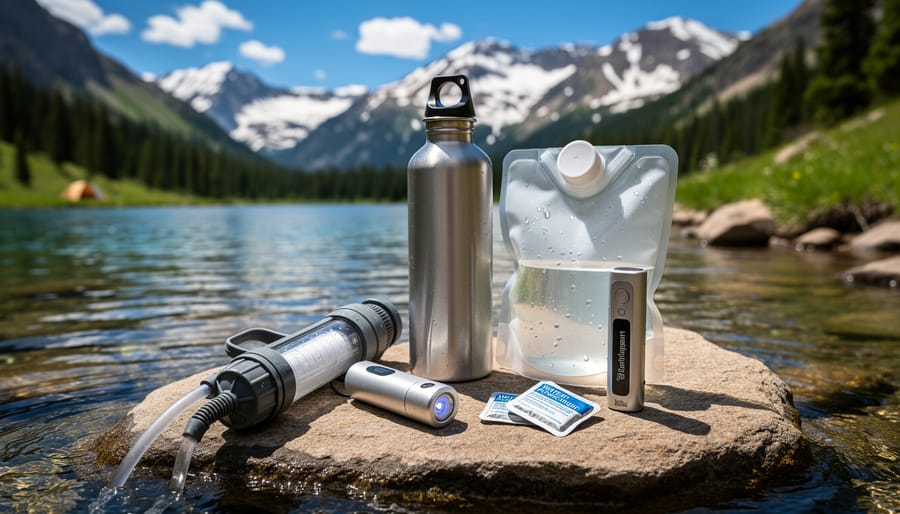
Start with a quality pump or squeeze filter as your primary defense. Products with hollow fiber membranes effectively remove bacteria and protozoa from Dillon’s cold mountain water. These filters work exceptionally well with the silty runoff common during spring snowmelt in the area. The squeeze-style filters are lightweight and perfect for day hikes around Dillon Reservoir, while pump filters handle larger groups at backcountry camps.
Always carry purification tablets as your backup method. These lightweight tablets take up minimal space in your pack and remain effective even after years of storage. While they require 30 minutes to four hours of wait time depending on water temperature, they provide crucial redundancy if your filter breaks or clogs. Given Dillon’s elevation at 9,000 feet, remember that colder water temperatures extend treatment times.
UV purifiers offer a third option, though battery dependence makes them less reliable in extended wilderness situations. They work incredibly fast on clear water but struggle with the sediment-heavy streams you might encounter near mining areas or during heavy rain.
Keep a metal container for boiling water as your fail-safe method. At Dillon’s elevation, bring water to a rolling boil for at least one minute to ensure complete purification.
Finding Water Sources Near Dillon
The Dillon area offers abundant water sources, but knowing where to look and what’s safe makes all the difference in a survival situation. During spring and summer, snowmelt creates numerous streams flowing down from the surrounding peaks. The Blue River and its tributaries provide reliable water sources, though treatment is always necessary before drinking.
Look for water in valley bottoms and natural drainage areas. Even in drier months, you’ll often find water where vegetation appears greener and more lush. Willows and aspens typically indicate water nearby. At Dillon’s high altitude (over 9,000 feet), water sources can be deceptive. That crystal-clear mountain stream might look pristine, but it can still harbor giardia and other parasites from wildlife upstream.
Avoid stagnant water in ponds or puddles unless you have no alternative, as these sources require extra filtration and purification. Similarly, stay away from water with visible algae, strong odors, or water near mining areas, which are common in Colorado’s mountain regions.
Seasonal considerations matter here. Winter transforms water location entirely. Frozen lakes and snow become your primary sources, requiring melting before use. Spring runoff (typically May through June) means abundant but silt-heavy water that needs proper filtration. Late summer and fall bring lower water levels, so knowing multiple source locations becomes crucial.
Always carry a reliable water filter or purification tablets when exploring around Dillon. The altitude intensifies dehydration, making water needs even more critical than at lower elevations. Plan your route around known water sources, and never assume seasonal streams will be flowing.
Priority #3: Fire – Warmth, Signaling, and Morale
Fire-Starting Tools That Won’t Fail
When you’re preparing for backcountry adventures around Dillon, carrying reliable fire-starting tools can mean the difference between a comfortable night and a genuine emergency. Colorado’s weather throws everything at you—sudden afternoon thunderstorms, high winds that whip across frozen reservoirs, and that persistent dampness at elevation that makes fire-starting a real challenge.
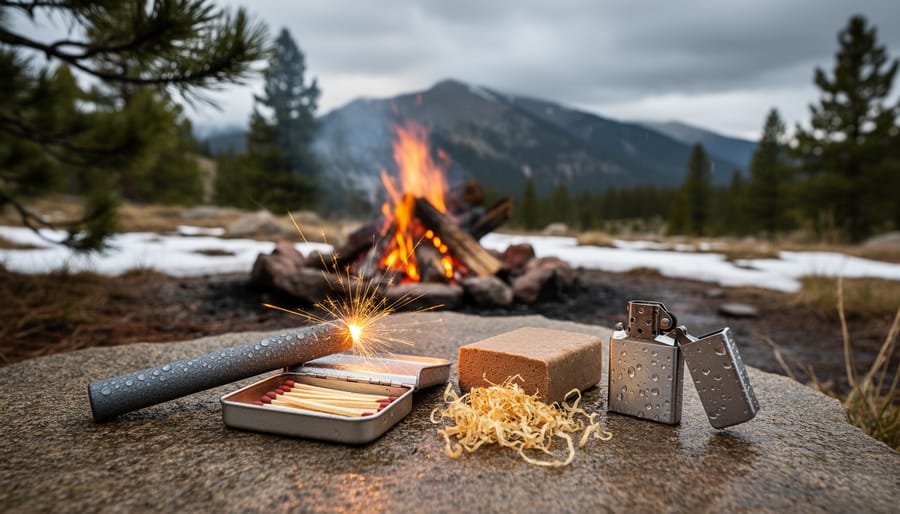
The golden rule? Never rely on just one method. Pack at least three different fire-starting tools, because redundancy saves lives. Start with a quality ferrocerium rod, which works even when soaking wet and lasts for thousands of strikes. Unlike matches or lighters, ferro rods don’t care about altitude or freezing temperatures, making them perfect for high-elevation camping around Dillon.
Next, include a reliable butane lighter in a waterproof case. Keep it close to your body in cold weather, as lighters lose effectiveness below freezing. Waterproof matches in a sealed container make an excellent backup—look for strike-anywhere varieties that work on any dry surface.
Don’t forget proper tinder. Commercial options like waterproof tinder cubes or petroleum jelly-soaked cotton balls ignite easily even in damp conditions. I always carry a small bag of dryer lint from home mixed with wax—it’s lightweight, free, and catches sparks beautifully.
Practice using each tool before you need it. Scraping a ferro rod effectively takes technique, and wet, windy conditions aren’t the time to learn. Spend an afternoon at your campsite testing your gear in various weather conditions. Your future self, shivering at dusk with storm clouds rolling in over the mountains, will thank you for that preparation.
Fire Safety in Colorado’s Wilderness
Fire represents a double-edged sword in Colorado’s wilderness. While it provides essential warmth and water purification capabilities that can save your life, it also poses significant wildfire risks in our dry mountain climate. Before striking a match, understand that fire should only be used when absolutely necessary for survival and when conditions permit safely.
Colorado enforces strict fire restrictions throughout much of the year, particularly during dry summer months when wildfire danger peaks. Summit County, where Dillon is located, regularly implements Stage 1 and Stage 2 fire restrictions that prohibit campfires even in designated fire rings. Check current restrictions with the White River National Forest and Summit County authorities before your trip, as violations can result in hefty fines and criminal charges.
If you must build a survival fire, choose a location away from overhanging branches, dry grass, and pine needles. Clear a ten-foot diameter down to mineral soil, keep your fire small and contained, and never leave it unattended. Always have water or dirt ready to extinguish flames completely. In many survival scenarios around Dillon, you’re better off relying on proper clothing layers and emergency blankets rather than risking an uncontrolled fire that could endanger yourself and others.
Priority #4: Food – Energy for the Long Haul
Emergency Food Essentials to Pack
When day hikes around Dillon extend unexpectedly or weather turns suddenly, having the right emergency food can make all the difference. Your pack should include high-calorie, non-perishable options that deliver maximum energy without adding excessive weight.
Energy bars are your first line of defense. Choose varieties with at least 200 calories per bar and a good balance of carbohydrates, protein, and healthy fats. Brands designed for mountaineering work particularly well at Dillon’s 9,000-foot elevation where your body burns calories faster.
Trail mix combining nuts, dried fruit, and dark chocolate provides quick energy and essential fats. Almonds and cashews pack roughly 160 calories per ounce, making them incredibly efficient. For longer adventures, individual nut butter packets offer concentrated calories in tear-and-go packaging.
Beef jerky or salmon packets deliver protein without refrigeration, helping maintain strength during extended situations. Add a few packets of instant oatmeal or dehydrated soup, which only require hot water from your emergency kit.
Pack enough food for one extra day beyond your planned trip. A general rule: carry 2,500-3,000 calories per person for emergency situations. Rotate your emergency food every six months to maintain freshness, and always keep these items separate from your regular snacks so they remain untouched until truly needed.
Foraging Basics Around Dillon
While food ranks fourth in survival priorities, knowing what’s safe to forage around Dillon can provide valuable supplementary nutrition if you’re stranded for extended periods. The Colorado high country offers several edible plants, but this knowledge comes with serious responsibility.
Common safe edibles in the area include dandelion greens (the entire plant is edible), wild raspberries along sunny trails, and pine needles for emergency vitamin C tea. You’ll also find wild onions near streams, identifiable by their distinctive onion smell. Fireweed, with its pink-purple flowers, produces edible shoots and leaves in early summer.
However, here’s the critical caution: never consume any wild plant unless you’re 100% certain of its identification. The high country also harbors toxic look-alikes like water hemlock and false hellebore that can cause serious illness or death. Even experienced foragers sometimes make mistakes.
Your survival pack should always contain enough emergency food to sustain you, making foraging knowledge a backup skill rather than a primary strategy. If you’re interested in learning more, take a guided foraging course specific to Colorado’s alpine environment before your trip. This hands-on education is invaluable and far safer than learning from books alone in an emergency situation.
Putting It All Together: Your Dillon-Area Survival Kit
Now that you understand the four priorities—shelter, water, fire, and signaling—let’s build a practical kit that addresses each one without weighing you down on Dillon’s trails. The beauty of this approach is that your survival kit essentials fit easily into a small pouch or pocket in your daypack.
For shelter, pack a lightweight emergency bivy or space blanket. These weigh just ounces but can save your life during an unexpected night out. Add a small tarp with cordage for versatile protection against wind and rain common at our 9,000-foot elevation.
Water preparation requires a compact filtration system like a LifeStraw or Sawyer Mini, plus a metal water bottle that doubles as a boiling container. These ensure safe drinking from the numerous streams and lakes around Dillon Reservoir.
Fire-starting redundancy is crucial in Colorado’s variable weather. Include waterproof matches, a reliable lighter, and a ferrocerium rod. Toss in some cotton balls soaked in petroleum jelly as foolproof tinder that lights even when damp.
For signaling, carry a whistle attached to your pack strap, a small signal mirror, and a lightweight headlamp with extra batteries. These items take up minimal space but dramatically increase your visibility to rescuers.
Additional items worth including: a knife or multi-tool, basic first aid supplies, high-energy snacks, and a fully charged phone in a waterproof case.
This complete kit weighs under two pounds and fits in a gallon-sized bag. Whether you’re hiking Sapphire Point or camping at Peak One, you’ll have everything needed to handle unexpected situations confidently. Remember, the best survival kit is the one you actually carry.
Before you head out to explore the stunning terrain around Dillon, take time to prepare your survival essentials. Understanding these four priorities—shelter, water, fire, and food—isn’t about feeding fear; it’s about building confidence. When you know you can handle unexpected situations, whether that’s a sudden afternoon thunderstorm on the trails near Lake Dillon or getting turned around in the backcountry, you’ll enjoy your adventures more fully.
Remember, these four priorities work as an interconnected system. Your shelter protects you from the elements so hypothermia doesn’t set in. Fire purifies water and keeps you warm. Water sustains your ability to think clearly and make good decisions. Food provides the energy to execute your survival plan and self-rescue if needed.
The mountains around Dillon are magnificent, but they demand respect. Pack your ten essentials, check the weather forecast, tell someone your plans, and carry the knowledge of how to use what you bring. True backcountry confidence doesn’t come from bravado—it comes from preparation. With your survival priorities in order and your kit properly assembled, you’re ready to embrace everything this remarkable area has to offer.